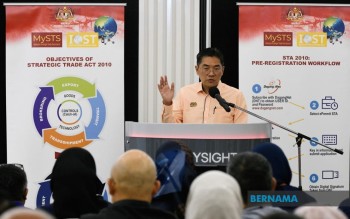
Malaysia is doubling down on its commitment to strengthen the electrical and electronics sector, recognising the industry's critical importance to the country's economic future and its position within intricate global supply networks. Deputy Investment, Trade and Industry Minister Sim Tze Tzin underscored this strategic priority during an engagement with industry stakeholders in George Town, emphasising that the sector deserves sustained government attention as it underpins Malaysia's relevance in international technology markets.
The E&E sector represents far more than routine manufacturing for Malaysia. It encompasses sophisticated operations spanning high-tech semiconductors, cutting-edge sensors, and telecommunications infrastructure—domains where Malaysia has built genuine competitive advantages. These activities inject substantial value into the economy and create employment opportunities across skill levels, from assembly line workers to research and development specialists. The sector's significance lies in its integration into global value chains where disruptions in one location cascade across multiple countries and industries, making Malaysia's stability and reliability as a production hub tremendously valuable to multinational corporations.
Penang and the wider Northern Region have emerged as particularly crucial nodes in this ecosystem. The area hosts an impressive concentration of world-class technology manufacturers whose operations attract further investment and talent migration. This clustering effect generates economies of agglomeration—suppliers, logistics providers, and specialist service firms locate nearby, reducing costs and improving efficiency. The region's established reputation as a technology manufacturing hub means companies considering Southeast Asian operations often view Penang as the default choice, a position Malaysia must actively maintain against competition from Vietnam, Thailand, and Indonesia.
The semiconductor industry warrants special attention within this broader narrative. Assembly, testing, and packaging operations constitute genuine high-value activities that employ thousands of Malaysian workers and engineers. Unlike simple labour-intensive assembly, these operations require substantial technical expertise and represent critical bottlenecks in global semiconductor supply chains. Recent global disruptions have highlighted the strategic importance of these capabilities, with electronics manufacturers worldwide prioritising supply chain resilience. Malaysia's ability to retain and expand semiconductor operations positions the country advantageously as companies recalibrate their international procurement strategies.
Beyond production capacity, the Ministry is emphasising export control compliance and regulatory adherence as cornerstones of Malaysia's trustworthiness as an investment destination. Semiconductor technology, in particular, operates within complex international frameworks governing dual-use items and sensitive technologies. By maintaining rigorous compliance standards, Malaysia signals to international partners that operations conducted here meet stringent requirements. This reputation for orderly, rule-based commerce becomes increasingly valuable as geopolitical tensions elevate scrutiny of technology supply chains, making jurisdictions perceived as transparent and cooperative more attractive.
The government's approach encompasses direct engagement with industry players through mechanisms like the Strategic Trade Act Customer Day and Northern Region Clinic. These platforms serve pragmatic functions, providing companies with concrete advisory services addressing permit applications, product classification challenges, licensing interactions, and internal audit requirements. Such hands-on support removes friction points that might otherwise discourage investment or drive operations to competing countries. The Northern Region Clinic attracted 86 participants, indicating strong industry appetite for direct guidance on navigating regulatory frameworks.
Recognising that Malaysia's recent robust trade performance creates opportunities beyond corporate profits, Deputy Minister Sim highlighted the importance of workers sharing in sectoral success. Strong company performance, he suggested, should translate into improved worker compensation through salary increases and bonuses. This consideration reflects broader concerns about wage stagnation in manufacturing sectors across developing economies and acknowledges that sustainable growth requires raising living standards. Companies benefiting from Malaysia's institutional advantages arguably bear some responsibility for reinforcing the social contract that permits such prosperity.
The emphasis on close government-industry collaboration reflects sophisticated understanding of how modern economies operate. Technology sectors thrive not through isolated government or corporate action but through genuine partnerships where each party contributes distinctive strengths. Government provides regulatory frameworks, infrastructure, talent development, and market access negotiations. Industry contributes innovation, operational efficiency, capital investment, and employment. When these elements align, regions like Penang become global magnets for technology investment.
For Malaysia specifically, maintaining this sector's prominence carries implications extending beyond immediate economic metrics. Technology manufacturing capabilities provide leverage in bilateral relationships, position the country within regional power dynamics, and offer skills transfer opportunities to younger generations. The sector generates high-wage employment in areas where Malaysia competes effectively internationally, rather than competing downward in labour-intensive, low-margin activities. Strategic investment in E&E capabilities therefore represents one of Malaysia's most promising paths toward sustained prosperity and middle-income advancement.
Looking forward, the challenge involves balancing continuity with adaptation. Climate change, digital transformation, and shifting geopolitics will reshape technology supply chains. Malaysia must simultaneously protect existing advantages while investing in emerging capabilities—from green electronics manufacturing to semiconductor design activities. The government's current focus on strengthening existing operations provides necessary foundation, but longer-term success requires progressively moving up value chains. The dialogue now beginning between MITI and industry stakeholders will prove crucial in navigating this transition effectively.

