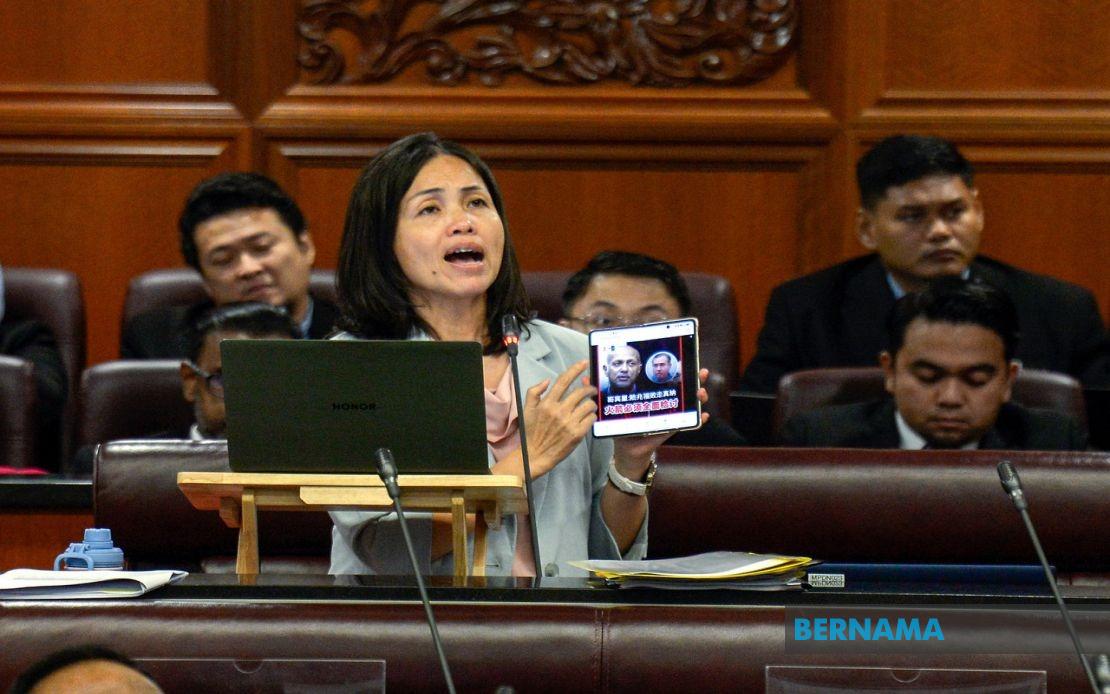
The Malaysian government has significantly accelerated its crackdown on fraudulent online content, with Deputy Communications Minister Teo Nie Ching revealing that 99,693 scam-related posts have been taken down from social media platforms during the first seven months of 2026. This figure, disclosed during parliamentary debate on the Communications and Multimedia (Amendment) Bill 2026, already exceeds the 98,503 items removed throughout the entirety of 2025, demonstrating both the growing sophistication of online scams and the intensifying response from authorities.
The trajectory of removal efforts over recent years paints a picture of rapidly escalating online fraud activity across Malaysia's digital landscape. In 2024, authorities managed to remove 63,652 scam-related contents, a sharp increase from the 6,297 items removed in 2023 and a mere 242 in 2022. These figures underscore how online scamming has transformed from a peripheral concern into a mainstream threat affecting Malaysian internet users, with perpetrators developing increasingly effective methods to evade detection and exploit vulnerable citizens. The exponential growth in content removal requirements suggests that either scammers are becoming more prolific, detection mechanisms have become substantially more effective, or both factors are at play simultaneously.
Teo Nie Ching used the parliamentary platform to emphasise that online safety has become a critical governance priority requiring sustained focus and comprehensive policy responses. Speaking during the winding-up debate in the Dewan Negara, she articulated the government's position that protecting Malaysian citizens from digital fraud demands unwavering attention from all relevant agencies and platforms. The sentiment reflects growing public concern about the prevalence of investment scams, romance fraud, phishing schemes, and other variants of online deception that have cost Malaysians hundreds of millions of ringgit in recent years.
The Communications and Multimedia (Amendment) Bill 2026, which passed through the Dewan Negara with majority voice support following contributions from 15 senators, introduces structural and legal mechanisms to strengthen the government's capacity to combat online threats. Central to these amendments is the establishment of a National Universal Service Provision (NUSP) initiative, designed to function as a coordinated framework for safeguarding national security through enhanced oversight of digital networks and applications. The initiative represents a shift toward more proactive governance of the communications sector, acknowledging that passive reactive enforcement no longer suffices against the sophistication of contemporary online threats.
Among the Bill's substantive provisions is an amendment to Section 202 of the Communications and Multimedia Act 1998, which grants the Minister explicit authority to direct the Malaysian Communications and Multimedia Commission (MCMC) to support NUSP implementation. This clarification of legal authority addresses previous ambiguities about the regulatory boundaries within which the MCMC operates, potentially streamlining the approval process for interventions targeting fraudulent content and malicious actors. By vesting clearer directive authority in the minister, the amendments establish a more hierarchical and decisive command structure for digital security operations.
Recognising concerns raised during parliamentary debate, Teo emphasised that the amendments include robust accountability mechanisms to prevent regulatory overreach. Any party adversely affected by MCMC decisions or ministerial directives may lodge appeals with the Appeals Tribunal established under the Communications and Multimedia Act 1998. This tribunal, chaired by a High Court judge, provides a independent review body insulating decisions from ministerial discretion. Furthermore, parties dissatisfied with the tribunal's determination retain the right to pursue judicial review in the civil courts, ensuring that the regulatory framework remains subject to judicial oversight and constitutional safeguards.
Senator Datuk Seri Prof Dr Noor Inayah Ya'akub articulated a concern that resonates across the legislative chamber: national security determinations must rest upon transparent, clearly defined criteria rather than subjective ministerial judgment. She emphasised that government credibility depends on demonstrating that every regulatory decision conforms to established legal standards and undergoes proper scrutiny. This position reflects the Malaysian parliament's enduring tension between granting executive agencies sufficient flexibility to respond to evolving threats while maintaining constitutional protections against arbitrary state action. For citizens and businesses alike, transparent criteria provide predictability about regulatory expectations and grounds for challenging unreasonable decisions.
Senator Sheikh 'Umar Bagharib Ali expanded the analytical frame by positioning digital communications infrastructure as foundational to both national security and economic prosperity. He characterised the communications sector as strategic infrastructure underpinning Malaysia's digital economic ambitions and public safety apparatus. This framing acknowledges that online safety and regulatory frameworks should not be viewed in isolation as security measures but recognised as essential enabling conditions for a thriving digital economy. When citizens trust that their online activities remain reasonably protected from fraud and that regulations operate fairly, they engage more confidently with digital services, ultimately accelerating economic digitalisation.
Sheikh 'Umar further argued that public confidence in fair, transparent, and lawful exercises of government power transforms citizens into willing partners in national security endeavours rather than reluctant subjects of surveillance and control. This observation carries particular salience in the Malaysian context, where public skepticism toward government intentions occasionally complicates implementation of security initiatives. When regulatory frameworks are perceived as partisan, opaque, or capricious, the legitimacy of even well-intentioned security measures erodes, potentially driving users toward unregulated platforms or encrypted channels beyond government oversight.
The substantial increase in scam content removals reflects the multifaceted challenge facing Malaysian regulators in an environment where fraudsters exploit platform algorithms, social engineering techniques, and the sheer volume of daily internet traffic. The MCMC's capacity to identify and remove nearly 100,000 items in seven months represents a significant operational achievement, yet this figure simultaneously suggests that the volume of fraudulent content creation far outpaces removal capabilities. For Malaysian users, particularly older adults and those with limited digital literacy, the proliferation of scams presents an ongoing threat despite these removal efforts, underscoring why education and platform-level measures merit continued investment.
The passing of the Communications and Multimedia (Amendment) Bill 2026 signals that Malaysian policymakers regard online fraud and related threats as sufficiently serious to warrant legislative innovation and expanded regulatory authority. However, the balance between effective enforcement and constitutional protections remains delicate. The inclusion of appeals mechanisms and judicial oversight provisions suggests that parliament recognises the necessity of constraining discretionary power even when expanding emergency-response capabilities. For Malaysian internet users, businesses, and platforms, this legislative development creates both clearer regulatory expectations and institutional safeguards against potential regulatory abuses, though the practical effectiveness of these mechanisms will depend on implementation and enforcement patterns that emerge over coming months.

