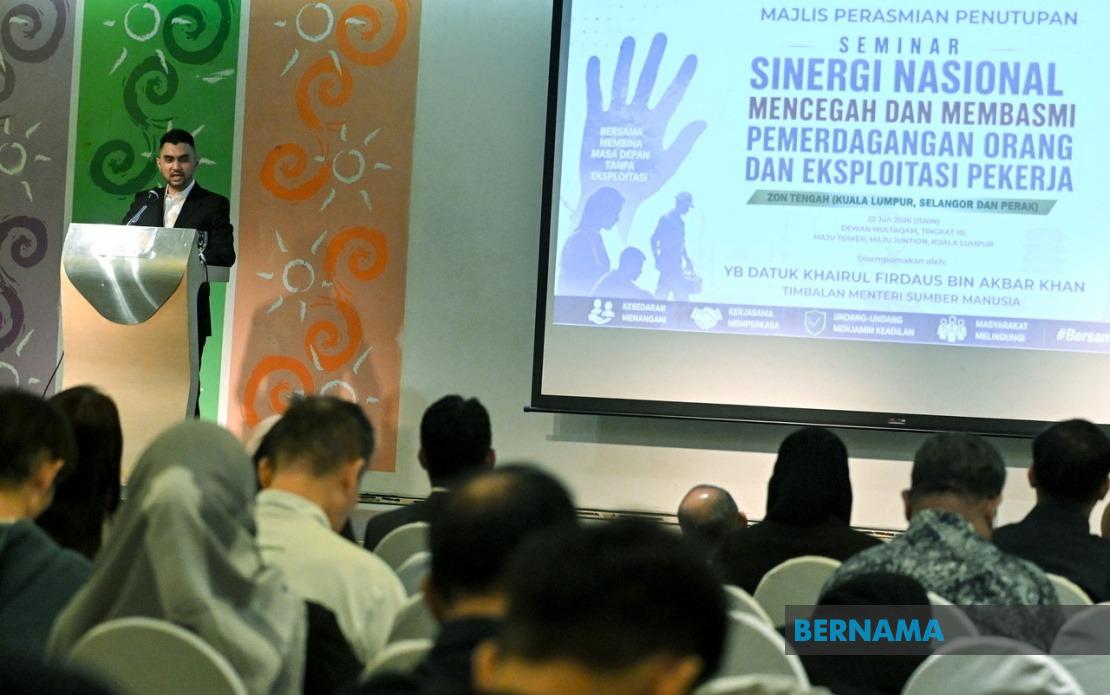
Malaysia's efforts to combat human trafficking and labour exploitation appear to be yielding measurable results, with rescue figures trending downward since 2023 according to data presented by Deputy Human Resources Minister Datuk Khairul Firdaus Akbar Khan at a national seminar in Kuala Lumpur. The statistics drawn from the Peninsular Malaysia Manpower Department show a significant reduction in identified victims, offering tentative evidence that coordinated government enforcement and prevention strategies are beginning to disrupt trafficking networks that exploit vulnerable workers across the country.
According to official figures, the Peninsular Malaysia Manpower Department recorded 70 trafficking and labour exploitation victims rescued during 2023. This figure dropped sharply to just 10 cases in 2024, before moderately rising to 17 cases in 2025. As of May this year, only four victims had been recorded, suggesting the downward trajectory may be continuing, though the year-to-date comparison remains incomplete. These numbers represent the visible outcomes of government intervention—workers identified during raids, workplace inspections, and investigation operations that have been escalated across the country.
Yet Datuk Khairul Firdaus cautioned against drawing overly optimistic conclusions from these declining figures. Speaking to media representatives, he acknowledged that while the government could take some satisfaction from reduced rescue numbers, a troubling reality likely underpins the statistics: unreported cases and clandestine operations remain hidden from official view. The dark figure of human trafficking—victims who never come into contact with authorities or who fear reporting their situations—likely represents a substantially larger population than government data reveals. This caveat reflects a critical challenge facing enforcement agencies across Southeast Asia, where trafficking networks have become increasingly sophisticated at evading detection and victim communities often operate in isolation from protective services.
To address the scale of exploitation, Malaysian authorities have substantially intensified their enforcement activities during the first five months of 2026. Across the country, government agencies conducted a total of 386 enforcement operations specifically targeting labour violations and trafficking indicators. These operations generated 311 investigation papers, representing cases that progressed beyond initial suspicion into formal inquiries. The volume of enforcement actions underscores a commitment to systematic workplace monitoring and supply chain scrutiny, moving beyond reactive responses to trafficking cases toward proactive identification of high-risk operations.
The government's approach aligns with Malaysia's obligations under international protocols ratified through the International Labour Organisation. Datuk Khairul Firdaus emphasized that the nation's anti-trafficking agenda reflects commitments made under ILO conventions addressing forced labour, modern slavery, and worker protection. These international frameworks provide both accountability benchmarks and technical support for Malaysian authorities implementing prevention and prosecution measures. For Malaysia, compliance with ILO protocols carries strategic importance in maintaining standards recognised by trading partners and investors who increasingly scrutinize labour practices within supply chains.
Beyond enforcement operations, the government has invested in public awareness and stakeholder engagement through a nationwide seminar series addressing human trafficking and labour exploitation. The National Synergy Seminar represents JTKSM's effort to build understanding of trafficking indicators, victim identification protocols, and prevention strategies among diverse audiences including employers, labour contractors, civil society organizations, and government officials. The Central Zone seminar, which Deputy Minister Khairul Firdaus formally concluded, followed earlier regional events held in Sungai Petani, Kedah on May 18 and Kluang, Johor on June 8.
These regional seminars collectively drew approximately 1,000 participants who shared observations, recommendations, and strategies for addressing human trafficking vulnerabilities within their respective zones. Such convenings serve multiple functions within Malaysia's anti-trafficking framework: they disseminate awareness about emerging trafficking patterns and exploitation methods; they facilitate information sharing among enforcement agencies, employers, and community organizations; and they create platforms for identifying systemic gaps in prevention and victim protection mechanisms. The geographic distribution of seminars across Peninsular Malaysia reflects recognition that trafficking patterns vary by region, with different industries, worker populations, and criminal networks operating across North, Central, and South zones.
The implications of Malaysia's approach extend beyond national borders within the Southeast Asian context. As a major destination country for migrant workers and a transit point for trafficking networks operating across the region, Malaysia's enforcement effectiveness influences trafficking patterns throughout ASEAN. Strengthened workplace monitoring and victim identification in Malaysia create enforcement pressure that can disrupt regional trafficking routes and deter exploitation within supply chains serving Malaysian industries. Conversely, gaps in enforcement or victim protection inadvertently facilitate criminal networks that operate across national boundaries, exploiting the mobility of workers and goods within the region.
For Malaysian employers and industries reliant on migrant labour, the intensified enforcement environment creates both compliance obligations and reputational risks. Manufacturing, construction, agriculture, and domestic work sectors—all significant employers of migrant workers in Malaysia—face heightened scrutiny regarding labour practices, worker documentation, and conditions. Companies operating within global supply chains increasingly face buyer pressure to demonstrate compliance with international labour standards and trafficking prevention protocols. The government's enforcement activities create accountability mechanisms that, while sometimes burdensome for businesses, ultimately protect Malaysia's reputation as a responsible actor within global labour markets and investor communities.
The declining victim rescue figures present a measurement paradox that encapsulates broader challenges in anti-trafficking work. Lower numbers could indicate genuine progress in prevention, successfully deterring traffickers and protecting potential victims before exploitation occurs. Alternatively, they might reflect trafficking networks adapting to enforcement pressure by operating in deeper secrecy, relocating operations to less-monitored jurisdictions, or exploiting workers through more diffuse and less detectable arrangements. Distinguishing between these possibilities requires sophisticated analysis of trafficking indicators, market trends, and criminal network behaviour—analysis that extends beyond simple victim counts to assess the effectiveness of prevention efforts and the actual prevalence of trafficking and exploitation throughout Malaysia's economy.
Moving forward, Malaysian policymakers and enforcement agencies must balance measured optimism about declining rescue figures against the realistic probability that significant trafficking remains undetected. The government's commitment to ILO protocols and escalated enforcement operations represents substantive progress, yet sustainable reduction in human trafficking requires continued investment in victim identification training, whistleblower protections, workplace monitoring capacity, and cross-border cooperation mechanisms. As Malaysia positions itself as a responsible regional actor addressing modern slavery, the challenge lies in translating enforcement statistics into genuine protection for vulnerable workers, whether Malaysian citizens or migrant labourers operating within the country's diverse economic sectors.