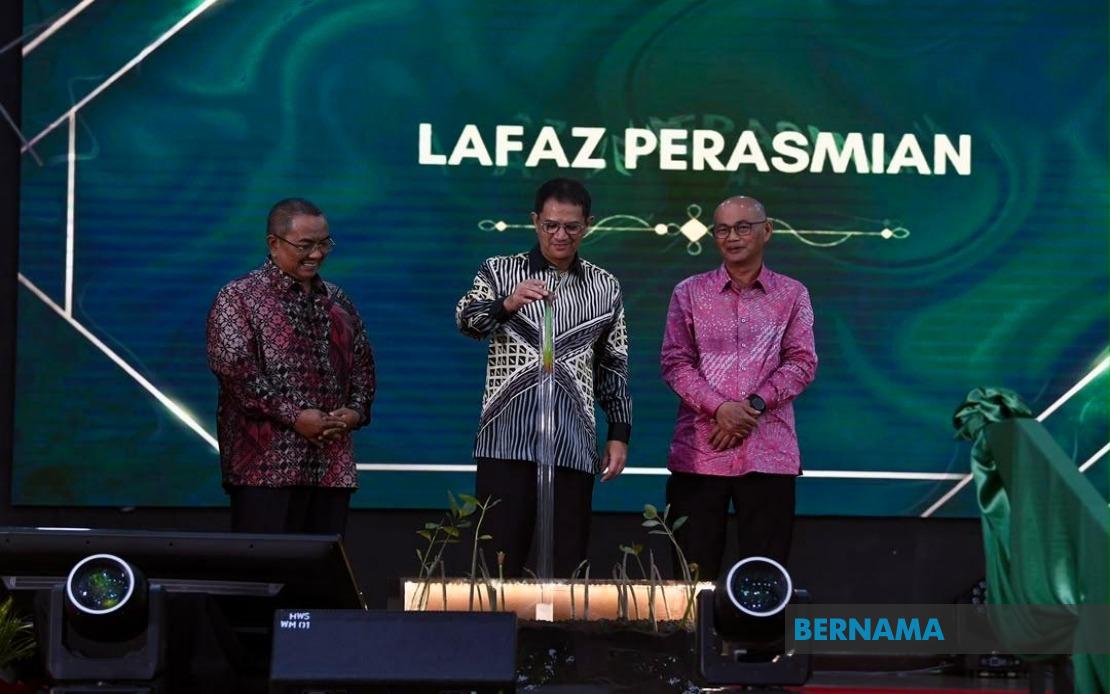
Malaysia has marked significant progress in coastal environmental rehabilitation, with approximately 3,965 hectares of mangrove forests restored across the country through an ambitious tree-planting initiative involving over 9.3 million mangrove and suitable coastal species. The achievement underscores the Malaysian government's strategic approach to preserving one of the world's most economically and ecologically valuable ecosystems, positioning the nation as an active participant in global coastal conservation efforts.
Natural Resources and Environmental Sustainability Minister Datuk Seri Arthur Joseph Kurup emphasised that this restoration milestone represents more than mere environmental statistics. The initiative reflects a comprehensive policy framework aimed at reversing decades of mangrove degradation that has affected coastal communities throughout the peninsula and East Malaysia. Mangrove ecosystems serve multiple critical functions: they provide nurseries for commercially important fish species, act as natural barriers against coastal erosion and storm surge, store substantial carbon reserves, and support livelihoods for thousands of fishing communities dependent on healthy coastal fisheries.
The financial commitment behind these conservation efforts demonstrates serious governmental intent. Since the programme's inception through 2025, RM71.3 million has been channelled into the National Coastal Mangrove and Suitable Species Tree Planting Programme, encompassing activities from initial planting through maintenance, scientific research, ecosystem monitoring, and public engagement initiatives. This multi-faceted approach recognises that successful mangrove restoration requires sustained investment beyond the planting phase, with ongoing management crucial for tree survival and ecosystem development.
Looking forward, the government has allocated an additional RM2 million under the 13th Malaysia Plan specifically designated for 2026, targeting mangrove conservation and coastal area preservation across Peninsular Malaysia, Sabah, and Sarawak. This regional distribution reflects the recognition that mangrove ecosystems merit attention across Malaysia's diverse geographical zones, each with unique ecological challenges and species requirements. The commitment across multiple years indicates institutional continuity in environmental policy, essential for long-term ecosystem recovery.
The restoration programme operates through a collaborative framework involving multiple government agencies and research institutions. Forestry Peninsular Malaysia directs efforts on the peninsula, while the Sabah Forestry Department and Sarawak Forest Department oversee rehabilitation in their respective states. The Forest Research Institute Malaysia provides scientific expertise and research support, ensuring that restoration methodologies are evidence-based and adapted to local conditions. This institutional coordination represents a departure from fragmented approaches sometimes seen in environmental projects, where competing jurisdictional interests can undermine comprehensive ecosystem management.
Community engagement and non-governmental organisation involvement have emerged as essential components of the restoration strategy. Rather than treating mangrove conservation as purely a government responsibility, the programme actively incorporates local communities and NGOs as partners in environmental education, public awareness campaigns, and direct ecosystem protection activities. This approach recognises that coastal communities possess traditional ecological knowledge invaluable for understanding mangrove dynamics, whilst their participation ensures long-term stewardship beyond official programme timelines. The recognition of NGOs and community groups through certificates of appreciation at the International Day for the Conservation of the Mangrove Ecosystem 2026 celebration signals institutional acknowledgment of these contributions.
The thematic framing of mangrove conservation as linked to blue economy sustainability reflects evolving policy perspectives within Southeast Asia. Rather than positioning environmental conservation as economically constraining, Malaysian policymakers increasingly articulate mangrove restoration as compatible with sustainable economic development. Healthy mangrove ecosystems support fisheries productivity, provide ecosystem services reducing disaster management costs, enable carbon credit generation, and attract eco-tourism revenues. This economic dimension makes environmental investment politically defensible and creates incentives for private sector engagement alongside government funding.
The National Mangrove and Coastal Ecosystem Seminar 2026, organised in conjunction with the conservation celebration, facilitated knowledge exchange among researchers, technical specialists, government agencies, and stakeholders through 12 academic papers, 15 technical posters, and nine exhibition displays. Such forums strengthen professional networks critical for scaling successful methodologies across different coastal contexts. Researchers presenting findings on mangrove regeneration techniques, monitoring protocols, and climate adaptation strategies contribute evidence for adaptive management, whilst practitioners share field experience that refines implementation approaches. This synthesis of academic research and practical expertise elevates mangrove management beyond simplistic tree-planting metrics to sophisticated ecosystem restoration science.
Mangrove ecosystems face mounting pressures across Southeast Asia from aquaculture expansion, urban development, and climate change impacts. Malaysia's restoration initiative operates against this regional backdrop, where competing land-use demands frequently prioritise short-term economic returns over long-term ecosystem services. The achievement of restoring 3,965 hectares represents meaningful progress, though context matters: if original mangrove coverage in Malaysia exceeded 400,000 hectares historically, current restoration rates remain incremental relative to ongoing losses elsewhere. Nevertheless, demonstrating restoration feasibility and effectiveness provides a proof-of-concept encouraging scaling and replication.
Climate change dimensions increasingly influence mangrove conservation strategies. Coastal areas face intensifying typhoon risks, sea-level rise, and saltwater intrusion, making mangrove buffers increasingly valuable for disaster risk reduction. Simultaneously, mangrove forests serve as significant carbon sinks, contributing to national climate commitments. Malaysia's integration of mangrove conservation within climate adaptation and mitigation frameworks positions coastal restoration as climate action rather than merely environmental regulation. This framing aligns domestic programmes with international climate commitments whilst generating co-benefits through biodiversity protection and community resilience.
For Malaysian readers and regional observers, the mangrove restoration initiative illustrates how environmental challenges at Southeast Asian scale increasingly intersect with economic development, climate adaptation, and disaster risk management. Successful implementation requires sustained financial commitment, institutional coordination across governance levels, meaningful community participation, and scientific capacity development. The restoration of 3,965 hectares through 9.3 million tree plantings represents tangible environmental progress, though maintaining momentum towards fully reversing historical mangrove loss requires scaling current efforts substantially whilst adapting approaches to region-specific ecological and social contexts.

