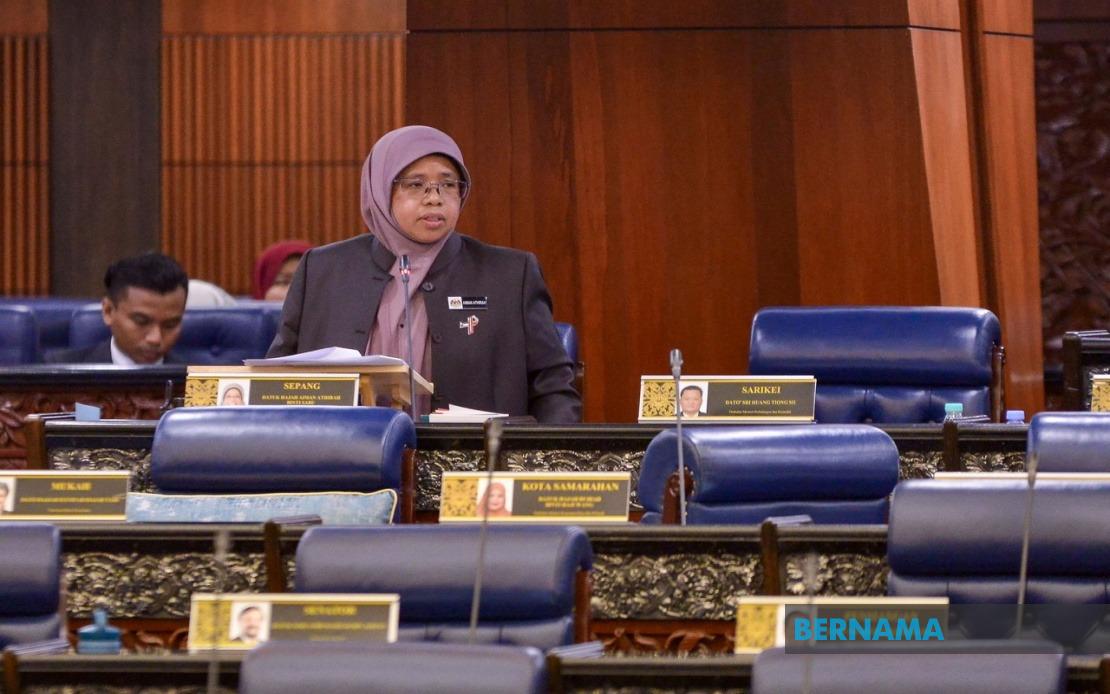
The Malaysian government is taking a more strategic approach to housing development by leveraging comprehensive data analytics to align construction with genuine population needs rather than speculative building. Deputy Housing and Local Government Minister Datuk Aiman Athirah Sabu outlined this shift in Parliament, emphasizing that the evidence-based methodology draws insights from multiple authoritative sources including the Department of Statistics Malaysia, the National Property Information Centre, and the Malaysian Urban Observatory to create targeted housing solutions across different localities.
The data-driven approach addresses a persistent challenge that has plagued Malaysia's property sector for years: the disconnect between what gets built and what people can actually afford or need. By analyzing statistics at both state and district levels, planners can now determine not only how many homes should be constructed but also what types of housing units will suit specific communities. This granular analysis helps prevent the wasteful cycle of overbuilding in certain areas while housing shortages persist elsewhere, a pattern that has contributed significantly to Malaysia's affordability crisis.
Central to this new framework is the National Affordable Housing Council, which operates under the Prime Minister's leadership and coordinates policy implementation across federal and state governments. This institutional structure represents recognition that housing challenges cannot be solved through ad-hoc interventions alone; instead, they require sustained coordination among multiple levels of government and alignment of incentives. The council's mandate includes monitoring how initiatives translate into actual housing units reaching Malaysian families and addressing systemic obstacles that obstruct progress.
One of the government's most visible accomplishments under this strategy has been the revival of troubled projects that had stalled or been abandoned. The Special Task Force established in December 2022 specifically to tackle delayed, sick, and abandoned private housing initiatives has orchestrated the recovery of 1,615 projects containing approximately 190,422 housing units. These projects, representing a gross development value of RM150.8 billion, were previously leaving homebuyers in limbo and eroding confidence in the residential market. The successful revival of these schemes demonstrates that many projects need not be written off entirely; rather, strategic intervention and better coordination can restore them.
The government is also finalizing the National Housing Policy 2026-2035, which promises a more responsive pricing framework for affordable housing. Rather than applying fixed price definitions nationwide, the new policy will calibrate affordability thresholds according to local economic conditions and income levels. This localized approach acknowledges that a home price considered affordable in Petaling Jaya differs substantially from what constitutes affordability in Kelantan or Sabah, yet previous policies often treated housing affordability as a uniform national benchmark.
To operationalize this localized pricing strategy, the Housing and Local Government Ministry is currently mapping affordable housing costs using the latest household income data disaggregated by state and district from the 2024 Household Income and Basic Amenities Survey. This detailed mapping ensures that policy targets remain grounded in actual purchasing power rather than theoretical assumptions. For Malaysian families struggling with escalating property prices, this signals a recognition that affordability must be measured against what real households actually earn in their respective regions.
Beyond pricing mechanisms, the government acknowledges that true housing affordability extends beyond the purchase price itself. First-time homebuyers face substantial additional expenses for renovations, furnishings, and related costs that often prove as burdensome as the mortgage itself. Through the Housing Credit Guarantee Scheme, the government now provides mortgage guarantees up to 120 percent of a property's value, with the additional 20 percent component specifically earmarked for renovation expenses and related outlays. This expanded guarantee structure recognizes the reality that homeownership involves costs beyond the initial property transaction.
The financing dimension addresses a critical constraint that has historically locked lower-income Malaysians out of homeownership. By reducing lenders' perceived risk through government guarantees, the scheme theoretically enables buyers with less substantial down payments to access credit. For Southeast Asia's largest Muslim-majority nation, where many households have been excluded from conventional banking products for religious reasons, expanding guarantee coverage also potentially increases access to Islamic financing products without requiring borrowers to absorb disproportionate risk premiums.
These interlocking initiatives represent a departure from Malaysia's earlier approach to housing policy, which often emphasized quantity over quality or affordability. The previous model generated numerous empty units, unfinished projects, and price inflation that progressively distanced homeownership from average earning households. By contrast, the current strategy prioritizes alignment between construction and demonstrable demand, between pricing and local incomes, and between project ambition and completion capacity.
For Malaysian homebuyers and aspiring property owners, these reforms should eventually translate into greater transparency about housing availability, more realistic pricing relative to their circumstances, and reduced risk of purchasing units in projects destined for abandonment. For policymakers across Southeast Asia grappling with similar housing crises, Malaysia's turn toward data-driven planning offers a potential template for escaping cycles of uncontrolled speculation and affordability deterioration. The real test, however, lies in consistent implementation over the 2026-2035 period and whether the mechanisms prove sufficient to outpace demographic pressures and rising construction costs that continue to erode housing accessibility for ordinary Malaysians.

