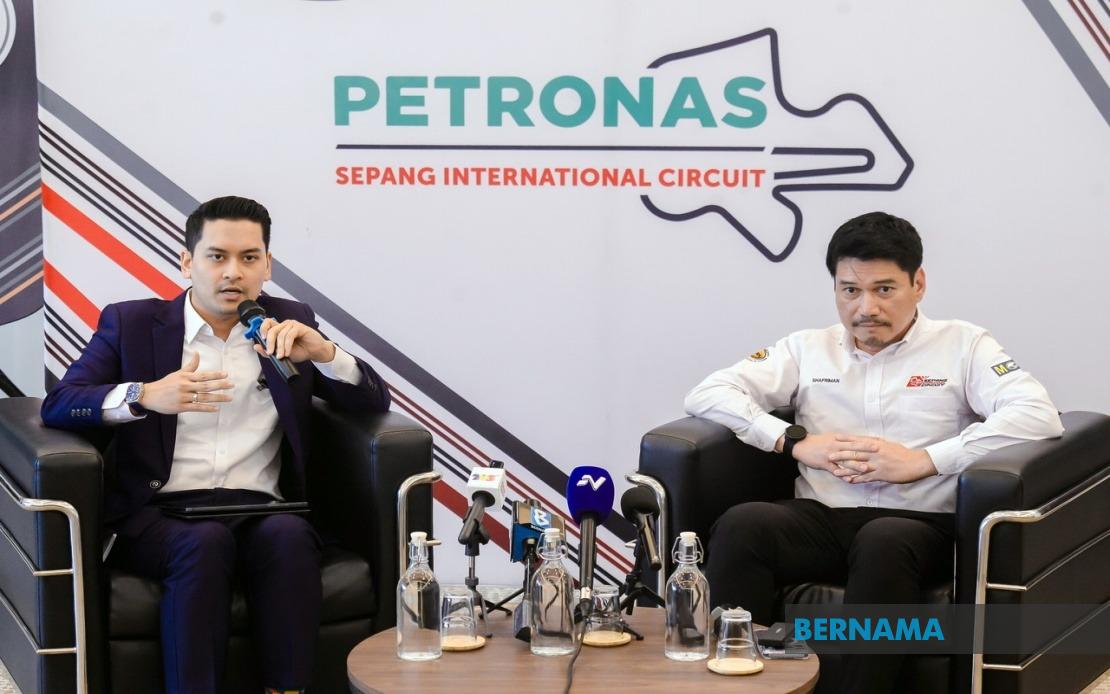
Malaysia has committed to hosting the Motorcycle Grand Prix until 2031 following government approval of a contract extension announced at the Sepang International Circuit. Youth and Sports Minister Dr Mohammed Taufiq Johari revealed that the new agreement, commencing in 2026, underscores the administration's determination to entrench the country as a premier global motorsport destination. The decision moves beyond simple event renewal, representing a calculated policy to maintain Malaysia's competitive standing in an increasingly crowded international motorsports arena.
The extended tenure builds upon the nation's existing MotoGP footprint, which has evolved substantially over three decades. Malaysia first introduced the championship to Southeast Asia in 1991 before transitioning to the purpose-built Sepang International Circuit in 1999, establishing the venue as the region's premier motorsport facility. This longevity demonstrates both the circuit's operational excellence and the event's significance within Malaysia's sports and tourism infrastructure—a position the government aims to solidify through 2031.
Dr Mohammed Taufiq framed the arrangement as integral to broader economic strategy rather than sporting indulgence. The 2024 edition delivered an economic footprint of approximately RM694 million, substantially benefiting hospitality, tourism, transport and SME sectors. The event created more than 4,400 employment opportunities during the racing season, offering temporary and permanent jobs across ticketing, catering, accommodation and logistics operations. Critically, the initial data indicates a return on investment ratio of 6.3 times—meaning every ringgit invested yielded substantial multiplier effects throughout Malaysia's economy.
Beyond immediate financial metrics, the minister emphasised MotoGP's role in developing the domestic motorsport industry. The Malaysian Motorsport Development programme has established a structured pathway for aspiring riders, producing talents including Hakim Danish and Qabil Irfan, both competing successfully at international level. This talent pipeline demonstrates how world-class events can catalyse broader participation and technical expertise within the country, creating career pathways that extend far beyond the annual race weekend.
The contract extension arrives amid Malaysia's wider strategic positioning as Southeast Asia's motorsport capital. Sepang International Circuit hosts multiple racing categories annually and serves as a testing facility for international teams. The MotoGP event specifically attracts global media attention, manufacturers and sponsors, elevating Malaysia's profile and attracting overseas visitors who inject spending into local economies. The tourism multiplier effect—where international visitors extend stays, dine in local restaurants and shop in surrounding communities—amplifies the direct economic impact of the three-day racing event.
For regional context, Malaysia's MotoGP commitment represents a counterweight to competing Southeast Asian motorsport developments. Thailand hosts Formula 1 aspirations through street racing concepts, while other nations invest in alternative racing formats. By securing MotoGP continuity, Malaysia reinforces its motorsport credentials and protects against erosion of investor confidence or infrastructure utilisation. The five-year horizon provides certainty for circuit management, hospitality operators and tourism boards in planning capacity expansion and facility improvements.
The government's emphasis on structural economic benefits reflects contemporary sports policy thinking that extends beyond spectator entertainment. Professional motorsport generates intellectual property associated with vehicle technology, attracting research and development partnerships. The annual MotoGP calendar positioning also influences global sponsorship allocation decisions, with brands choosing to activate marketing campaigns around marquee international events. Malaysia's retention of this status preserves privileged access to multinational motorsport investment and promotional spending.
Cabinet approval signals whole-of-government commitment, suggesting coordination between youth and sports, tourism, commerce and finance portfolios. Such alignment indicates serious intent to maximise ancillary benefits—from visa processing efficiency for international visitors to transport infrastructure optimisation during event periods. The ministerial framing emphasises national asset status, positioning MotoGP as strategic infrastructure rather than discretionary entertainment spending, thereby justifying continued public investment.
Looking forward, the 2026-2031 window presents opportunities for Sepang International Circuit to enhance facilities and experiences. International motorsport venues increasingly compete on hospitality quality, fan engagement technology and sustainability credentials. Malaysia could leverage the extended contract period to implement infrastructure upgrades—improved seating, hospitality facilities, or environmental initiatives—that distinguish Sepang and attract premium-paying spectators.
The extension also provides stability for peripheral industries dependent on MotoGP's calendar certainty. Hotel operators, restaurants, ground transportation services and retail businesses plan marketing campaigns and staffing decisions based on confirmed event schedules. Five-year visibility enables these stakeholders to invest confidently in capacity expansion, training programmes and inventory management.
For Malaysian sports diplomacy, sustaining this premier motorsport platform enhances national standing within international sporting bodies and commercial circles. MotoGP brings government leaders, corporate executives and media decision-makers to Malaysia annually, creating networking opportunities and positive country association. These soft-power dimensions, though difficult to quantify economically, strengthen Malaysia's competitive positioning as a regional investment and tourism destination.
The contract extension reflects confidence in Malaysia's ability to manage complex international sporting events to world standards. Successive successful editions have built reputation and operational credibility, making renewal less contentious than initial selection. This track record becomes valuable as Malaysia competes for other premium international events and endeavours to position itself as Southeast Asia's preferred venues destination.

