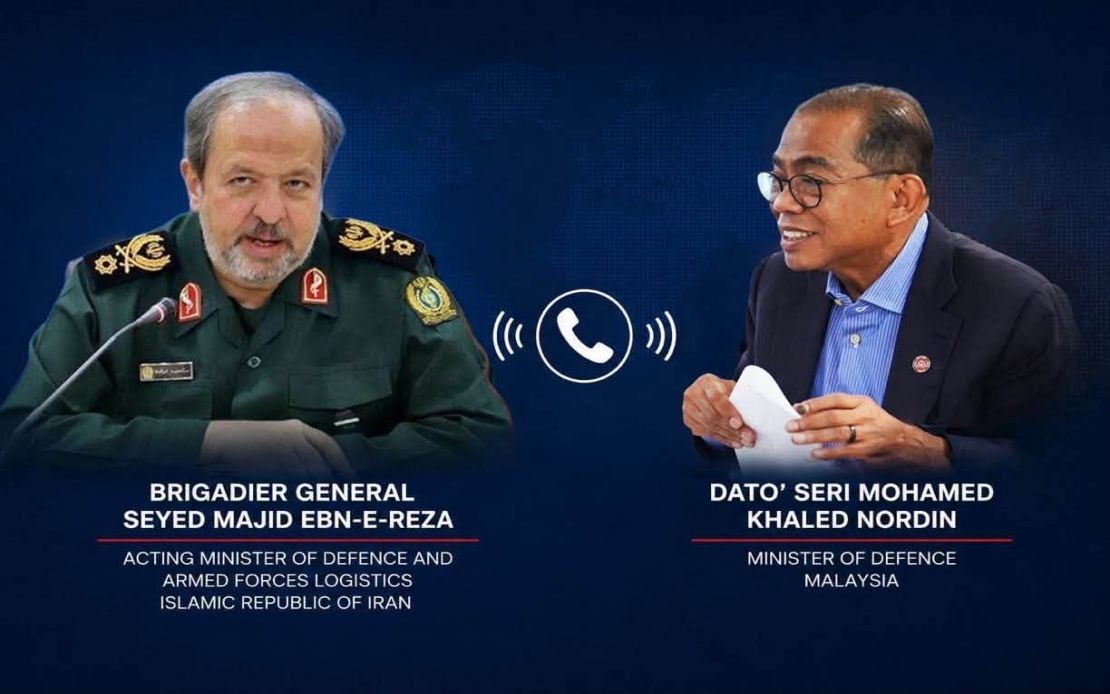
Malaysia has signalled its intention to deepen defence and military ties with Iran, reflecting a broader strategic alignment between the two Islamic nations. Defence Minister Datuk Seri Mohamed Khaled Nordin conveyed this position during a recent telephone discussion with Iran's Acting Minister of Defence and Armed Forces Logistics, Brigadier General Seyed Majid Ebn-e-Reza, underscoring Kuala Lumpur's willingness to move beyond diplomatic pleasantries towards more concrete security arrangements.
The centrepiece of this expanding partnership would be the formalisation of a Memorandum of Understanding on defence cooperation. Such an agreement would provide an institutional framework for military-to-military engagement, potentially encompassing joint exercises, technology sharing, personnel exchanges, and coordinated maritime security operations. For Malaysia, which maintains a significant naval presence in the Strait of Malacca and faces its own regional security challenges, deepening ties with a major regional military power carries both strategic and diplomatic weight.
A particularly symbolic gesture involves Iran's planned participation in the Langkawi International Maritime and Aerospace Exhibition (LIMA) next year. The biennial event has traditionally showcased defence equipment and fostered military partnerships among participating nations. Iranian attendance would represent both a diplomatic breakthrough and a practical platform for exploring expanded defence cooperation beyond conventional bilateral channels. This move signals Malaysia's intent to facilitate Iran's deeper integration into Southeast Asian security dialogue, despite broader Western sanctions and regional tensions.
The Defence Minister's comments also revealed Malaysia's underlying concern for regional stability and maritime security. He specifically highlighted the critical importance of safeguarding the Strait of Hormuz, one of the world's most strategically vital shipping lanes through which roughly one-third of global seaborne trade passes. Malaysia's emphasis on maintaining freedom of navigation in this chokepoint reflects legitimate concerns about potential disruptions to regional commerce and energy supplies, issues that directly affect Malaysian economic interests and the broader ASEAN community.
Kuala Lumpur's diplomatic outreach to Tehran must be understood within the context of the broader West Asian conflict. Datuk Seri Mohamed Khaled conveyed Malaysia's formal condolences for Iranian losses, including military personnel and civilians affected by the ongoing regional tensions. This gesture, while appearing symbolic, carries weight in demonstrating Malaysia's sympathies and its positioning as a voice for de-escalation rather than confrontation. It aligns with Malaysia's long-standing principle of supporting peaceful resolution of international disputes through dialogue rather than military means.
Malaysia's emphasis on ceasefire maintenance and diplomatic solutions underscores the country's commitment to conflict prevention and mediation. By publicly articulating support for dialogue-based approaches to West Asian tensions, Malaysia positions itself as a potential neutral broker and advocate for regional peace. This diplomatic posture has become increasingly important as Southeast Asian nations seek to maintain balanced relationships across great power divides without becoming entangled in larger geopolitical conflicts.
The statement regarding Iran's independently developed defence capabilities represents implicit recognition of Tehran's technological sophistication and military modernisation efforts. For Malaysia, which has invested heavily in upgrading its own defence infrastructure, understanding Iranian defence innovations holds practical value. Potential areas of cooperation could include naval technologies, aerospace capabilities, or cyber defence systems, though specific details remain undisclosed pending formal MoU negotiations.
Malaysia's acknowledgement of Iran's cooperation and "good treatment" in facilitating safe passage during the West Asian conflict speaks to practical security concerns affecting Malaysian personnel and assets operating in the region. This reference suggests Malaysia has had direct interactions requiring diplomatic support from Iranian authorities, underscoring the real-world stakes of bilateral relations beyond abstract strategic considerations.
The timing of this defence overture carries significance within Malaysia's broader foreign policy framework. As the country navigates complex relationships with Western allies, China, and other regional powers, expanding ties with Iran demonstrates Kuala Lumpur's commitment to maintaining autonomous foreign policy decision-making. This approach aligns with Malaysia's historical non-aligned stance and its emphasis on maintaining equidistant relationships across competing power blocs.
For Southeast Asia more broadly, Malaysia's initiative reflects a growing recognition that regional nations cannot remain passive observers of West Asian developments. The outcome of conflicts and diplomatic processes in that region directly impacts Southeast Asian security, trade, and energy security. By engaging Iran constructively through defence partnerships and maritime security dialogues, Malaysia potentially positions itself and the broader ASEAN community as stakeholders in regional stability rather than passive recipients of great power decisions.
The proposed defence MoU also carries implications for Malaysia's role within ASEAN. As the bloc works to establish itself as a central platform for regional security dialogue, bilateral defence agreements with major powers strengthen ASEAN members' individual positions while creating precedents for deeper institutional engagement. Malaysia's approach could influence how other Southeast Asian nations calibrate their own relationships with Iran and other regional actors.
Looking forward, the success of Malaysia-Iran defence cooperation will largely depend on how political conditions in the broader region evolve. International sanctions, domestic political changes, and developments in the West Asian conflict all carry potential to accelerate or constrain defence ties. For Malaysian policymakers, the challenge lies in balancing strategic partnership with Iran against maintaining constructive relationships with Western allies and other regional powers—a diplomatic balancing act that defines contemporary Southeast Asian security strategy.

