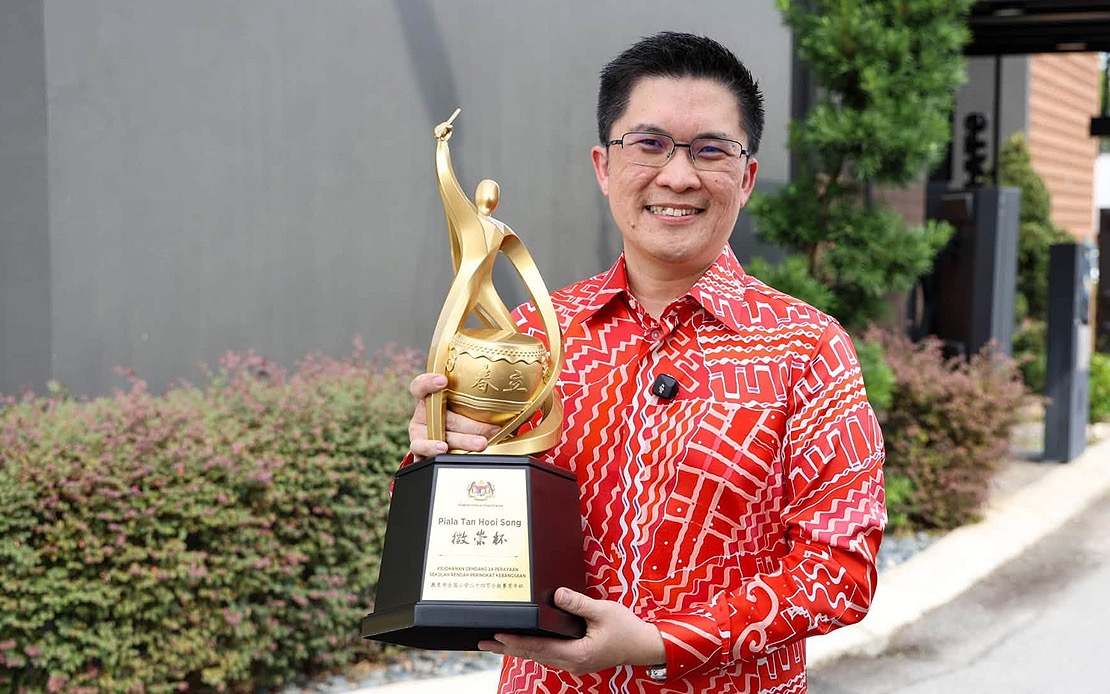
Malaysia's Education Ministry is taking a significant step to preserve one of the nation's distinctive cultural traditions by submitting an application to the United Nations Educational, Scientific and Cultural Organisation (UNESCO) for Gendang 24 Perayaan to be recognised as a world-class cultural heritage. Deputy Education Minister Wong Kah Woh announced the initiative at the closing ceremony of the National Primary Schools Gendang 24 Finals Competition at Stadium Indera Mulia in Ipoh, describing the bid as a cornerstone of the ministry's long-term vision for safeguarding and promoting the art form among younger generations.
The push for international recognition reflects growing awareness of how globalisation and shifting cultural preferences pose ongoing challenges to traditional art forms across Southeast Asia. Gendang 24 Perayaan, which originated in Malaysia in 1988 through the creative vision of cultural pioneers the late Tan Hooi Song and Tan Chai Puan, represents a distinctly Malaysian expression of percussion music that blends contemporary performance styles with deeply rooted cultural values. The art form gained domestic recognition as Intangible National Heritage in 2009, validating its importance within the national cultural fabric.
Wong's May discussions with his ministry team laid the groundwork for the UNESCO application strategy, marking a deliberate escalation in efforts to elevate Gendang 24 Perayaan onto the international stage. UNESCO's Intangible Cultural Heritage lists carry substantial symbolic weight and can unlock funding, research partnerships, and global visibility—resources that many traditional art custodians in developing nations depend on to sustain programmes. For Malaysia, securing such designation would underscore the country's contribution to world cultural diversity and potentially boost cultural tourism linked to traditional performances.
The education system has emerged as the primary vehicle for ensuring continuity of the tradition. The Ministry of Education has implemented a Train the Trainers programme designed to equip school educators with the knowledge and technical skills required to teach Gendang 24 Perayaan in classroom settings. This approach sidesteps reliance on hereditary transmission—often fragile in modern urban societies—and instead embeds the art form within formal institutional structures where it reaches cohorts of students systematically. By positioning Gendang 24 Perayaan as part of the school curriculum, the ministry significantly expands its accessibility and ensures exposure to children who might otherwise have limited exposure to traditional cultural practices.
The scale of student participation demonstrates the strategy's early success. The inaugural National Primary Schools Gendang 24 Finals Competition brought together 16 elite teams composed of 417 primary school students from across the country, showcasing both the depth of technical competence developing within the younger generation and the breadth of schools now incorporating the art into their co-curricular offerings. This competitive structure creates incentives for schools to invest in training programmes and students to commit serious effort to mastery, generating a self-sustaining ecosystem of cultural practitioners.
The trajectory of Gendang 24 Perayaan over the past four decades reveals how Malaysian cultural initiatives can scale and adapt. Beginning with only a handful of school teams three and a half decades ago, the art form has expanded to hundreds of schools nationwide, indicating genuine grassroots enthusiasm rather than top-down imposition. This organic growth suggests the tradition resonates authentically with contemporary Malaysians and fulfils a cultural need, rather than existing as a relic maintained primarily for heritage tourism or political symbolism.
Organisational partnerships have proven essential to this expansion. The current competition was jointly organised by the Sports, Co-curricular and Arts Division of the Ministry of Education and the Malaysia Gendang 24 Perayaan Association, with Yayasan Sime Darby serving as principal sponsor. Such collaborations distribute the institutional and financial burden across public agencies and private sector entities, a model that has become increasingly necessary as governments face budget constraints. Corporate involvement also signals to the business community that cultural preservation aligns with corporate social responsibility objectives.
The UNESCO application process itself carries implications beyond a simple yes-or-no designation. The vetting process requires detailed documentation of the art form's history, current practitioners, transmission methods, and social significance—work that may itself contribute to scholarly understanding of how Malaysian cultural traditions evolve and adapt. Additionally, the formal application process generates momentum among stakeholders, encouraging the Malaysia Gendang 24 Perayaan Association and schools to strengthen their institutional practices and documentation standards in anticipation of international scrutiny.
For Malaysia and other Southeast Asian nations grappling with cultural preservation in an interconnected world, the Gendang 24 Perayaan case study offers valuable lessons. Integrating traditional practices into mainstream education, securing diverse funding sources, building formal institutional structures, and pursuing international recognition create multiple reinforcing mechanisms that can sustain cultural traditions through generational transitions. Conversely, overreliance on any single mechanism—whether government funding, corporate sponsorship, or international prestige—leaves heritage vulnerable to disruption.
The initiative also reflects Malaysia's broader cultural diplomacy strategy. Securing UNESCO recognition for Gendang 24 Perayaan would position the country as a custodian and practitioner of living cultural traditions valued on the world stage, enhancing national soft power and distinguishing Malaysian cultural contributions within regional and global conversations. This stands in contrast to approaches that treat heritage purely as static museum artefacts; instead, the Education Ministry's strategy treats Gendang 24 Perayaan as a living, evolving practice capable of engaging contemporary youth and meeting modern performance contexts.
The success of this endeavour will likely depend on how effectively the ministry and its partners document the tradition's contemporary relevance to young Malaysians. UNESCO increasingly evaluates nominations not only on historical significance but on demonstrated community participation and sustainability of transmission practices. The substantial enrolment of primary school students in training and competition suggests these conditions are being met, positioning Malaysia favourably for recognition. As the application moves through UNESCO's evaluation process, Malaysian educators and cultural practitioners will be watching closely to see whether international institutional validation translates into expanded resources and opportunities for deepening Gendang 24 Perayaan's roots in Malaysian society.

