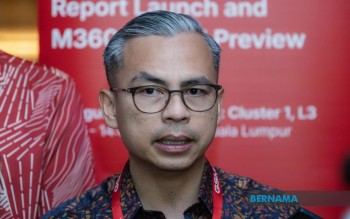
Kuala Lumpur has secured the honour of hosting M360 ASEAN 2026 on September 9 and 10, a milestone that Communications Minister Datuk Seri Fahmi Fadzil says will elevate Malaysia's standing in telecommunications, artificial intelligence, and regional connectivity. The selection marks a significant endorsement of Malaysia's technological capabilities and strategic importance within Southeast Asia, with the event serving as a platform to showcase the nation's digital ambitions to a continental audience.
The distinction carries particular weight because this represents the inaugural staging of M360 ASEAN—organised by the GSM Association—anywhere within the bloc. Previous iterations of the M360 conference series have been held in other regions, but this is the first time ASEAN will be granted host status, underscoring the region's growing prominence in global technology discussions. For Malaysia specifically, the event arrives at a moment when the country is actively positioning itself as a regional innovation and digital excellence hub.
Industry players, technology vendors, subject-matter experts, investors from venture capital and institutional backgrounds, academics, and government policymakers from across ASEAN will converge on Kuala Lumpur for the two-day gathering. This convergence of stakeholders from diverse sectors creates an environment where collaborative approaches to regional digital transformation can take root. The breadth of attendance ensures that discussions encompass not only commercial considerations but also regulatory frameworks, research directions, and long-term strategic positioning.
One of the central aims of M360 ASEAN 2026 will be to chart the collective direction that ASEAN nations should pursue in developing their digital sectors. This coordination mechanism is increasingly vital as individual member states pursue different technological pathways. The platform will enable candid exchanges about expanding digital infrastructure across the region—particularly addressing connectivity gaps that persist in rural and less developed areas. Equally important will be deliberations on responsible artificial intelligence deployment, a topic that commands heightened attention as AI systems become embedded in critical services from banking to healthcare.
According to analysis presented by GSMA, the economic stakes of digital development in Asia-Pacific are enormous. Mobile technologies and services are projected to contribute US$1.4 trillion to the regional economy by 2030, representing a 40 per cent expansion from the current US$1 trillion baseline. This trajectory illustrates why governments and enterprises throughout ASEAN are intensifying their focus on digital sectors. For Malaysia, participating as the hosting nation rather than merely as an attendee strengthens its ability to influence how this growth is structured and distributed.
The GSMA report identifies four converging priorities that will shape ASEAN's digital future and consequently dominate conversations at M360 ASEAN 2026. The rapid proliferation and integration of artificial intelligence represents the first concern—a technology that promises productivity gains but also poses risks around job displacement, algorithmic bias, and data security. This challenge requires urgent policy attention from governments across the region, many of whom are still developing coherent AI governance frameworks.
The second priority centres on declining digital trust—a phenomenon reflected in growing public scepticism about data privacy, cybersecurity vulnerabilities, and the concentration of digital power among technology giants. ASEAN societies are becoming increasingly concerned about their personal information, the security of digital transactions, and the reliability of online platforms. Rebuilding and maintaining trust in digital systems will require coordinated efforts between public and private sectors, involving transparent practices, robust security standards, and stronger consumer protections.
The third priority involves strengthening digital infrastructure resilience. Recent regional disruptions—from submarine cable cuts to data centre outages—have exposed vulnerabilities in ASEAN's connectivity backbone. As economies become more dependent on uninterrupted digital access, infrastructure redundancy and disaster recovery capabilities have moved from technical considerations to strategic imperatives. Building more robust systems requires substantial capital investment and cross-border cooperation to ensure that critical infrastructure withstands natural disasters, cyberattacks, and unforeseen crises.
The fourth priority addresses digital sovereignty—an increasingly prominent concern as ASEAN nations seek greater autonomy over their data, digital infrastructure, and technological decision-making. Countries are reluctant to remain dependent on foreign providers for critical digital services and are exploring localized alternatives, data residency requirements, and regional technological development. This sovereignty imperative sometimes creates tension with the efficiency and innovation benefits that global technology platforms provide, requiring careful policy calibration.
For Malaysia, hosting M360 ASEAN 2026 offers tangible advantages beyond prestige. The event will amplify the country's voice in setting regional technology standards and development priorities. Malaysian technology companies, research institutions, and startups gain exposure to regional and international decision-makers. Policymakers can benchmark Malaysia's digital initiatives against peer nations and identify areas requiring acceleration or reform. Additionally, the event generates economic activity through accommodation, dining, and transport services while projecting an image of Malaysia as a sophisticated, technology-forward destination.
The timing of the conference reflects broader geopolitical and economic shifts reshaping Southeast Asia. As regional economies increasingly recognize that digital transformation determines competitiveness, coordinating digital strategies becomes essential. ASEAN's traditional consensus-based approach to regional cooperation finds natural expression through forums like M360 ASEAN, where member states can align policies without surrendering national autonomy. Malaysia's selection as inaugural host signals confidence in the country's capacity to convene such high-level discussions and manage the logistics required.
Looking forward, the success of M360 ASEAN 2026 will be measured partly by whether concrete outcomes emerge from the discussions—whether memoranda of understanding are signed, initiatives are launched, or policy recommendations gain traction among governments. The conference must transcend the typical pattern of industry conferences where insights are shared but implementation remains elusive. For Malaysia, demonstrating leadership in translating these discussions into tangible regional cooperation mechanisms will reinforce its position as a trusted convener within ASEAN.

