When geopolitical tensions between the United States and Iran threatened shipping lanes through the Strait of Hormuz, global markets braced for shocks that typically reverberate across Southeast Asia. The conflict disrupted international supplies of crude oil—a critical input for manufacturing fertilisers—alongside plastic materials essential for food packaging. Malaysian consumers, watching reports of supply uncertainties and energy cost surges worldwide, understandably worried about food scarcity and escalating supermarket bills. Yet Malaysia's domestic food prices have remained remarkably resilient, a stability that reflects deliberate government intervention rather than good fortune alone.
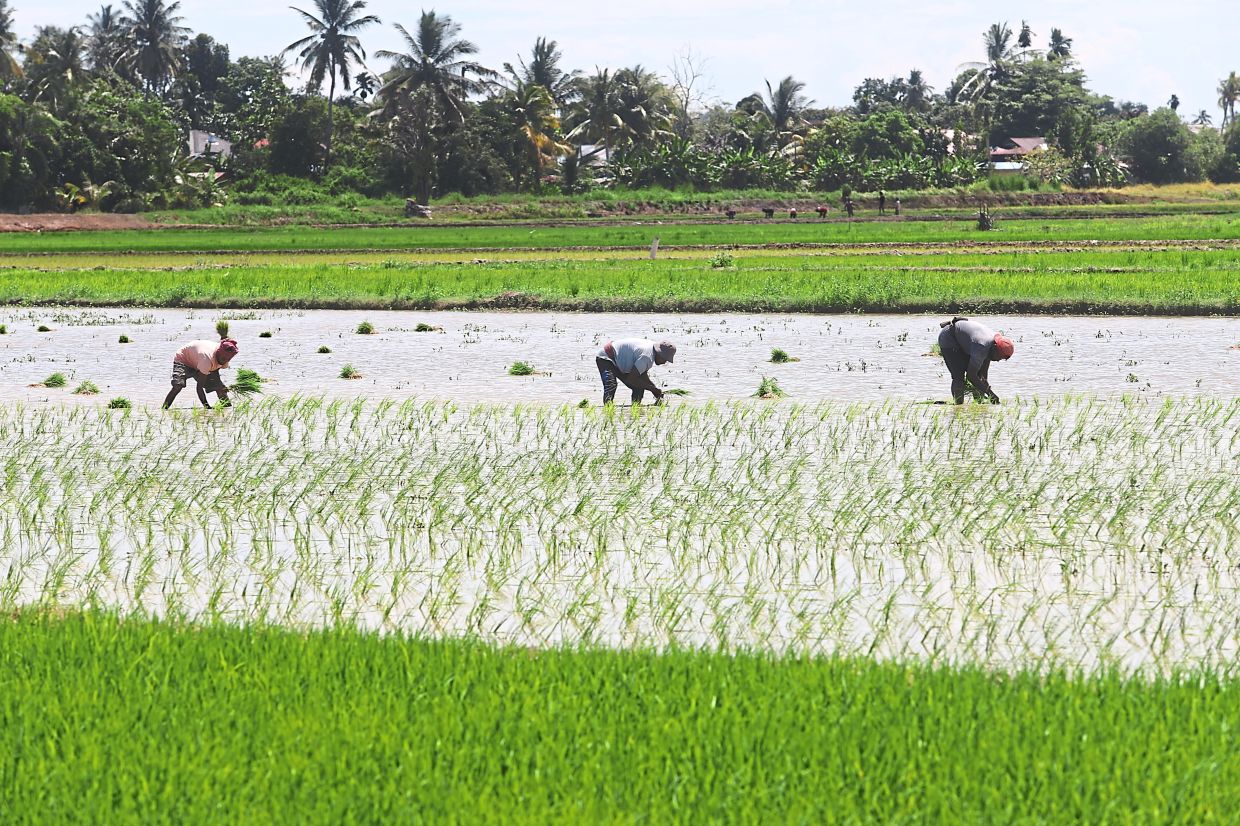
The foundation of this price stability rests on a carefully calibrated suite of agricultural support measures that substantially reduce farmers' production costs. In April, the Ministry of Finance announced a significant expansion of Budi Agri-Komoditi, the diesel subsidy programme for agricultural machinery, lifting it from RM300 to RM400 monthly—a 33 percent increase designed to cushion farmers against volatile fuel expenditures. Simultaneously, the ploughing incentive scheme (Insentif Pembajakan kepada Pesawah, IPKP) nearly doubled to RM300 per hectare for the 2026 planting season, up from RM160. Farmers in Peninsular Malaysia also received an advance payment of RM200 per hectare to facilitate land preparation before planting, a timing mechanism that addresses cash flow constraints that often plague smallholders during the pre-season phase.
According to Professor Datuk Dr Nasir Shamsudin, an agricultural economist at Putra Business School and emeritus professor at Universiti Putra Malaysia's Faculty of Agriculture, these initiatives operate as precisely targeted interventions rather than blanket price controls. The monthly RM400 allocation helps offset both rising diesel expenses and transportation costs that ripple through farming communities, while the expanded ploughing incentive meaningfully strengthens farmers' working capital before they commit resources to cultivation. By reducing the immediate financial burden at a critical juncture in the agricultural cycle, these programmes sustain output levels and insulate consumers from the production-cost pressures that would otherwise migrate to retail counters.
The effectiveness of this approach is evident in Malaysia's food inflation trajectory. In May 2026, food price increases measured just 1.4 percent year-on-year, a marginal rise that contrasts sharply with the volatility seen in other economies facing similar global supply chain headwinds. This modest inflation reflects the cost savings transmitting through the supply chain, demonstrating that targeted fiscal interventions can meaningfully shape price outcomes when designed with sectoral specificity. Prime Minister Datuk Seri Anwar Ibrahim acknowledged in a Facebook post that rising living costs and global economic uncertainty had prompted the government to extend support, framing smallholders and entrepreneurs as the nation's economic backbone worthy of protection.
Beyond these immediate relief measures, the government has embedded substantial longer-term structural support within Budget 2026. An allocation of RM2.62 billion funds various subsidy and assistance programmes spanning paddy price stabilisation, crop cultivation incentives, fertiliser provision, seed distribution, and production bonuses. The fishing sector received RM160 million earmarked for living allowances reaching RM300 monthly alongside catch incentives, while RM55 million supports local fruit growers through targeted incentives and infrastructure development for specialised crops including pineapples, soursop, water apple, and pomelo. This diversified approach recognises that food security extends across multiple production systems, not merely rice or staple grains.
Prof Nasir emphasises that the full benefits of government subsidies depend crucially on how effectively these cost reductions translate throughout the supply chain. Short-term relief, he cautions, can mask structural vulnerabilities that ultimately require deeper systemic reform. Sustainable price stability will increasingly hinge on productivity improvements and supply chain efficiency gains rather than perpetual subsidy expansion. The government must therefore invest in mechanisation, precision agriculture technologies, climate-adaptive crop varieties, sophisticated irrigation infrastructure, post-harvest facilities, and integrated logistics networks. These investments permanently reduce per-unit production costs, enhance farmer competitiveness, and gradually diminish reliance on ongoing government transfers.
The government has reassured the public regarding inventory adequacy across essential categories. Supplies of chicken, eggs, fish, milk, and fresh fruits are reportedly sufficient for at least one month, a buffer that provides modest protection against acute disruptions. Rice reserves, including strategic government stockpiles, can sustain the population for five to six months, a more comfortable position reflecting paddy production's relative success. Fertiliser stocks cover approximately nine months of domestic demand, though this supply is itself dependent on global imports and price dynamics. These inventory levels represent conscious policy design rather than accidental accumulation.
A significant emerging initiative involves shifting the fertiliser paradigm away from chemical inputs toward organic alternatives and biological products. The Agriculture and Food Security Ministry is promoting organic fertilisers, biofertilisers, and Effective Microorganisms products to reduce exposure to volatile global chemical fertiliser markets. A RM5.5 million project authorised under the 13th Malaysia Plan aims to catalyse circular economy development by converting agricultural and food waste streams into valuable compost and organic fertilisers. This represents a longer-term philosophical shift toward reducing external dependency while creating value from waste—an approach particularly valuable for an economy vulnerable to import price shocks.
Yet Malaysia confronts a fundamental structural constraint that no subsidy programme can fully resolve: the nation remains a substantial net food importer operating within a global system that periodically experiences supply disruptions and price volatility. The country's agri-food trade deficit reached RM39.34 billion in 2024, reflecting ingrained reliance on external supplies for rice, wheat, dairy products, and meat. Even agricultural sectors appearing self-sufficient domestically often depend heavily on imported inputs—seeds, chemicals, equipment, and technology. This import dependence inevitably exposes Malaysian consumers and producers to external price shocks whenever global logistics networks falter or commodity markets surge.
Addressing this vulnerability requires multi-generational commitment to domestic production expansion and input security. Malaysia must simultaneously reduce food import dependency and strengthen resilience within sectors already producing domestically. Prof Nasir notes that substantial productivity gains, greater mechanisation, improved irrigation efficiency, and crop diversification represent the realistic pathway toward reduced vulnerability. The current moment of relative price stability should be viewed as an opportunity to advance structural reform rather than merely celebrate temporary insulation from global turbulence.
The confluence of Middle East tensions with Malaysia's agricultural support expansion demonstrates how geopolitical shocks can paradoxically accelerate policy attention to food security. The government's substantial Budget 2026 commitments were largely conceived before February's escalation, yet they have fortuitously strengthened the sector's resilience against precisely the kinds of external shocks now materialising. This alignment between policy timing and global circumstances offers Malaysia a window to move beyond crisis response toward systematic building of productive capacity, supply chain robustness, and strategic food reserves that can weather future disruptions with greater confidence.

