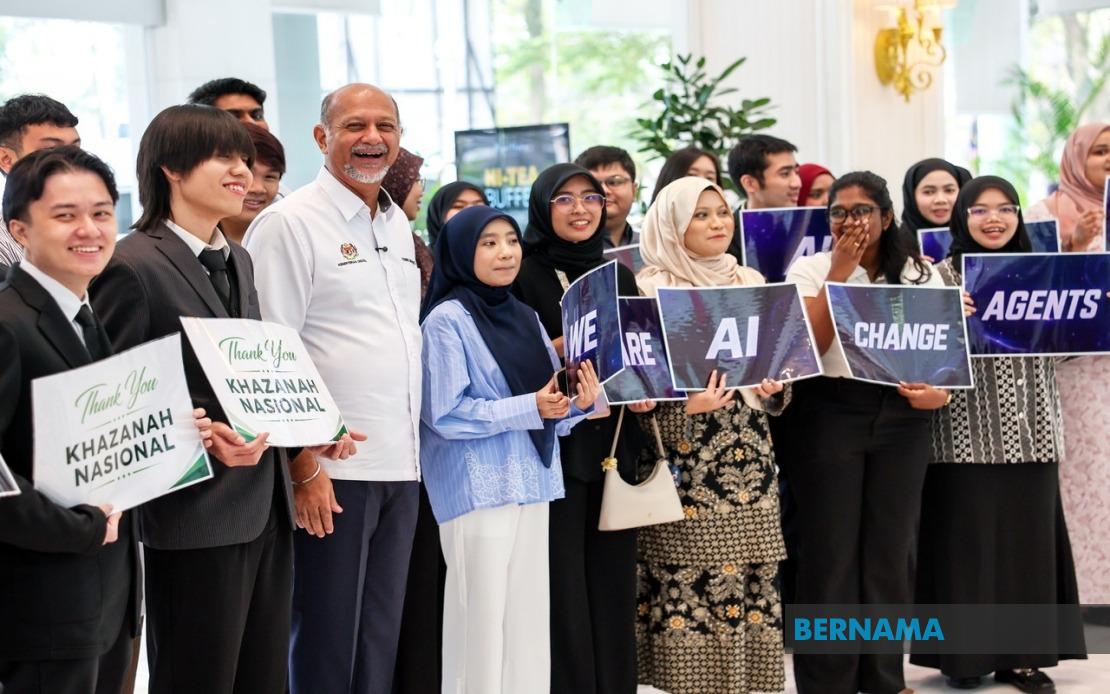
Malaysia is fundamentally shifting its approach to technology governance, moving away from a reactive model that addresses problems only after they emerge towards a forward-looking framework designed to anticipate and prevent challenges before they materialise. Digital Minister Gobind Singh Deo articulated this strategic pivot while opening the AI-Ready Malaysia Summit 2026 in Petaling Jaya, emphasising that the nation's technological aspirations require policymakers to work ahead of the curve rather than constantly playing catch-up.
The minister's remarks reflect growing recognition among Malaysian policymakers that the rapid evolution of artificial intelligence and other emerging technologies demands a fundamentally different governance mindset. Under the previous reactive model, the government would typically respond to technological disruptions by formulating policies, drafting legislation, and implementing enforcement measures only after problems had already materialised. This approach consumed valuable time and left citizens, businesses, and institutions vulnerable to unforeseen consequences. Gobind Singh Deo underscored that such a sluggish response mechanism is increasingly untenable in an era when technological change accelerates exponentially.
Central to Malaysia's new strategy is the establishment of AI Malaysia, a dedicated institutional body tasked with stewarding the nation's ambition to become a genuinely AI-capable economy by 2030. Rather than simply monitoring developments in artificial intelligence, AI Malaysia functions as an anticipatory body designed to identify emerging risks and opportunities across the technology landscape. By working proactively, the institution aims to ensure that policy solutions, regulatory frameworks, and implementation mechanisms are already in place before new challenges crystallise into widespread problems. This represents a meaningful departure from conventional Malaysian governance practice and signals a maturation in how the government conceptualises its role in technology stewardship.
The proactive framework encompasses the deliberate formulation of Bills and legislative measures that serve as preparedness instruments, allowing the nation to respond swiftly and decisively when technological disruptions occur. Rather than scrambling to devise legal responses during a crisis, Gobind Singh Deo explained that the government is now laying groundwork through forward-thinking legislation designed to address anticipated challenges across multiple sectors. This approach mirrors best practices observed in jurisdictions such as Singapore and South Korea, which have similarly invested in anticipatory governance frameworks for emerging technologies.
AI Malaysia's strategic focus encompasses six key economic sectors identified as particularly vulnerable to technological disruption or positioned to benefit significantly from AI adoption. These include agriculture, transport, and healthcare, each representing domains where artificial intelligence can deliver transformative impacts. For Malaysia's agricultural sector, AI applications could enhance crop yields and optimise resource management across its palm oil, rubber, and food production industries. In transport, artificial intelligence promises to revolutionise logistics, autonomous vehicle deployment, and traffic management systems. Healthcare applications span diagnostic imaging, drug discovery, and personalised medicine, potentially improving outcomes for millions of Malaysians while reducing costs.
Beyond institutional frameworks and sectoral focus, the digital minister emphasised that technological advancement remains meaningless unless accompanied by genuine public engagement and understanding. Gobind Singh Deo articulated a three-pronged strategy addressing awareness, accessibility, and adoption of AI technologies among Malaysian society. The awareness component requires sustained educational efforts to help citizens comprehend what artificial intelligence actually entails and how it can meaningfully improve their lives. Many Malaysians remain unclear about AI's practical applications, viewing it as either science fiction or a distant phenomenon irrelevant to their daily existence. Cultivating genuine understanding is therefore prerequisite to broader technology adoption.
Accessibility represents the second critical pillar, requiring the government to ensure that AI tools and platforms are available across all socioeconomic segments of Malaysian society. The minister stressed that technology ecosystems must not be prohibitively expensive or technically demanding, lest they reinforce existing inequalities and leave lower-income communities further behind. This reflects a crucial tension in Malaysia's development narrative: the danger that rapid AI adoption could exacerbate existing digital divides between urban and rural areas, wealthy and less-affluent communities, and different educational backgrounds. Addressing this requires deliberate government intervention to subsidise access, provide training, and ensure infrastructure reaches underserved populations.
The adoption dimension acknowledges that merely making technology available proves insufficient if implementation remains optional or lacks compelling incentives. Gobind Singh Deo's framing suggests that once Malaysians understand AI's benefits and can access appropriate tools at reasonable cost, adoption should follow organically. However, this somewhat optimistic assessment may overlook structural barriers including cultural resistance, skills gaps, and entrenched institutional practices that often impede technology adoption even when awareness and access exist. Malaysia's experience with previous digital initiatives suggests that moving from availability to genuine, sustained adoption requires more sophisticated change management strategies than the minister's remarks explicitly acknowledged.
The government's proactive posture carries significant implications for Malaysia's competitive positioning within Southeast Asia and globally. Neighbouring Singapore has long positioned itself as the region's technology hub through anticipatory governance and substantial public investment in digital infrastructure. Thailand, Indonesia, and Vietnam are increasingly competitive in AI development and deployment. By adopting a genuinely proactive framework, Malaysia signals serious intent to differentiate itself as a jurisdiction where artificial intelligence can flourish within a supportive, forward-thinking regulatory environment. This could attract multinational technology companies and nurture homegrown AI innovation, generating employment and economic value across the innovation ecosystem.
However, realising this vision requires more than rhetorical commitment. The Malaysian government must allocate adequate budgetary resources to AI Malaysia and related initiatives, attract top talent to policymaking roles, and demonstrate sufficient political continuity to implement sophisticated technological strategies across multiple electoral cycles. Previous Malaysian technology initiatives have sometimes faltered due to underfunding, leadership turnover, or competing political priorities. Additionally, genuine proactivity demands incorporating perspectives from diverse stakeholders including technologists, academics, business leaders, civil society organisations, and affected communities. Technocratic policymaking disconnected from public input may produce technically sophisticated but politically unstable frameworks.
The shift towards proactive governance also raises questions about appropriate safeguards and democratic accountability. When governments anticipate problems and formulate solutions in advance, the risk exists that policymakers may overreach or impose restrictions premature to full societal understanding of implications. Malaysia must balance the legitimate desire for anticipatory governance with transparency about assumptions embedded in policy formulation and mechanisms for public scrutiny. International examples of technology regulation demonstrate that premature or excessively restrictive frameworks can stifle beneficial innovation while failing to prevent actual harms.
Looking ahead, Gobind Singh Deo's vision of proactive AI governance represents a genuinely ambitious undertaking for Malaysia. Success requires sustained coordination across government, meaningful engagement with private and academic sectors, and willingness to adapt frameworks as technology and societal understanding evolve. The government's establishment of AI Malaysia and public commitment to anticipatory policymaking constitute important first steps. However, the true test will emerge through consistent implementation, adequate resource allocation, and demonstrated ability to translate high-level strategic vision into concrete policies that genuinely benefit Malaysian citizens and workers while managing risks responsibly.

