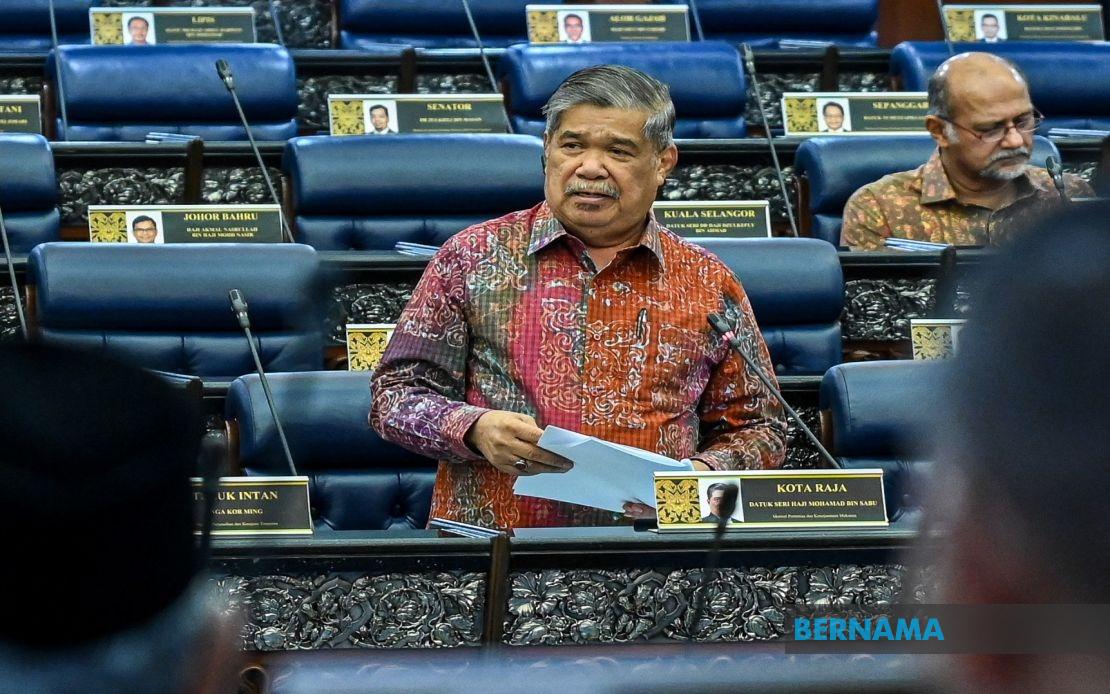
The Malaysian government is mounting a multi-pronged response to shield the nation's food supply from the looming threat of Super El Niño, with Agriculture and Food Security Minister Datuk Seri Mohamad Sabu unveiling an integrated strategy spanning water conservation, crop research, farmer support, and market expansion. Speaking during Ministerial Question Time in Parliament on July 16, Mohamad outlined a comprehensive defensive framework designed to buffer both domestic food security and the livelihoods of rural communities most vulnerable to prolonged drought conditions expected under El Niño weather patterns.
At the operational core of Malaysia's response lies a sophisticated water management system that extends far beyond conventional reservoir monitoring. The government is deploying real-time surveillance of water levels across dams and catchment areas throughout the peninsula, enabling rapid response to emerging shortages. More significantly, the strategy hinges on deploying advanced irrigation infrastructure—including smart monitoring systems and drip irrigation technology—to dramatically reduce agricultural water consumption while maintaining yield levels. These technological interventions represent a fundamental shift from traditional flood-based irrigation methods that consume vastly more water, positioning Malaysia's rice sector for greater resilience against climate volatility that scientists increasingly view as the new normal rather than an anomaly.
Recognising that technological fixes alone cannot address the severity of drought stress on traditional rice varieties, the Malaysian Agricultural Research and Development Institute (MARDI) has been tasked with accelerating the development of crop strains specifically bred for drought tolerance. This research initiative, which received particular emphasis during the Prime Minister's Food Security Meeting, reflects a longer-term adaptation strategy acknowledging that climate patterns are shifting permanently. The development of genetically improved rice varieties capable of sustaining productivity with reduced water availability represents an investment in the sector's structural resilience, complemented by ongoing cloud seeding operations when meteorological conditions permit artificial precipitation enhancement.
The financial architecture supporting beleaguered farmers demonstrates the government's willingness to deploy substantial resources as an immediate buffer against crop losses. In the initial phase of drought relief, RM45.24 million was channeled to 8,224 rice farmers beginning in 2024, establishing the foundational framework for compensation schemes. More impressively, through June 30, 2026, cumulative assistance reached RM38.53 million distributed across 55,058 rice farmers, addressing agricultural damage across 16,933 hectares of affected land concentrated in the northern and eastern regions of Peninsular Malaysia, where rice cultivation forms the economic backbone of rural communities. This capital injection directly addresses the income volatility that drives rural-to-urban migration and rural unemployment, making disaster assistance as much a social stability mechanism as an agricultural policy.
Beyond reactive assistance, the government is pursuing structural expansion of domestic rice production capacity through strategic agricultural development in geographically advantaged states. Large-scale rice field development initiatives in Sarawak, Pahang, and other jurisdictions aim to incrementally reduce Malaysia's dependence on imported rice by expanding the productive base. This diversification across multiple states serves a dual purpose: it reduces geographic concentration of production risk by spreading it across regions with varying microclimates and water availability patterns. Simultaneously, the government is promoting controlled environment agriculture—encompassing greenhouse and vertical farming technologies—to isolate crop production from weather variability, a particularly promising approach for high-value produce and emerging protein sources in the livestock sector.
These agricultural interventions operate within a broader food security architecture anchored by strategic rice stockpiling. Malaysia maintains approximately six months of rice supply in governmental reserves, providing a substantial cushion against supply shocks from either climatic disruption of domestic production or international market volatility. The government complements this buffer stock with continuous import arrangements calibrated to replace depleted reserves and meet domestic consumption growth, ensuring that El Niño-induced local production shortfalls do not translate into consumer price spikes or availability constraints. For Malaysian households already experiencing cost-of-living pressures, this strategic reserve mechanism functions as an essential price stabilizer and food availability guarantor.
The government's response extends beyond rice into broader agricultural markets where weather disruption poses equally acute challenges. The durian export sector, currently experiencing severe price depression due to oversupply driven by favourable growing conditions in preceding seasons, requires market development strategies to absorb excess production and stabilize farmer incomes. Government initiatives to expand durian exports to China represent a commercial counterweight to El Niño-related production constraints elsewhere in the agricultural portfolio. The untapped potential in Chinese second and third-tier cities offers considerable absorption capacity for Malaysian premium fruit exports, a market development opportunity that negotiations on logistics and customs clearance protocols could unlock. By diversifying export markets and expanding market reach within existing destination countries, Malaysia can reduce its vulnerability to price-depressing domestic oversupply while maintaining farmer income stability.
The comprehensiveness of Malaysia's El Niño response reflects a sophisticated understanding that food security operates across multiple dimensions requiring coordinated intervention. Water infrastructure investment addresses the physical availability of the essential agricultural input most threatened by El Niño. Crop research targets the biological capacity of cultivated varieties to survive stress conditions. Financial assistance protects farmer incomes during the transition toward greater climate resilience. Production expansion reduces import dependence and geographic concentration of supply risk. Export market development transforms potential commodity gluts into revenue-generating opportunities. Strategic reserves provide temporal buffering against supply shocks. Taken together, these initiatives constitute an adaptive framework acknowledging both immediate climate threats and longer-term shifts in precipitation patterns that will characterise Malaysian agriculture for decades.
The implementation of these measures carries significant implications for Southeast Asian regional food security architecture. Malaysia's capacity to maintain stable domestic rice supply despite climate stress reduces potential demand for regional rice imports, moderating upward pressure on regional prices that would otherwise burden food-import-dependent nations throughout Southeast Asia. Conversely, the expansion of Malaysian agricultural export capacity through market development creates commercial opportunities for other regional exporters by expanding regional consumer demand. The technology transfer embedded in MARDI's crop research and the smart irrigation systems deployment establishes demonstration effects that can inform agricultural adaptation strategies throughout the region, creating positive externalities extending beyond Malaysia's borders.
For Malaysian stakeholders across the agricultural value chain, the government's El Niño strategy signals a sustained commitment to sector stability despite climate challenges. Farmers receive both immediate income protection through disaster assistance and longer-term support through crop research yielding superior varieties. Agribusiness enterprises benefit from infrastructure investments enabling precision agriculture and climate-controlled production. Consumers are insulated from food price shocks through strategic reserve policy and supply diversification. Exporters gain government backing for market development initiatives potentially offsetting domestic production challenges through international sales. This alignment of interests across diverse stakeholders—farmers, businesses, consumers, and exporters—suggests that Malaysia's food security framework, while challenged by El Niño conditions, possesses institutional maturity and financial resources to navigate the immediate crisis while building systemic resilience against future climate variability.

