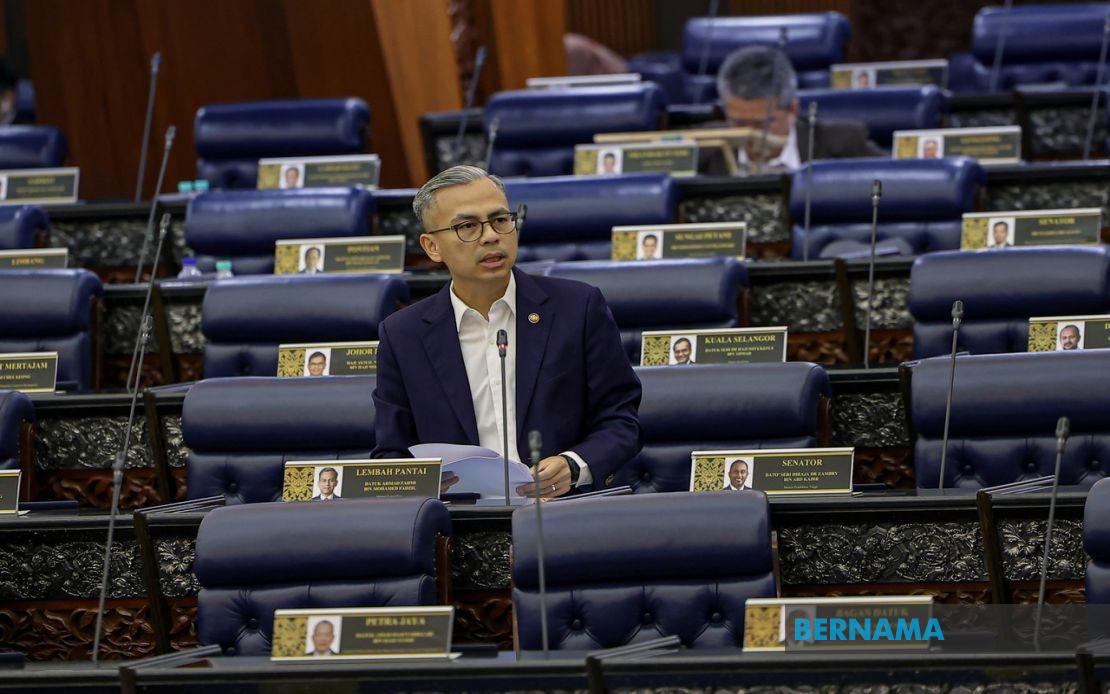
Communications Minister Datuk Seri Fahmi Fadzil tabled the Communications and Multimedia (Amendment) Bill 2026 in parliament on July 13, marking a significant step toward integrating national security objectives into Malaysia's telecommunications regulatory regime. The legislation seeks to amend the foundational Communications and Multimedia Act 1998, updating provisions that have governed the sector for nearly three decades. The Bill will proceed to second reading during the current parliamentary session, indicating swift movement through the legislative process.
The proposed amendments centre on modifications to Section 202 of the principal Act, introducing two new subsections that fundamentally reshape how universal service obligations can be deployed. The framework moves beyond traditional connectivity mandates—ensuring affordable access across urban and rural areas—to encompass security-focused infrastructure and service initiatives. This represents a deliberate policy shift acknowledging that modern telecommunications networks underpin critical national functions ranging from government communications to emergency response systems and financial networks.
Under the amended provisions, the Communications Minister gains explicit authority to instruct the Malaysian Communications and Multimedia Commission (MCMC) to direct communications service providers toward national universal service initiatives deemed necessary in the interest of national security. This discretionary power represents a meaningful expansion of the Minister's existing remit, tying MCMC's regulatory decisions to security determinations made outside the traditional telecom regulatory framework. The new subsection 202(1B) specifies that the National Security Council, operating under the National Security Council Act 2016, will make authoritative determinations on whether initiatives qualify as security-related, establishing a clear hierarchy of decision-making authority.
The Bill contemplates a broad spectrum of potential measures falling under the national security umbrella. These encompass encouraging the installation of critical network facilities—presumably encompassing backbone infrastructure, data centres, and strategic nodes—alongside the provision of network or application services across vulnerable regions or communities. The language intentionally remains capacious, allowing future administrations to expand the definition of security-driven universal service provision as technological and geopolitical circumstances evolve. This flexibility reflects policymakers' recognition that telecom infrastructure threats—from foreign interference to espionage to cyberattacks—continue shifting rapidly.
For Malaysia and the broader Southeast Asian region, this legislative approach reflects a global trend toward treating telecommunications infrastructure as essential national security infrastructure rather than purely commercial services. Countries including Australia, India, and European Union members have similarly embedded security considerations into telecom regulation, particularly regarding 5G deployment and submarine cable routing. Malaysia's move aligns with this emerging consensus while maintaining the fiction that universal service obligations—historically conceived as social policy ensuring disadvantaged populations receive affordable connectivity—remain the statutory vehicle for advancing these objectives.
The amendment explicitly requires that any national universal service initiative remain consistent with the principal Act's original objects, providing a legal guardrail against security mandates completely overriding the Act's consumer protection, competition, and accessibility purposes. This constitutional safeguard suggests legislators recognised potential tensions between security imperatives and traditional regulatory goals. However, the substantive effectiveness of this constraint remains uncertain, particularly if the National Security Council interprets threats expansively or classifies determinations as non-justiciable.
The Bill's second component, contained in Subclause 2(b), grants the Minister regulatory-making authority under Section 16 of the principal Act specifically regarding national universal service initiatives. This provision, seemingly technical, carries significant implications. It enables the Minister to prescribe implementation details—which service providers bear obligations, what infrastructure targets apply, timeline requirements, and cost-recovery mechanisms—without requiring fresh parliamentary legislation for each iteration. The delegation of rule-making power to the executive branch accelerates policy implementation but potentially limits parliamentary oversight of operational security decisions.
A noteworthy aspect of the Bill's formulation is its explicit statement that implementation will not generate additional government expenditure. This positioning suggests that obligations will be imposed directly on licensed communications service providers, requiring them to fund security-oriented infrastructure or service enhancements from operating revenues. This approach mirrors universal service frameworks globally, where carriers absorb costs as regulatory obligations rather than government subsidies. However, the statement warrants scrutiny—if security mandates prove costly, providers may eventually seek cost-recovery mechanisms, triggering broader tariff impacts on Malaysian consumers.
The timing of this legislation carries significance beyond its technical provisions. Malaysia faces evolving security challenges including cybersecurity threats to critical infrastructure, concerns regarding foreign investment and control over strategic networks, and vulnerabilities in rural and underserved areas potentially susceptible to illicit communications usage. The amendment enables government to respond proactively by mandating infrastructure upgrades and service extensions framed as security necessities rather than merely commercial or social priorities. This framing potentially simplifies legislative navigation compared to seeking dedicated security infrastructure funding.
Regional implications merit consideration. Southeast Asian nations, including Malaysia, depend heavily on submarine cables connecting to global internet infrastructure, and face pressures from major powers seeking preferential access to telecom networks. Embedding security mandates into universal service frameworks represents a mechanism for strengthening domestic network resilience and reducing dependency on foreign infrastructure operators. Other ASEAN members may observe Malaysia's legislative approach and consider similar measures, potentially catalysing regional norm-setting around telecom security governance.
Stakeholders including service providers, technology companies, and civil society organisations will likely scrutinise the Bill during parliamentary debate and subsequent implementation. Carriers may seek clarity on cost allocation and timeline expectations, while technology firms wonder whether security classifications might restrict their services or require localisation. Privacy advocates may examine whether security mandates, without robust oversight mechanisms, could facilitate surveillance creep beyond legitimate national defence objectives. These tensions will shape how the legislation ultimately functions in practice.
The amendment represents a sophisticated regulatory evolution for Malaysia's telecom sector. Rather than establishing entirely new security-focused agencies or licensing regimes, the government leverages the existing MCMC framework and universal service mechanism, minimising institutional disruption while expanding policy flexibility. This approach reflects pragmatic lawmaking, repurposing established regulatory infrastructure to address contemporary security challenges. However, its success depends critically on implementation decisions regarding which initiatives qualify as security-driven and how effectively obligations can be balanced against commercial viability and consumer interests.

