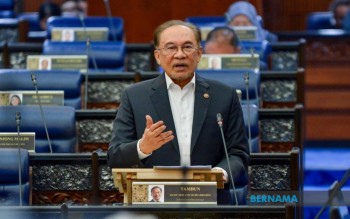
Prime Minister Datuk Seri Anwar Ibrahim has outlined how the developing Malaysia-Thailand Border Economic Zone will fundamentally reshape trading patterns across the northern corridor and beyond, creating a significant conduit for Malaysian goods into the broader Indochina region. Speaking in parliament, Anwar explained that the initiative represents a strategic breakthrough in removing long-standing logistical obstacles that have constrained Malaysian exporters seeking to reach markets in Laos, Cambodia and Vietnam. The zone, jointly launched with Thailand's Prime Minister Anutin Charnvirakul in recent days, marks a culmination of negotiations that have persuaded Bangkok to relax its historically stringent customs requirements for goods transiting through Thai territory.
The announcement addresses a perennial frustration within Malaysia's export-oriented sectors. Fisheries and agricultural producers have struggled with Thai border procedures that, while ostensibly standard customs practice, effectively created friction costs that made regional trade less competitive. Anwar, who holds the finance portfolio alongside his prime ministerial role, stressed that the relaxation of these requirements would allow Malaysian products to flow through established customs channels without the supplementary delays and documentation burdens that previously characterised cross-border movement. This distinction—between formal customs procedures and their actual application—reflects the practical obstacles that regional traders encounter daily.
The geographic scope of the initiative extends beyond the initial joint launch sites of Sadao and Bukit Kayu Hitam. Rantau Panjang in Kelantan has been incorporated into the framework, with Anwar indicating that state government cooperation would accelerate development at this location. The inclusion of Rantau Panjang is particularly significant for Malaysia's east coast, where smaller ports and border communities have historically remained peripheral to major economic corridors. By integrating this northern Kelantan gateway into a formal bilateral economic zone, the initiative promises to distribute development benefits more equitably across border regions rather than concentrating activity in established hubs.
Malaysia and Thailand have long identified untapped potential in their bilateral trading relationship. Despite geographic proximity, cultural links, and complementary economic profiles, bilateral trade volumes have failed to reach levels commensurate with the two nations' economic capacity. Anwar's emphasis on realising this potential reflects recognition that institutional barriers—rather than market demand or product competitiveness—have constrained growth. The border economic zone mechanism directly addresses these institutional frictions by creating a dedicated framework for commerce that enjoys high-level political commitment from both governments.
The approach taken toward smaller enterprises and border communities signals a departure from traditional infrastructure-led development models that often benefit large corporations while marginalising local participants. Anwar outlined plans to prioritise small and medium-sized enterprises, job creation initiatives, and skills training programmes. This emphasis recognises that border regions frequently experience economic dislocation when major trade routes shift, and that sustained development requires genuine local participation rather than treating communities as mere geographic features through which commerce flows. The targeting of skills training is particularly noteworthy, suggesting recognition that economic opportunities require human capital development alongside physical infrastructure.
The role of the East Coast Rail Link in this economic strategy provides essential physical infrastructure supporting the zone's operation. The federal government has committed to extending this rail corridor to Rantau Panjang, fundamentally altering logistics patterns for goods moving through the northern corridor. During discussions with Thailand's Prime Minister, Anwar proposed extending this railway into Thai territory along the same route, creating a seamless transport corridor that would reduce transit times and costs for goods moving between Malaysia and Indochina markets. Such a cross-border rail extension would represent extraordinary progress in regional connectivity, transforming what have historically been separate national infrastructure systems into an integrated network.
The timing of this initiative carries geopolitical significance within Southeast Asia's evolving economic architecture. As regional supply chains reorganise following global disruptions and as countries seek alternatives to concentration in traditional trade corridors, border-based economic zones offer a mechanism for capturing transit commerce and value-added processing. For Malaysia, the zone positions the country as a gateway to Indochina while simultaneously accessing Thai infrastructure and markets. For Thailand, the arrangement provides access to Malaysian ports and establishes frameworks for deeper manufacturing integration. For Laos, Cambodia and Vietnam, the corridor offers alternative routes for international commerce that bypass traditional choke points.
The customs relaxation specifically targeting fisheries and agricultural products reflects sectoral priorities aligned with Malaysia's resource endowments and the dietary preferences of large populations in Indochina. These sectors employ significant numbers of Malaysians, particularly in rural areas and along the east coast. Facilitating their access to markets worth hundreds of millions of dollars annually could generate meaningful multiplier effects through related services, packaging, cold storage, and transportation sectors. The fisheries industry, in particular, has struggled with market access limitations that customs complexity exacerbates.
Implementation mechanisms will determine whether this initiative delivers its promised benefits. The involvement of state governments, particularly Kelantan, introduces variable governance into what could otherwise be a straightforward bilateral arrangement. Historical experience with border development projects suggests that coordination challenges often emerge between federal initiatives and state-level prerogatives. Anwar's specific mention of state government cooperation indicates awareness of these tensions and intention to address them proactively through consultation rather than imposition.
The broader context involves Malaysia's positioning within evolving Asia-Pacific trade arrangements. As megadeals such as the Regional Comprehensive Economic Partnership reshape regional commerce, bilateral and sub-regional arrangements like the border economic zone function as complementary mechanisms addressing specific geographic and sectoral challenges. The zone does not substitute for participation in major trade frameworks but rather enables specific communities and sectors to realise benefits that broader arrangements create.
For Malaysian small and medium enterprises, particularly those in border regions, the zone represents a concrete opportunity to access markets that were previously accessible only through expensive middlemen arrangements or not accessible at all. Success would validate the model and potentially inspire similar initiatives along other borders, establishing border economic zones as a standard development tool within Southeast Asia rather than an exceptional undertaking.
The initiative's success ultimately depends on political commitment enduring beyond initial announcement phases and on operational details being resolved through established procedures. The involvement of two prime ministers signals high-level attention, but sustained implementation requires bureaucratic alignment across multiple agencies in both countries. The commitment to extend rail infrastructure into Thailand indicates seriousness, yet such projects require extensive coordination and sustained funding. Malaysian observers will monitor progress carefully, as the initiative's outcomes will influence confidence in bilateral economic cooperation mechanisms more broadly.

