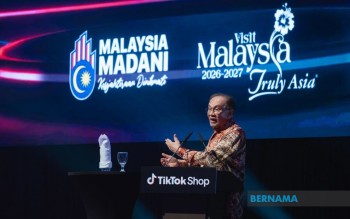
Malaysia is implementing a more rigorous investment review mechanism to filter out applicants whose operations fail to deliver meaningful economic returns or job creation for the country. Prime Minister Datuk Seri Anwar Ibrahim made this commitment at the TikTok Shop Summit 2026 in Kuala Lumpur, signalling a significant tightening of the investment approval process that had previously allowed marginal economic actors to establish operations within Malaysian borders.
The decision stems from alerts raised by the Ministry of Investment, Trade and Industry regarding a growing cohort of enterprises that have established themselves in Malaysia primarily to operate warehousing and transit hubs with virtually no local employment or value creation. These entities, according to MITI's findings, have essentially operated as pass-through operations without contributing meaningfully to the domestic economy or workforce. The Prime Minister indicated that the government has already begun halting such activities, but acknowledges the need for a more comprehensive review mechanism to prevent similar cases among future applicants.
Anwar's comments arrived in response to concerns raised during the summit about the proliferation of ultra-low-cost imported goods flooding Malaysian e-commerce platforms through cross-border players such as Temu and Pinduoduo. These platforms have created significant competitive headwinds for local retailers and domestic manufacturers, undercutting prices in ways that make it difficult for Malaysian businesses to maintain viable margins. The Prime Minister acknowledged Malaysia's identity as an open economy and free-trade nation, yet emphasized that openness should not come at the expense of systematic economic harm to local enterprises.
The government recognizes that digital commerce and online platforms have fundamentally altered how goods enter the Malaysian market, with traditional tariff and customs barriers becoming less effective at protecting domestic producers. However, this structural shift has created new vulnerabilities that existing regulatory frameworks were not designed to address. Anwar characterized some of these pricing practices as deliberate market-capture strategies that amount to dumping, wherein foreign sellers sacrifice short-term profitability to establish market dominance and eliminate local competitors.
A particularly concerning trend involves foreign operators registering entities under ostensibly Malaysian names—such as local coffee shop brands—while importing virtually all inventory from overseas. These operations exploit consumer assumptions about local provenance while providing zero benefit to the actual local communities or traditional businesses whose identities they appropriate. The Prime Minister cited specific examples of vendors selling imported coffee, tea, and biscuits under Malaysian business nomenclature, effectively deceiving consumers about the origin of products while circumventing any reasonable expectation that such enterprises would support domestic supply chains.
The Port Klang warehousing phenomenon illustrates another dimension of the problem. Large international investors have established substantial warehouse operations at Malaysia's principal port facility, yet these installations function as pure logistics nodes with no requirement to hire local workers, source local materials, or generate indirect employment through procurement activities. Such operations represent pure extractive economic activity—they utilize Malaysian infrastructure and location but contribute almost nothing to local prosperity or skill development. Enforcement officers have already begun taking corrective action against these arrangements, though Anwar's announcement suggests this effort will be systematized and expanded.
The investment screening tightening reflects growing recognition that mere capital inflow or increased transaction volume through Malaysian ports does not automatically translate into economic development. Developing economies frequently struggle with the distinction between gross economic activity and genuine value creation, and Malaysia appears determined to recalibrate its approach toward prioritizing substance over appearances. This reorientation aligns with broader concerns across Southeast Asia about ensuring that foreign investment serves domestic development objectives rather than simply extracting rents from market access.
For Malaysian small and medium enterprises and traditional retailers, this policy shift offers potential relief from predatory competition originating from overseas players operating under minimal cost structures and no local accountability. Local businesses have increasingly found themselves unable to compete on price alone against operations that utilize sophisticated logistics networks, exploit regulatory arbitrage, and operate with minimal local overhead. The government's intervention could help restore a more level competitive terrain by requiring that significant economic operators within Malaysia demonstrate concrete benefit to the local economy.
The policy also addresses a subtle but important form of regulatory arbitrage whereby international companies structure their Malaysian operations to minimize local obligations while maximizing the advantages of market access and geographic position. By insisting on genuine employment creation, local procurement, and measurable economic contribution, Malaysia is essentially establishing that market access carries reciprocal responsibilities. This principle extends beyond simple tariff or quota considerations into the deeper question of what obligations multinational enterprises should bear toward host-country development.
Implementing such screening will require MITI and related agencies to develop clearer criteria for assessing genuine economic contribution versus purely extractive operations. This will necessitate moving beyond simple metrics like capitalization or transaction volume toward more sophisticated measurements of local employment quality, skills transfer, supply-chain integration, and technology dissemination. The challenge lies in maintaining openness to legitimate foreign investment while excluding operations that essentially function as parasitic economic entities.
The timing of Anwar's announcement at the TikTok Shop Summit carries symbolic significance, occurring amid broader global and regional scrutiny of e-commerce platforms and their economic impacts. Malaysia is attempting to position itself as a nation that welcomes beneficial cross-border commerce while protecting its citizens and entrepreneurs from predatory market practices. This balanced approach—neither protectionist nor naively open—may serve as a model for other Southeast Asian nations grappling with similar tensions between trade liberalization and local economic protection.

