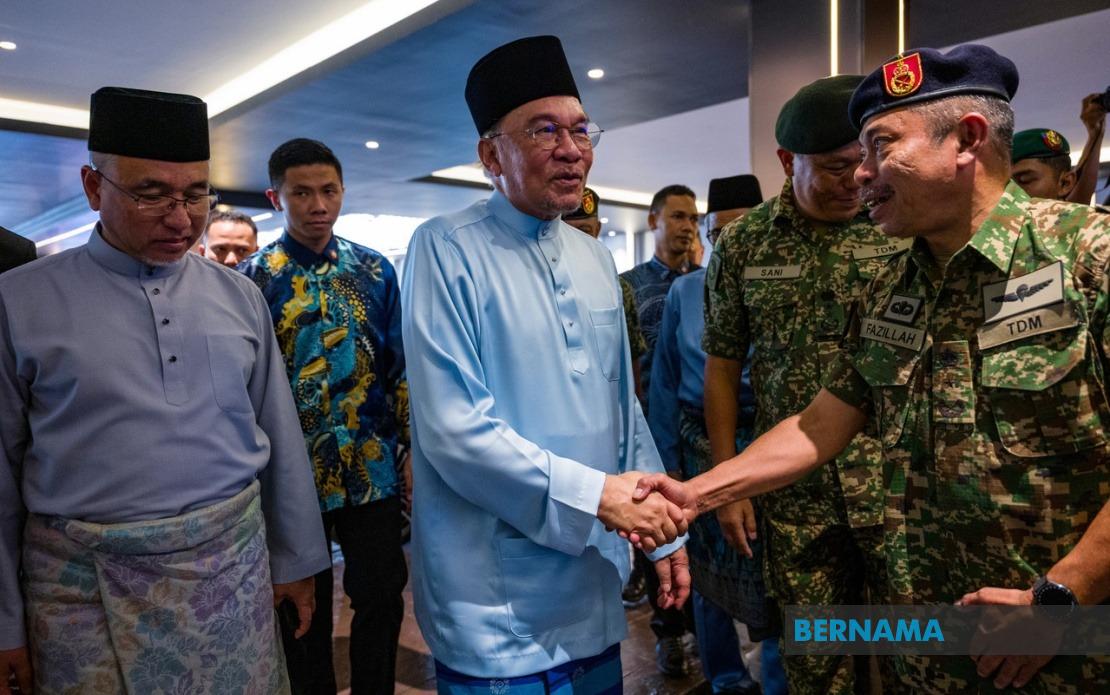
Malaysia's government has signalled a significant commitment to military modernisation by planning to increase the defence budget allocation under Budget 2027. Prime Minister Datuk Seri Anwar Ibrahim made the announcement at the Semarak Kenegaraan Programme with the Malaysian Armed Forces (MAF) at Terendak Camp in Melaka, underscoring the administration's determination to bolster the nation's primary line of defence during a period of evolving regional security challenges.
The decision to expand defence spending comes as part of a broader strategic initiative to elevate the armed forces' operational capabilities and equipment standards. Chief of Defence Force General Tan Sri Malek Razak Sulaiman welcomed the commitment, noting that the additional funds would be instrumental in advancing the MAF's development agenda and ensuring its personnel remain equipped to meet contemporary security demands. This move reflects a recognition within government circles that adequate funding is essential to maintain military readiness and deter potential threats in an increasingly dynamic geopolitical environment.
Beyond hardware and equipment acquisition, the enhanced budget allocation will prioritise the welfare infrastructure of military personnel and their families, a crucial element often overlooked in defence discussions. Anwar, who also holds the position of Finance Minister, specified that the increased spending would encompass tangible improvements such as renovated housing facilities, a new military hospital, and maintenance of essential services like water supply. These investments acknowledge that servicemen and women perform optimally when their families enjoy adequate living conditions and access to quality healthcare facilities.
The modernisation framework underpinning this budget increase is grounded in the MAF's Future Force strategic development plan, a comprehensive roadmap designed to transform the armed forces into a contemporary, integrated fighting force. This plan guides procurement decisions and operational restructuring, ensuring that financial allocations directly support well-defined modernisation objectives rather than scattered expenditures. By aligning budget increases with this strategic vision, the government signals that defence spending will be purposeful and outcomes-oriented.
Personnel welfare initiatives form a vital component of the budget enhancement, reflecting an understanding that military effectiveness depends significantly on servicemen's morale and job satisfaction. Improved housing, medical facilities, and utility services directly contribute to the quality of life of armed forces personnel, which in turn enhances their commitment to duty and reduces attrition rates. This holistic approach to defence spending recognises that investing in people is as important as investing in equipment.
In a related development, the government has agreed in principle to streamline the promotion process for both MAF and Royal Malaysia Police personnel, bringing it into alignment with other public service advancement schemes. This initiative addresses long-standing grievances about career progression in the uniformed services and signals a broader effort to make military service more attractive and professionally rewarding. Simplified promotion pathways can accelerate meritocratic advancement and improve retention of skilled personnel.
For Malaysia's defence posture, this budget commitment arrives at a strategically significant moment. Regional tensions, maritime security concerns, and the need to maintain sovereignty over vast territorial waters and airspace all underscore why adequate defence investment is essential. The MAF must be equipped to monitor and protect Malaysia's interests across diverse operational domains—land, sea, and air—while also participating in regional stability mechanisms and international peacekeeping efforts.
The modernisation agenda carries particular importance for Southeast Asian stability. A well-equipped and professionally managed Malaysian armed forces contributes to regional balance and reassures neighbouring countries about Malaysia's capacity to manage security challenges responsibly. As defence technologies evolve rapidly, countries in the region must invest continuously to avoid falling behind and to ensure they can respond effectively to new threats, from sophisticated maritime incursions to cyber warfare.
From an economic perspective, increased defence spending carries potential spin-off benefits for Malaysia's domestic defence industry and technology sectors. Modernisation programs often create opportunities for local contractors and companies to participate in equipment upgrades and infrastructure projects. This can stimulate technological advancement and create skilled employment in sectors aligned with Malaysia's economic diversification goals, particularly in high-value manufacturing and engineering services.
The government's approach also reflects a recognition that defence and security form the foundation upon which economic development and prosperity are built. Without adequate military capacity and readiness, national institutions become vulnerable to challenges that can destabilise the state and undermine investor confidence. By publicly committing to defence budget increases, Anwar's administration sends a signal to both domestic and international audiences that Malaysia takes its security obligations seriously.
The announcement at Terendak Camp carried symbolic weight beyond the budgetary figures themselves. The choice to make this commitment directly to serving personnel emphasised that the government's pledge was not merely a bureaucratic exercise but a sincere undertaking made in the presence of those who would directly benefit from improved resources and conditions. This approach builds institutional trust between political leadership and the uniformed services.
Looking ahead, the successful implementation of Budget 2027's defence provisions will require effective oversight and accountability mechanisms to ensure funds are deployed efficiently and achieve stated objectives. Parliament and oversight bodies will play a crucial role in scrutinising defence spending and ensuring that modernisation goals translate into tangible improvements in capability and readiness. The defence community will closely monitor how the increased allocation progresses from commitment to concrete outcomes.
Ultimately, the decision to elevate defence spending reflects a government that recognises security and military capability as strategic imperatives. As Malaysia navigates complex regional dynamics and safeguards its territorial integrity, the modernisation of the armed forces and improvement of personnel welfare represent investments not merely in defence hardware but in national resilience and stability.

