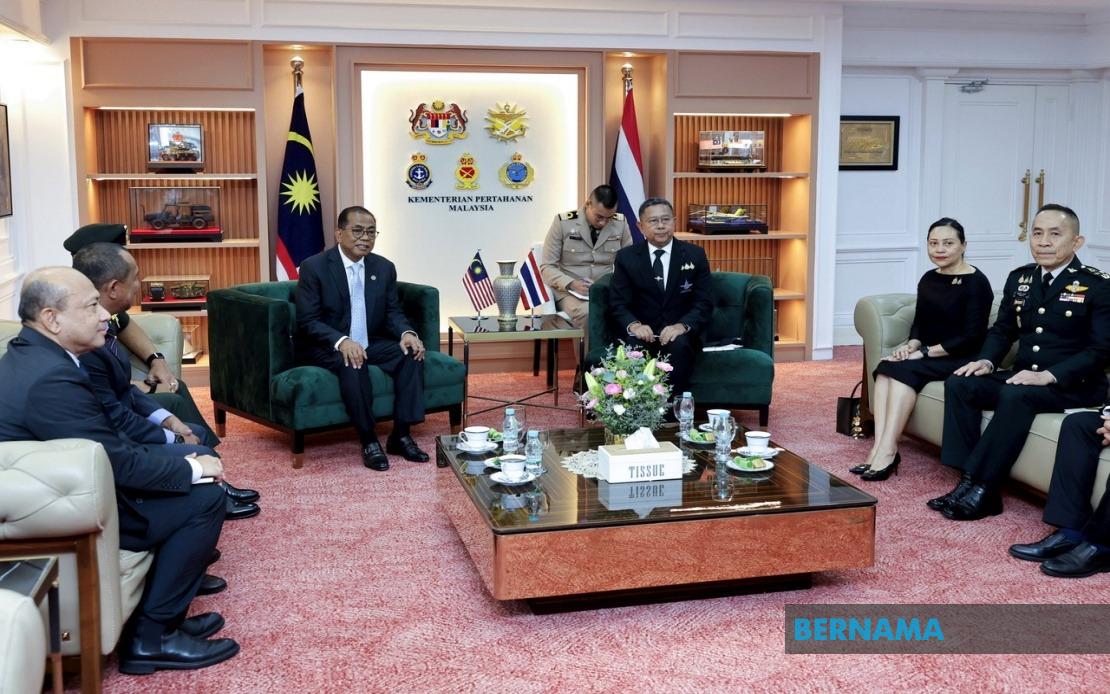
Malaysia has signalled its readiness to work in closer partnership with Thanut Suvarnananda, who recently took over as chief of Thailand's Peace Dialogue Panel, as both nations seek to consolidate gains in resolving the long-standing instability plaguing southern Thailand. The commitment was articulated by Malaysian Defence Minister Datuk Seri Mohamed Khaled Nordin during his meeting with visiting Thai Defence Minister Lieutenant General Adul Boonthumjaroen in Kuala Lumpur on July 14, underscoring the strategic importance Kuala Lumpur places on regional stability in its immediate neighbourhood.
The appointment of Thanut represents a significant development in Thailand's approach to the southern conflict, which has claimed thousands of lives over two decades and displaced communities across Yala, Pattani, and Narathiwat provinces. Malaysia's formal endorsement of this leadership change signals confidence in the trajectory of peace negotiations and reflects the intricate diplomatic choreography required when multiple stakeholders hold stakes in a complex regional dispute. By welcoming the new chief publicly, Malaysia positioned itself as a constructive partner invested in Thailand's success, a posture that carries weight given Kuala Lumpur's strategic location and influence in Southeast Asian diplomacy.
Malaysia's role in the peace process remains carefully circumscribed. Datuk Rabin Basir serves as Malaysia's designated facilitator for the Southern Thailand Peace Dialogue, a position that allows Kuala Lumpur to contribute meaningfully without overstepping into Thailand's domestic governance. Mohamed Khaled was explicit in distinguishing between Malaysia's facilitative responsibilities and Thailand's sovereign prerogatives, noting that military operations and internal security decisions remain entirely within Bangkok's domain. This calibration reflects a broader Southeast Asian principle of non-interference in internal affairs, particularly sensitive given the cross-border dimensions of the southern Thai conflict and the presence of Malaysian-connected communities in the region.
Beyond peace dialogue mechanisms, Malaysia and Thailand have identified smuggling and cross-border movement of destabilising elements as priority security concerns requiring immediate attention. The two countries agreed to intensify collaborative efforts through the Malaysia-Thailand General Border Committee, an institutional framework that has functioned for decades as the primary mechanism for addressing transnational challenges. This year's 57th GBC Meeting, to be hosted by Malaysia, will examine interconnected issues spanning border security protocols, coordinated military operations, economic development initiatives in peripheral areas, and disaster preparedness—reflecting the comprehensive nature of contemporary border management.
The bilateral defence relationship extends beyond counterinsurgency cooperation into broader strategic alignment. Malaysia and Thailand have committed to signing a Memorandum of Understanding in 2024 aimed at bolstering regional security architecture and fostering collaboration in domestic defence industry development. Such agreements serve multiple purposes: they institutionalise defence ties, create pathways for technology transfer and joint capability building, and signal to regional and international audiences that Southeast Asian nations are strengthening internal cohesion. For Malaysia's growing defence sector, partnerships with neighbouring nations offer export opportunities and innovation corridors.
The timing of these initiatives carries significance within the broader ASEAN context. Mohamed Khaled noted that the Malaysia-Thailand bilateral alignment ahead of the ASEAN Defence Ministers' Meeting and ADMM-Plus—both to be held in the Philippines—demonstrates how bilateral relationships feed into multilateral frameworks. By synchronising positions beforehand, Malaysia and Thailand enhance their ability to shape regional defence dialogues and ensure that Southeast Asian interests receive priority attention in discussions with major powers including the United States, China, India, and Japan.
Malaysia has additionally thrown its diplomatic weight behind Thailand's bilateral approach to its maritime boundary dispute with Cambodia, endorsing Bangkok's preference for dialogue within ASEAN frameworks emphasising peaceful resolution rather than external intervention. This position aligns with Malaysia's own maritime interests and reflects a consensus view that regional disputes should remain within ASEAN's problem-solving architecture. By referring the matter to the Philippines as incoming ASEAN Chair for 2026, Malaysia subtly positioned Manila as a potential honest broker, underscoring confidence in ASEAN's capacity to manage tensions internally.
The overarching strategy reflects Malaysia's delicate balancing act in regional security. As a nation sharing porous borders with Thailand and positioned adjacent to one of Southeast Asia's most volatile zones, Malaysia has compelling interests in southern Thai stability. Yet as a Muslim-majority nation with population ties to affected border regions, Malaysia must navigate sensitivities around the conflict's intercommunal dimensions. The emphasis on facilitating rather than directing reflects this calculated restraint.
For Malaysian security planners, the enhanced cooperation framework addresses practical concerns about transnational crime networks, refugee flows, and potential spillover from instability. The focus on socio-economic development in border areas through GBC mechanisms acknowledges that security cannot rest on military deterrence alone—addressing root causes of conflict requires economic opportunity and cross-border people-to-people engagement. This mirrors Malaysia's broader regional development philosophy emphasising prosperity as a foundation for peace.
The appointment of a new Thai peace dialogue chief, viewed through the Malaysian lens, presents an opportunity to revitalise momentum in negotiations. Previous dialogue processes have suffered from intermittent setbacks and periods of stagnation. A fresh leadership transition offers space for reconceptualising approaches while maintaining institutional continuity. Malaysia's enthusiasm for deepening engagement with Thanut suggests confidence that Thailand's government remains committed to resolution rather than indefinite management of conflict.

