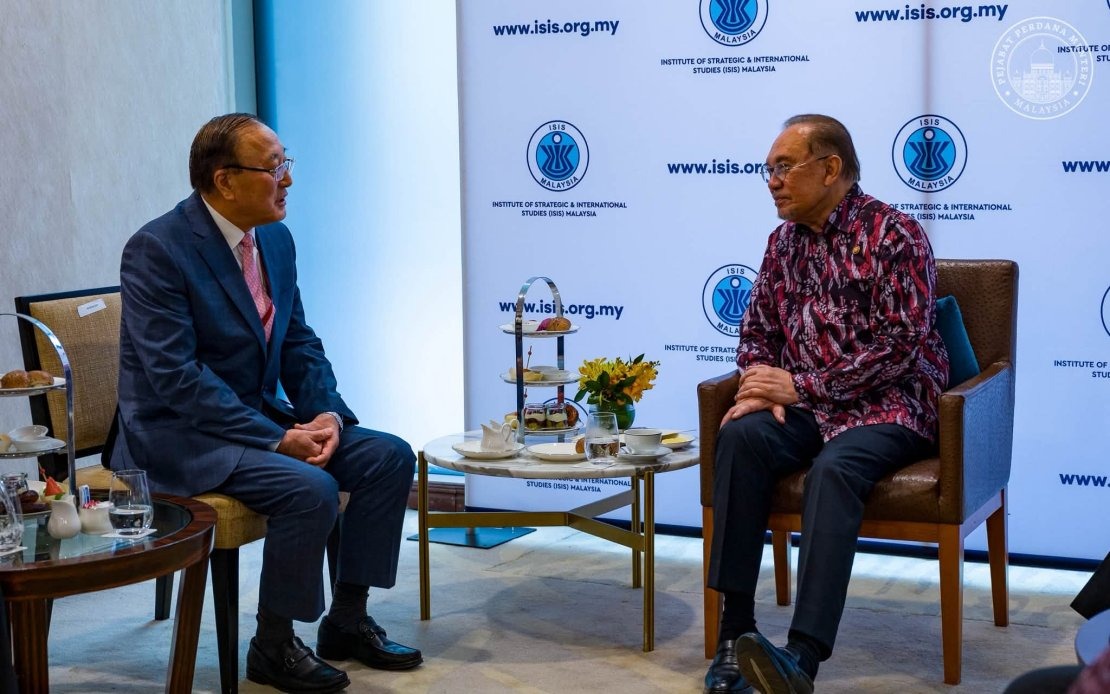
Malaysia is set to deepen its engagement with the Boao Forum for Asia (BFA), with Prime Minister Datuk Seri Anwar Ibrahim outlining a comprehensive framework for collaboration spanning critical economic and technological domains. The announcement came during a bilateral exchange with BFA secretary-general Zhang Jun, who visited Malaysia to discuss the evolving regional and international environment. This initiative reflects Kuala Lumpur's strategic positioning within Asia's multilateral architecture at a moment when the region faces compounded challenges from geopolitical friction, economic volatility, and unprecedented technological disruption.
The Prime Minister, who simultaneously holds the Finance portfolio, identified seven principal areas for enhanced partnership. Trade and investment form the traditional bedrock of Malaysia's engagement with regional forums, yet the BFA framework extends considerably beyond conventional commerce. Digital transformation and artificial intelligence have emerged as frontier sectors where Malaysia seeks collaborative advantage, recognizing that technological capability increasingly determines economic competitiveness. This positioning aligns with Malaysia's Digital Economy Blueprint and broader aspirations to position itself as a regional technology hub within Southeast Asia.
Energy transition represents a particularly consequential pillar of the proposed cooperation. As Malaysia navigates its own complex energy landscape—balancing hydrocarbon revenues with renewable energy commitments and climate obligations—partnership with the BFA provides access to regional expertise and investment mechanisms. The forum's membership spans diverse economies at varying stages of energy sector evolution, offering potential models for Malaysia's own transition pathway. Food security, another designated focus area, carries acute relevance for a nation dependent on food imports and vulnerable to supply chain disruptions demonstrated during recent global crises.
Education and talent development constitute the final major collaboration track. Malaysia's competitive advantage in attracting regional talent depends substantially on maintaining world-class educational institutions and professional development ecosystems. The BFA framework potentially facilitates knowledge exchange, student mobility initiatives, and capacity-building programmes that strengthen Malaysia's human capital base while establishing deeper institutional linkages throughout Asia.
Anwar's remarks emphasized that contemporary regional challenges demand recalibrated approaches to cooperation. Geopolitical uncertainties—evident in great power competition, maritime disputes, and shifting alliance patterns—create an environment where traditional bilateral relationships prove insufficient. He articulated that inclusive dialogue-based mechanisms represent essential stabilizers in this turbulent context. This framing positions Malaysia as an advocate for pragmatic multilateralism, a posture consistent with Kuala Lumpur's historical preference for ASEAN-centered regionalism supplemented by broader Asian forums.
The BFA itself has evolved into a significant platform for Asian economic and political discourse since its establishment. The organization convenes political leaders, business executives, academics, and civil society representatives to deliberate on shared challenges and collaborative opportunities. For Malaysia, formal deepening of BFA engagement provides amplified voice within an influential think-tank and networking ecosystem. The forum's composition—encompassing major regional powers alongside smaller economies—creates space for Malaysia to advocate for ASEAN interests and Southeast Asian perspectives within broader Asian conversations.
Economic resilience constitutes a central concern animating the proposed cooperation expansion. Malaysia's dual vulnerability to global market fluctuations and regional supply chain interdependencies necessitates proactive engagement with mechanisms that strengthen collective risk management. Enhanced BFA coordination on trade flows, investment patterns, and economic policy coordination could enhance predictability and reduce contagion risks during periods of instability. For Malaysian businesses, deepened forum engagement translates into improved market intelligence, regulatory clarity, and investment opportunity identification across Asia.
The artificial intelligence dimension merits particular attention given its transformative potential across sectors. Malaysia, like most Southeast Asian nations, confronts substantial challenges in AI capacity development, ethical governance frameworks, and ensuring that technological benefits distribute equitably. The BFA platform offers avenues for collaborative standard-setting, knowledge transfer, and coordinated approaches to AI-related risks and opportunities. This proves especially valuable as regional governments seek to harness AI's productivity potential while managing disruption to labor markets and social structures.
Energy transition cooperation carries strategic significance extending beyond environmental considerations. The shift toward renewable energy, hydrogen technologies, and grid modernization creates substantial capital requirements and technological demands. Malaysian participation in BFA-facilitated initiatives could secure access to green financing mechanisms, technological partnerships with regional leaders in renewable energy deployment, and policy learning from economies further advanced in their transition journeys. This cooperation framework potentially accelerates Malaysia's movement toward its own climate commitments while creating commercial opportunities in emerging clean energy sectors.
The Food Security pillar addresses vulnerabilities starkly exposed during pandemic-related disruptions and geopolitical tensions affecting supply chains. Malaysian policy-makers recognize that regional food self-sufficiency remains unattainable and that cooperation mechanisms strengthening supply chain resilience provide essential insurance against future shocks. BFA engagement on agricultural innovation, trade facilitation, and coordination on strategic reserves offers practical pathways toward enhanced food system security benefiting all participating economies.
Anwar's invocation of "tangible benefits to the people as a whole" signals awareness that cooperative initiatives must translate into concrete improvements in living standards, employment opportunities, and social stability. For Malaysia, this emphasis reflects political necessity—voters ultimately assess governments on practical outcomes rather than diplomatic achievements. The BFA framework's success will be measured by whether collaboration on identified priority areas generates measurable improvements in Malaysian workers' prospects, business competitiveness, and household resilience.
Regional cooperation through institutions like the BFA becomes increasingly vital as unilateral actions and fragmented responses prove inadequate to contemporary challenges. Malaysia's commitment to strengthening BFA ties reflects recognition that prosperity and stability in Asia depend on deliberate collaborative construction. As geopolitical competition intensifies and technological change accelerates, forums enabling sustained dialogue among diverse stakeholders provide essential mechanisms for managing competition while pursuing mutual gain. Malaysia's leadership in deepening such partnerships positions the country as a constructive regional actor committed to institutional frameworks that benefit all participants.

