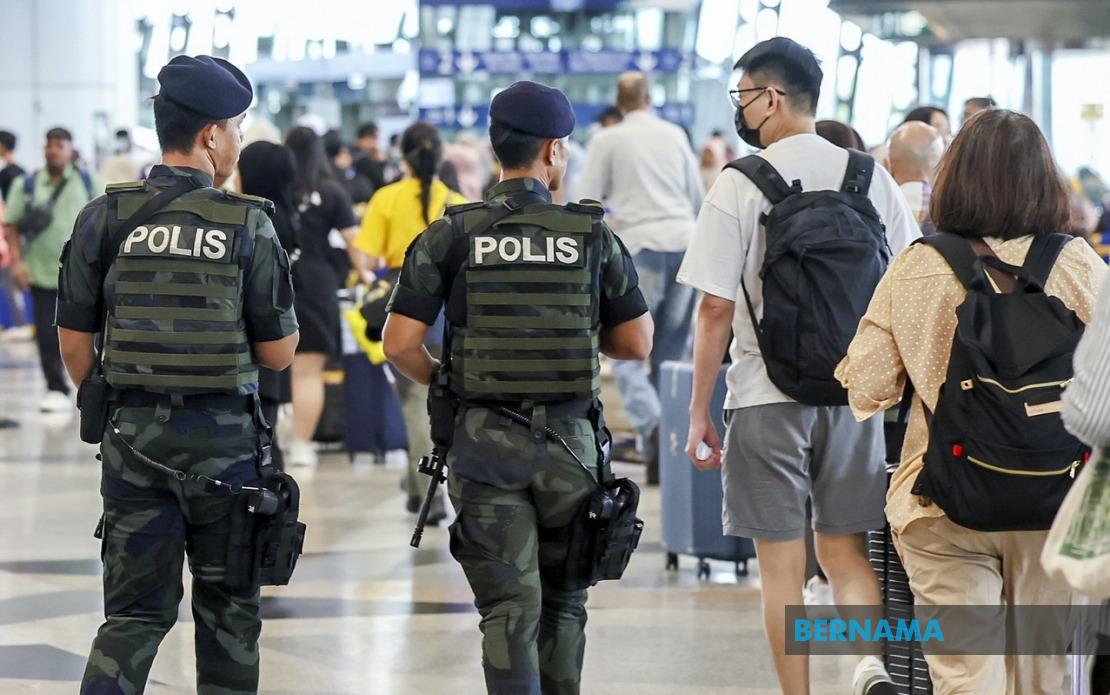
Malaysia has announced a comprehensive security overhaul at its airports in response to the arrest of a Malaysian pilot in Indonesia on suspected drug smuggling charges. The government will immediately deploy personnel from the Royal Malaysia Police (PDRM) to staff the Aviation Security (AVSEC) units at Malaysian airports, replacing the auxiliary police officers currently managing these critical checkpoints. Communications Minister Datuk Seri Fahmi Fadzil revealed the decision following a Cabinet meeting where both the Home Ministry and Transport Ministry presented urgent recommendations to strengthen airport security controls.
The policy shift marks a significant escalation in airport security protocols and reflects mounting concerns about potential vulnerabilities in Malaysia's aviation system. AVSEC units serve as the frontline defence against illegal items and individuals attempting to pass through airports, making their staffing and operational capacity central to national security. By transitioning from auxiliary to regular police personnel, the government aims to enhance the professional standards and enforcement capability of these units, recognizing that the current arrangement may have contributed to security gaps.
The catalyst for these measures was the arrest of a 39-year-old Malaysian pilot at Terminal 3 of Soekarno-Hatta International Airport in Jakarta on suspicion of attempting to smuggle drugs. Indonesian National Police investigations revealed packages containing over 70,000 capsules of ecstasy and methamphetamine with a combined weight of 25 kilogrammes, valued at approximately RM45 million at Indonesian market prices. The incident sent shockwaves through regional aviation circles and prompted immediate diplomatic and security discussions between Malaysia and Indonesia, highlighting the cross-border implications of aviation-related criminal activity.
Beyond deploying police personnel, the Cabinet has directed Malaysia Aviation Group (MAG) to conduct a thorough review of its background screening and health assessment procedures for pilots and co-pilots. This requirement acknowledges that internal airline vetting mechanisms may have gaps that allowed a pilot with potential involvement in drug smuggling to operate commercial aircraft. The review represents an attempt to tighten hiring standards and ongoing employee monitoring at Malaysia's largest airline group, ensuring that individuals engaged in criminal activities can be identified and removed from service before they pose operational or security risks.
Simultaneously, the Royal Malaysia Police and the Malaysian Border Control and Protection Agency (AKPS) have been tasked with conducting a comprehensive audit of existing security systems at airports nationwide. This examination aims to identify weaknesses and loopholes that could potentially be exploited by individuals seeking to smuggle contraband through aviation facilities. The instruction reflects recognition that security protocols often contain procedural gaps or enforcement inconsistencies that criminals can manipulate, particularly when those managing checkpoints lack specialized training or adequate authority.
The Malaysian government has refrained from immediately establishing a dedicated special investigation team to examine the pilot case, instead indicating a preference to await comprehensive reports before committing additional resources. Minister Fahmi explained that preliminary information has come through oral briefings rather than complete documentation, making premature decisions imprudent. However, he emphasized that authorities will carefully study the full report once available and determine appropriate follow-up actions, particularly regarding identifying other potential accomplices in the smuggling operation.
The case underscores broader regional concerns about aviation security within Southeast Asia, where porous borders and established drug trafficking networks create persistent vulnerabilities. A Malaysian pilot's involvement suggests that criminal organizations may be leveraging aviation professionals' legitimate access to international travel to move contraband across borders. This development is particularly alarming given the pilot's position of trust within the aviation system and his ability to move through airports with minimal scrutiny compared to ordinary passengers.
For Malaysia specifically, the incident poses reputational risks to the country's aviation industry at a time when international confidence in regional airport security remains a competitive concern. Airlines and aviation authorities across Southeast Asia constantly navigate balancing act between operational efficiency and security rigour, and high-profile cases involving criminality by airline personnel can impact international partnerships, investment decisions, and passenger confidence. Malaysian authorities recognize that swift, visible responses to security lapses help reassure both domestic stakeholders and international partners of the government's commitment to maintaining aviation safety standards.
The deployment of regular police to AVSEC units will require resource reallocation within the police force, and questions remain about whether such deployment will be permanent or temporary pending system-wide security reviews. The scope of the initiative—whether it will apply to all major Malaysian airports or primarily to Kuala Lumpur International Airport and other principal hubs—has not been specified. These implementation details will significantly influence the effectiveness of the security enhancement and the resource demands placed on PDRM operations nationwide.
Longer-term, the incident highlights the need for Malaysia to strengthen intelligence-sharing mechanisms between airport authorities, border agencies, and law enforcement to detect suspicious activity patterns among aviation professionals. Background screening protocols must be enhanced with regular psychological assessments and financial investigations, particularly for positions involving international travel. The case also suggests that Malaysian authorities should examine whether current penalties for aviation-related drug smuggling adequately deter involvement and whether enforcement consistency matches legal provisions.
Regional coordination on aviation security represents another critical frontier, as the pilot case demonstrates that Malaysian airports cannot be secured in isolation. Information-sharing agreements with Indonesian and other Southeast Asian authorities regarding suspicious activity by aviation personnel would enhance collective security. The Association of Southeast Asian Nations has long emphasized aviation safety cooperation, yet practical intelligence-sharing mechanisms remain underdeveloped in areas such as individual-level screening and vetting.
The government's measured response—strengthening security infrastructure while awaiting full investigation results—signals commitment to addressing systemic vulnerabilities rather than treating the incident as an isolated aberration. However, sustained focus will be necessary to implement promised reforms effectively. History demonstrates that security improvements initiated in response to high-profile incidents often face bureaucratic delays and resource constraints that undermine comprehensive implementation. Malaysian authorities must ensure that announced measures progress from policy announcements to operational reality across all affected airports and agencies.

