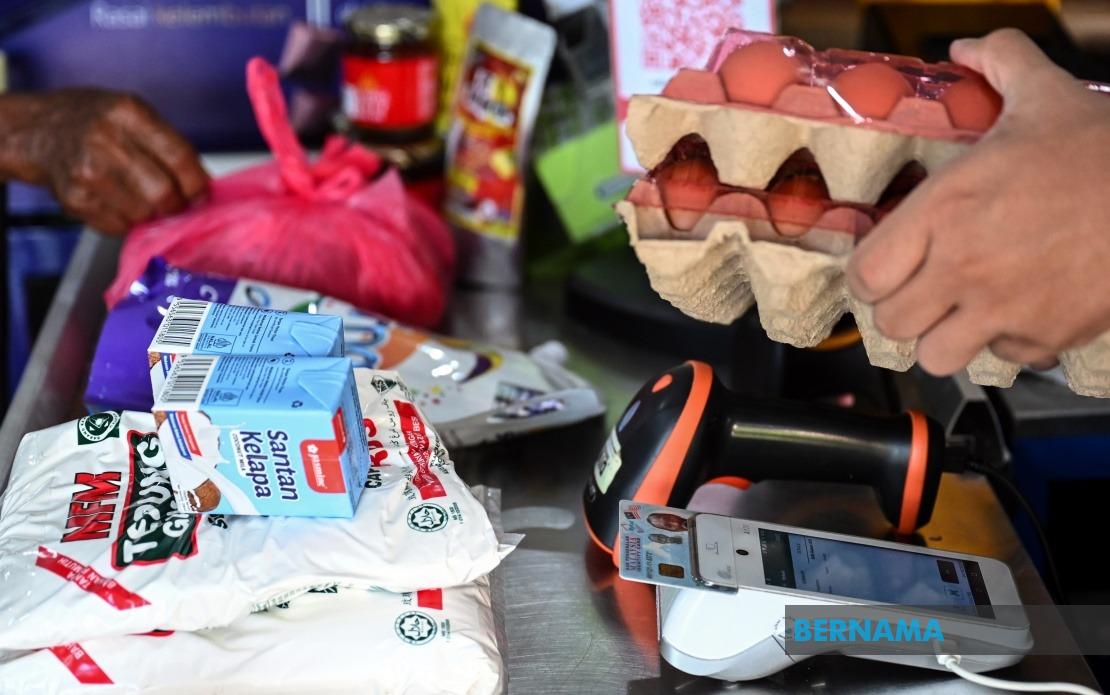
The Ministry of Finance has launched Phase 3 of the Sumbangan Tunai Rahmah (STR) assistance programme, extending support to 5.3 million Malaysians through a RM1.2 billion disbursement that commenced on August 15. This expansion represents a significant growth trajectory for the welfare initiative, with the recipient base expanding by 300,000 individuals since the beginning of the year, when the programme covered five million beneficiaries. The broadening reach underscores the government's commitment to addressing economic pressures facing households across various income segments in an environment where the cost of living remains a pressing concern for many Malaysians.
The composition of Phase 3 recipients reflects a targeted approach to social support. Among those receiving payments, 3.9 million qualify as low- and middle-income households, a category that has itself expanded from 3.7 million at the year's outset. The remaining 1.4 million recipients consist of single senior citizens, a demographic prioritised for protection given their particular vulnerability to economic hardship. This stratification demonstrates deliberate policy design aimed at channelling assistance where demographic and economic indicators suggest the greatest need exists.
Payment amounts vary considerably depending on household circumstances, with the range extending from RM150 to RM600 for low- and middle-income families, while single senior citizens uniformly receive RM150. The variation mechanism accounts for income levels and the number of dependent children, ensuring that support intensity adjusts according to measured financial need and family obligations. This graduated approach represents a departure from uniform payment schemes, allowing the programme to calibrate assistance more precisely across the spectrum of eligible populations.
Cumulatively, the first three phases of STR disbursements in 2026 have channelled RM3.6 billion into the Malaysian economy, establishing the programme's substantial fiscal footprint within the government's welfare architecture. When combined with the monthly SARA basic income assistance that accompanies STR, recipients can accumulate up to RM3,300 in total support by August 2026, excluding the one-off SARA payment provided to all Malaysian citizens aged eighteen and above. This layered approach reflects a modernised assistance structure that emphasises regular, predictable support rather than episodic relief, creating more reliable income floors for vulnerable populations.
The structural redesign implemented this year fundamentally alters how assistance reaches beneficiaries. STR payments now occur on a quarterly cycle, while SARA delivers monthly stipends to qualifying recipients, replacing older sporadic disbursement patterns. This transition toward regularised, frequent payments enables households to plan expenditure more effectively and provides consistent assistance aligned with the monthly rhythm of living expenses. The philosophical shift underlying this restructuring emphasises sustaining vulnerable populations through ongoing support mechanisms rather than temporary injections of cash.
Prime Minister Datuk Seri Anwar Ibrahim has positioned the expanded assistance as integral to the government's broader economic strategy. Rather than presenting welfare payments as mere palliative measures for cost-of-living pressures, the government frames STR and SARA as complementary to structural economic reforms designed to enhance incomes and living standards over the medium term. This framing acknowledges persistent affordability challenges while asserting that comprehensive policy responses must address underlying income generation capacity alongside immediate financial relief. The rhetorical emphasis suggests that welfare expansion occurs within a framework targeting systemic economic improvements rather than representing a permanent dependency on cash transfers.
The 2026 allocation of RM15 billion for STR and SARA combined represents the largest welfare investment in Malaysian federal history, exceeding previous programmes by substantial margins. Most strikingly, this figure nearly triples the 2016 BR1M (Bantuan Rakyat 1Malaysia) spending, reflecting either genuine budgetary prioritisation of social protection or the compounding effects of inflation and population growth on nominal spending levels. Either interpretation suggests that welfare has become an increasingly significant component of federal expenditure, raising questions about fiscal sustainability and the relationship between assistance spending and other developmental priorities.
The financial management improvements enabling this expansion deserve scrutiny. The Ministry of Finance attributes enhanced resource availability to restructuring government finances and governance improvements that free additional state revenue for welfare purposes. These claims warrant examination regarding their specificity and verifiability—whether the government has genuinely improved revenue collection, reduced inefficiency, or reallocated spending from other areas. For Malaysian observers, understanding the genuine sources of welfare funding has implications for assessing the government's fiscal health and the opportunity costs of welfare prioritisation.
Payment mechanisms reflect pragmatic accommodation of Malaysia's uneven financial inclusion. Beneficiaries with bank accounts receive electronic transfers directly to their accounts, simplifying administration and reducing risks associated with cash handling. However, recognising that a substantial portion of the eligible population lacks formal banking relationships, the government enables cash collection at Bank Simpanan Nasional branches nationwide, ensuring that financial inclusion status does not exclude eligible recipients from assistance. This dual-channel approach demonstrates awareness of Malaysia's persistent financial inclusion gaps and the necessity of accommodating diverse circumstances.
The programme retains substantial flexibility through year-round application and appeals windows via the bantuantunai.hasil.gov.my portal, addressing concerns about static beneficiary lists and missed populations. This continuous intake mechanism theoretically permits newly eligible households and omitted deserving cases to join the programme throughout the year, mitigating the effects of initial enrolment errors or changed circumstances. The emphasis on maintaining open channels for applications suggests acknowledgment that accurate targeting of assistance remains inherently imperfect and requires ongoing corrective capacity.
Cyber security and fraud prevention feature prominently in official messaging, with the Ministry of Finance warning recipients against counterfeit links and fraudulent schemes targeting vulnerable populations. The emphasis on directing people exclusively toward official portals and away from third-party intermediaries reflects real vulnerabilities within programmes reaching large populations with limited digital literacy. As welfare administration increasingly digitises, the tension between accessibility and security becomes more pronounced, requiring sustained public education and investment in genuine platform security to protect beneficiary populations from exploitation.
For Southeast Asian regional analysis, Malaysia's STR expansion represents one of the region's more comprehensive social protection expansions amid contemporary cost-of-living pressures affecting the broader region. The programme's scale and sophistication contrast with more limited welfare infrastructure in some neighbouring economies, though comparable programmes exist in Thailand and Indonesia. Malaysia's willingness to direct substantial fiscal resources toward direct cash transfers reflects political choices about distributional priorities and the perceived legitimacy of state-funded redistribution, choices that vary significantly across the region's political economy contexts.

