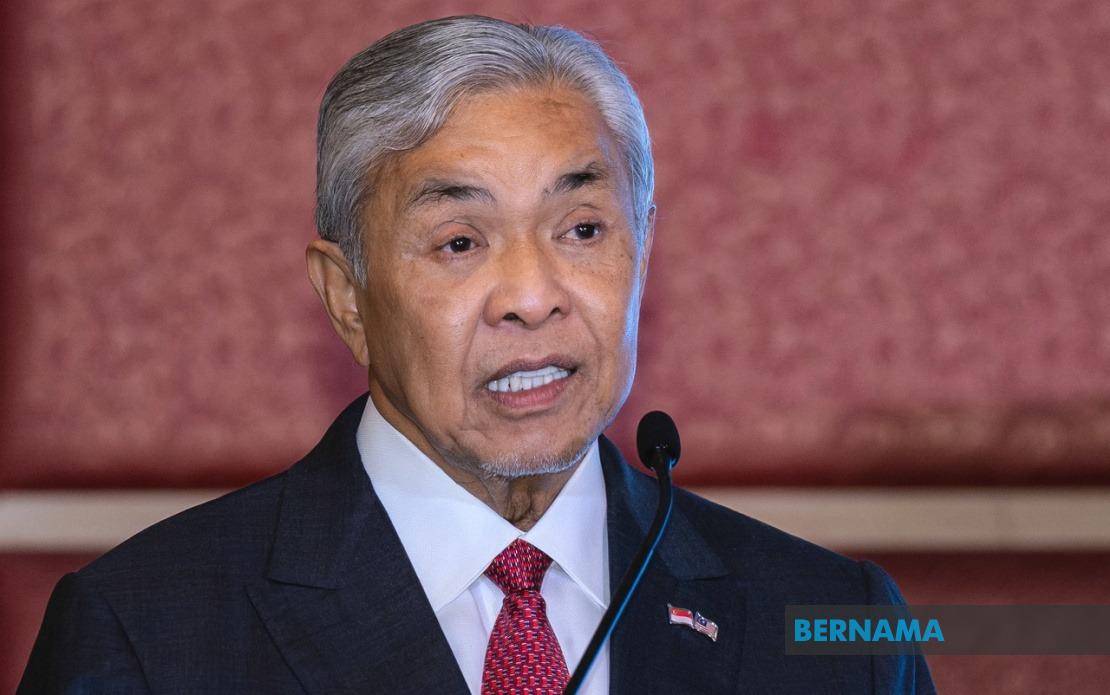
Malaysia intends to create a self-contained administrative framework for handling refugee and asylum seeker populations, moving away from dependence on external international organisations. Deputy Prime Minister Datuk Seri Dr Ahmad Zahid Hamidi outlined this strategy in response to parliamentary questioning, emphasising that the National Security Council Directive No. 23 on the Policy and Mechanism for the Management of Refugees and Asylum Seekers (2023 revision) forms the foundation for this domestically-driven approach. Signed by Prime Minister Datuk Seri Anwar Ibrahim in June 2023, the directive represents the government's commitment to balancing humanitarian concerns with sovereignty and security imperatives.
The framework Ahmad Zahid described encompasses a multi-faceted approach requiring substantial coordination across government departments. Rather than outsourcing refugee management to international bodies, the NSC working under the Prime Minister's Department has collaborated with various ministries and agencies to establish clear operational guidelines. This initiative reflects growing recognition that refugee crises demand tailored solutions reflecting each nation's particular circumstances, capacity constraints, and security environment. For Malaysia, which hosts over 126,000 registered Rohingya refugees, this represents a significant undertaking requiring institutional capacity-building and resource allocation across multiple sectors.
A critical dimension of Malaysia's emerging strategy involves balancing enforcement with humanitarian provision. The government acknowledges that managing refugee populations effectively requires more than security measures alone. Ahmad Zahid articulated that the mechanism would facilitate eligible refugees' access to essential services including healthcare, education, and legitimate employment opportunities. This represents a notable shift from purely restrictive approaches, recognising that marginalised populations lacking basic services become vulnerable to exploitation and informal economy participation, ultimately complicating national security and social stability objectives.
However, Ahmad Zahid identified a significant implementation challenge threatening the success of this framework. The Deputy Prime Minister pointed to local residents acting as enablers within communities, motivated by financial self-interest through rental income from housing refugees or profit from cheap labour extraction. This candid assessment reveals tensions inherent in refugee management: while official policy articulates humanitarian provision, grassroots economic incentives often encourage informal settlement arrangements that undermine structured management. Addressing this requires not merely policy redesign but cultural and economic interventions influencing behaviour at community level.
The NSC Directive No. 23 specifically addresses role clarity among government institutions, a prerequisite for coherent implementation. By delineating functions and responsibilities across ministries and agencies, the directive attempts to eliminate gaps and overlapping mandates that characteristically plague complex governance challenges. Whether involving immigration enforcement, health service provision, employment verification, or security screening, each participating institution now operates within explicit parameters. This institutional architecture represents recognition that refugee management transcends any single agency's capacity, demanding integrated governmental response.
For Malaysia's regional standing, this independent approach carries diplomatic implications. By developing domestically-designed mechanisms rather than defaulting to international frameworks, Malaysia signals determination to exercise sovereign control over border management and population issues. This resonates within Southeast Asia's broader context, where countries increasingly assert self-determination regarding refugee policies rather than accepting prescriptive international arrangements. The approach also accommodates Malaysia's unique position as both a transit country and increasingly a place of long-term settlement for refugee populations, requiring differentiated responses from those developed for developed nations.
The Refugee Registration Document (DPP) system mentioned in the parliamentary exchange represents operational infrastructure supporting this broader framework. By establishing formal documentation processes, Malaysia creates administrative apparatus enabling identification, tracking, and service provision while maintaining security oversight. This system moves refugee management from informal, untracked populations toward structured registration enabling policy implementation. The DPP effectively transforms invisible populations into quantifiable groups whose needs and movements can be systematically addressed.
Implementing this comprehensive framework demands sustained resource commitment and institutional coordination that Malaysia's government structures must sustain over years. Initial enthusiasm and policy directives frequently encounter bureaucratic resistance, capacity limitations, and competing priorities as implementation progresses. The fact that Ahmad Zahid addressed these challenges explicitly in parliamentary response suggests awareness that policy intention alone proves insufficient without sustained execution commitment. Public acknowledgement of enabler problems and enforcement undermining indicates transparency regarding implementation obstacles.
For Malaysian civil society and business communities, the emerging framework carries operational implications. Employers considering refugee labour must navigate clearer legal parameters regarding employment rights and verification procedures. Landlords and property owners face evolving regulations affecting refugee housing arrangements. Healthcare and education providers require guidance on service provision protocols and eligibility verification. These downstream effects mean the NSC Directive No. 23 extends beyond government operations into private sector and community practices.
The timing of this framework development reflects regional migration pressures and international attention to refugee crises. With ongoing displacement in Myanmar, Afghanistan, and elsewhere, Southeast Asian countries experience persistent migration pressure. Malaysia's approach of establishing independent management capacity rather than advocating for international responsibility-sharing reflects pragmatic acknowledgement that solutions must be domestically resourced and implemented. This framework positions Malaysia to manage refugee populations without perpetual international advocacy or dependence on international organisations' support.
Looking forward, the success of Malaysia's refugee management mechanism depends on several factors beyond policy formulation. Implementation capacity across government institutions, sustained political commitment transcending electoral cycles, community acceptance balancing humanitarian and security concerns, and adequate funding allocation will determine whether the NSC Directive No. 23 translates from aspiration into effective governance. The framework represents Malaysia's most comprehensive attempt to systematically address refugee management through independent institutional design, acknowledging that this geographically-positioned nation must develop capabilities to manage populations it cannot prevent from arriving.

