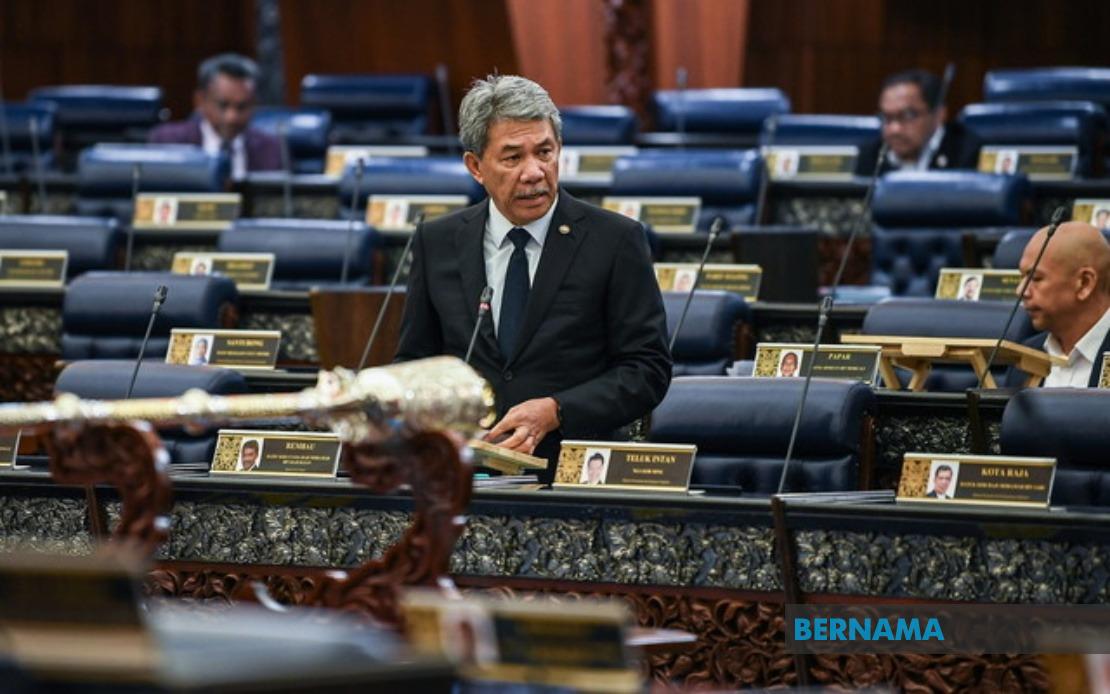
Malaysia is committing itself to an expansive diplomatic offensive aimed at resolving the protracted conflict in West Asia, according to Foreign Minister Datuk Seri Mohamad Hasan. The strategy encompasses engagement across multiple international institutions and forums, reflecting Kuala Lumpur's conviction that multilateral channels offer the most promising pathway toward sustainable regional stability. Speaking in Parliament this week, Mohamad outlined how Malaysia intends to channel its diplomatic weight through established global structures to complement bilateral efforts already underway.
The timing of Malaysia's renewed diplomatic initiative coincides with significant developments in US-Iran relations. Malaysia ranks among the earliest nations to rally behind a memorandum of understanding signed between Washington and Tehran last week, signalling Kuala Lumpur's desire to build constructively on this breakthrough. The MoU framework allocates sixty days for both powers to negotiate and formalize the undertakings contained within it, creating a critical window during which international actors can reinforce momentum toward de-escalation. Malaysia's early endorsement positions the country as a constructive voice capable of influencing how this agreement develops in subsequent phases.
The substance of the US-Iran understanding addresses core grievances that have fuelled regional volatility. The agreement encompasses fourteen distinct provisions spanning reconstruction of Iran's battered infrastructure, valued at USD300 billion, alongside the crucial reopening of the Strait of Hormuz and withdrawal of Israeli military presence from multiple territories including Lebanon. For Malaysia and other trading nations, restoration of shipping through the Strait represents an economic imperative, as prolonged closure precipitates global supply chain disruptions and inflationary pressures that ripple across Southeast Asian economies dependent on international commerce.
Mohamad articulated Malaysia's multipronged approach to leveraging institutional influence. The strategy incorporates engagement through the United Nations proper, the UN Security Council, the Organisation of Islamic Cooperation, BRICS grouping, and the Non-Aligned Movement. This institutional diversity reflects recognition that different forums carry distinct advantages and constituencies. The OIC connection taps into Malaysia's standing within the Muslim world, while BRICS affiliation signals alignment with rising powers increasingly asserting themselves in global governance. The NAM platform speaks to Malaysia's historical commitment to multilateralism outside Cold War alignments, principles that remain central to contemporary diplomatic positioning.
Beyond formal institutional channels, Malaysia is pursuing supplementary diplomatic engagement at the bilateral and personal level. Mohamad disclosed that he has personally contacted counterparts from Pakistan, the United Arab Emirates, and Saudi Arabia to express Malaysia's solidarity and reaffirm commitment to conflict resolution measures. Pakistan's role as host of the US-Iran negotiations makes coordination with Islamabad particularly significant, as does engagement with the Gulf monarchies whose interests and influence remain determinative for regional outcomes. These parallel conversations ensure that Malaysian diplomatic pressure operates simultaneously across multiple registers and relationships.
Proactive outreach to the incoming President of the UN General Assembly represents another dimension of Malaysia's strategy. This forward-looking engagement seeks to cultivate receptiveness within the institution's leadership for initiatives designed to galvanize broader international consensus around West Asian peace. By establishing relationships early in the new administration's tenure, Malaysia positions itself to advocate effectively when pressing matters reach the General Assembly agenda.
However, Mohamad's assessment plainly acknowledges that significant obstacles persist. He characterized Israel's government as fundamentally opposed to the peace process and accused it of continuing to threaten regional stability through military operations spanning Gaza, the West Bank, Lebanon, and other occupied territories. This blunt language reflects growing frustration within Malaysia and broader Non-Aligned circles regarding perceived Israeli obstruction of diplomatic progress. The foreign minister contended that sustained international pressure remains essential to compelling cessation of Israeli military activities across multiple theatres.
The most structural impediment Mohamad identified is the United States' repeated use of veto power within the UN Security Council to shield Israel from enforcement measures. He noted that Washington has exercised this veto thirty-one times specifically to protect the Israeli government, fundamentally constraining the Security Council's capacity to impose binding resolutions. This dynamic highlights a central tension in the international system: permanent Security Council membership permits major powers to exempt themselves and favoured allies from collective enforcement mechanisms. For Malaysia and countries seeking mechanisms to pressure Israel, this structural barrier represents the most consequential obstacle to translating international disapproval into concrete consequences.
The confluence of these factors creates complex terrain for Malaysian diplomacy. While the US-Iran accord opens diplomatic space and signals potential superpower cooperation on regional matters, the persistence of Israeli military operations and American protection of Israel at the Security Council suggests that comprehensive resolution remains distant. Malaysia's approach accepts these realities while continuing to build coalitions and strengthen institutional advocacy mechanisms that might gradually shift the calculus toward peace.
For Malaysia specifically, these developments carry direct implications. Southeast Asia's prosperity depends fundamentally on unobstructed global trade and stable energy supplies flowing through the Strait of Hormuz. Regional conflicts that disrupt shipping lanes and elevate geopolitical tensions carry immediate economic consequences for Malaysia and its neighbours. Moreover, Malaysia's substantial Muslim population and its institutional leadership within the OIC create domestic expectations that the government champion Muslim-world interests in international forums. The diplomatic initiative Mohamad outlined represents an attempt to reconcile these economic interests, diplomatic obligations, and domestic political considerations through sustained engagement across multiple international platforms.