Malaysia's government has committed to preserving its suite of financial support programmes for ordinary citizens even as it grapples with mounting petroleum subsidies estimated at almost RM40 billion this financial year, driven largely by oil price volatility stemming from regional tensions in West Asia. Deputy Finance Minister Liew Chin Tong made the assurance during parliamentary proceedings, signalling the administration's determination to shield households from global energy market shocks that have rippled across the broader economy.
The maintenance of assistance schemes including Sumbangan Tunai Rahmah (STR) and Sumbangan Asas Rahmah (SARA) represents a deliberate policy choice to prioritise household purchasing power and social stability during a period of pronounced external economic pressure. Rather than trimming welfare provisions to offset rising energy costs, the government has opted for a protective approach that seeks to insulate citizens from commodity price turbulence—a strategy that carries substantial fiscal implications but reflects political calculations about maintaining social cohesion.
Liew's comments came in response to concerns raised during parliamentary question time about whether the escalating petroleum subsidy bill might force authorities to cut back on other assistance programmes. The deputy minister's emphatic response underscores the government's hierarchy of fiscal priorities, placing direct support to households ahead of fiscal consolidation measures that might otherwise be considered during periods of budgetary strain. This positioning offers Malaysian citizens reassurance that existing assistance mechanisms will remain intact regardless of international oil market movements.
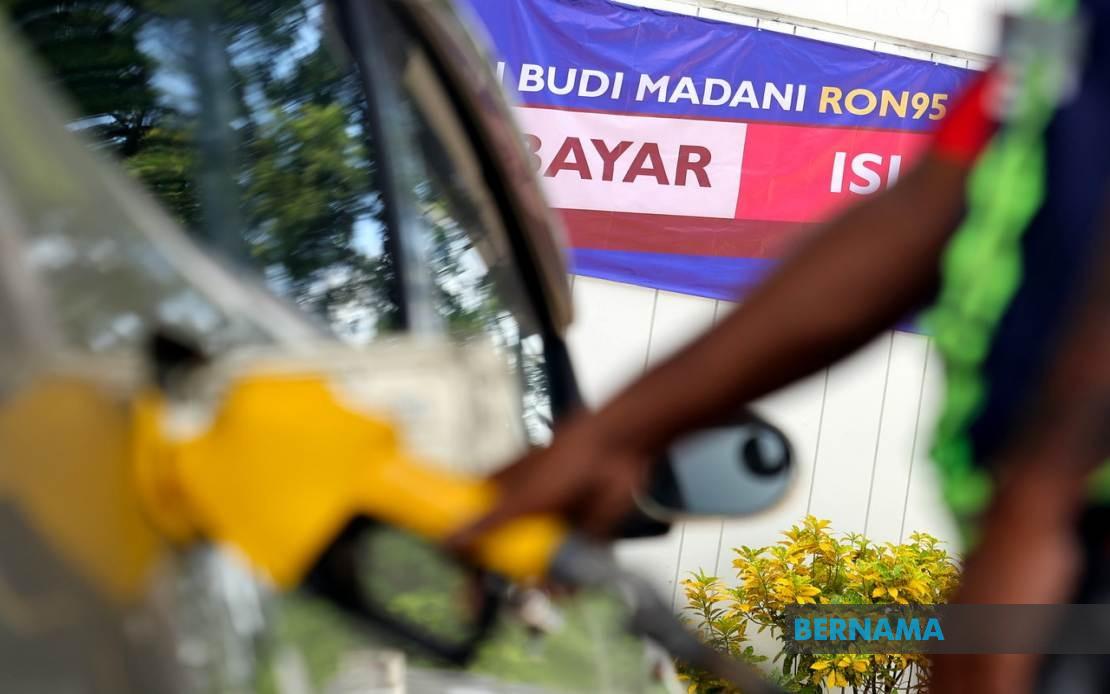
Central to the government's strategy for managing these competing pressures is the BUDI MADANI RON95 programme, which commenced in September of the previous year. This initiative establishes a fixed retail price for standard petrol while simultaneously capping the volume that subsidised fuel can reach consumers. The scheme's architecture has proven effective during periods of elevated global oil costs, most notably when prices spiked dramatically in March and April as Middle Eastern tensions intensified regional instability.
Under BUDI95's framework, Malaysian drivers have continued purchasing petrol at RM1.99 per litre even when international crude benchmarks surged to approximately RM5 per litre—a differential that the government absorbs entirely. This price protection mechanism functioned as intended during the peak crisis period, preventing the kind of sticker shock at pumps that can trigger widespread economic disruption and public discontent. The quota-based system ensures that subsidised fuel reaches households rather than being diverted to commercial operations or hoarded for speculative purposes.
Liew emphasised that Malaysia's approach generates tangible advantages for citizens compared to regional peers or countries operating under pure market pricing regimes. He highlighted the continuity of fuel availability and price stability as defining features of the programme, contrasting Malaysia's experience with other nations that have struggled to maintain supply chains or absorb price shocks. The security of having accessible petrol at predictable prices—even in ordinary traffic conditions—represents a quality-of-life factor that extends beyond simple economics into the realm of daily convenience and social order.
The budgetary burden of maintaining these overlapping support mechanisms is substantial. At RM40 billion annually for petroleum subsidies alone, this expenditure absorbs a significant portion of government revenues that might otherwise fund infrastructure development, healthcare expansion, or education improvements. However, policymakers appear to have concluded that the political and social stability costs of subsidy withdrawal would outweigh the fiscal benefits of reallocation, particularly given Malaysia's relatively modest per-capita income distribution and the dependency of lower-income households on affordable energy access.
The government's stance also reflects broader regional economic considerations. Southeast Asian neighbours have experienced varying outcomes from subsidy reform programmes, with some countries achieving fiscal savings at the cost of reduced economic competitiveness and social unrest. Malaysia's decision to maintain protective measures during a period of heightened external risk suggests a preference for stability over austerity—a calculus that may prove prudent if international tensions persist or re-escalate.
Parliamentary scrutiny of subsidy policy remains active, as evidenced by legislators probing whether cash assistance programmes might be curtailed. This questioning likely reflects constituent concerns about long-term fiscal sustainability and concerns about whether short-term protections might mask underlying economic vulnerabilities. The deputy minister's affirmative responses provide reassurance for now, though persistent high petroleum costs could eventually force difficult trade-offs between competing spending priorities.
The interconnection between petroleum subsidies, direct cash transfers, and food assistance illustrates how modern welfare systems operate through multiple channels rather than single mechanisms. By maintaining all three simultaneously, the government attempts to provide comprehensive protection against inflation and external shocks. STR and SARA schemes deliver income support directly to household accounts, while BUDI95 reduces essential commodity costs—a dual approach that creates multiple pressure valves for economic stress.
Looking ahead, Malaysia's sustainability of this multi-layered support structure will depend on both international oil price movements and the government's ability to maintain adequate fiscal space. Should West Asian tensions escalate further or crude prices remain elevated for extended periods, even the most resolute commitment to assistance programmes may eventually face pressure. However, for the immediate term, policymakers have signalled that protecting ordinary Malaysians from energy shocks remains a governing priority that supersedes other budget considerations.

