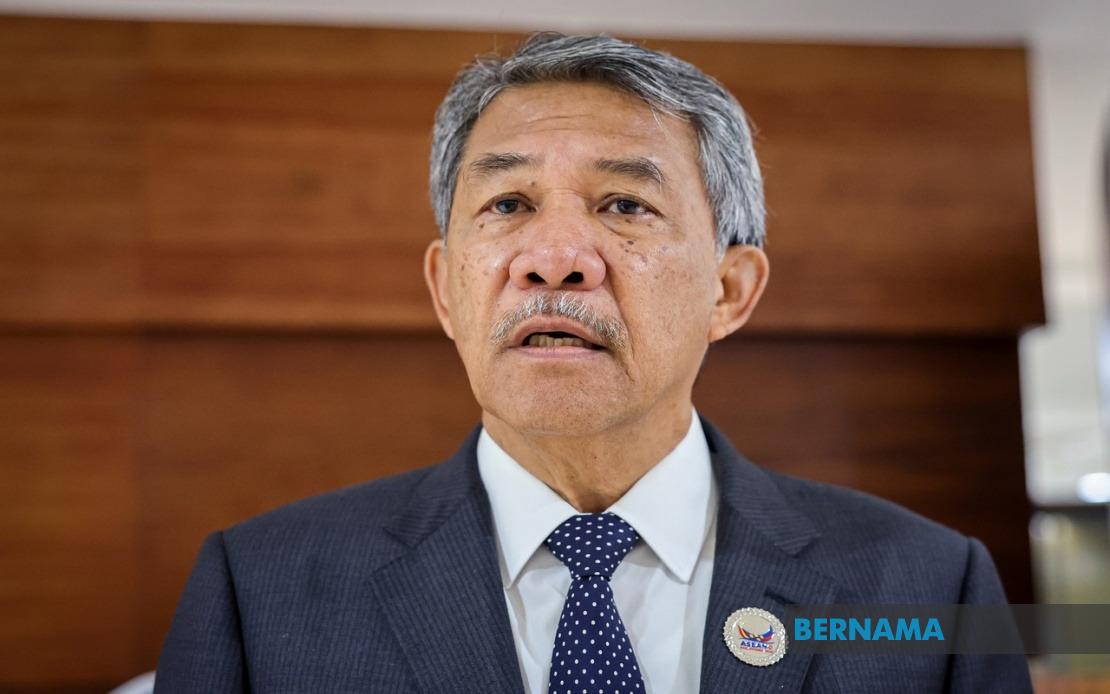
Malaysia has been selected as the country coordinator for ASEAN-Turkiye relations following ASEAN member states' formal acceptance of Turkiye as a new Dialogue Partner. Foreign Minister Datuk Seri Mohamad Hasan announced the dual decisions, which were reached during plenary sessions held alongside the 59th ASEAN Foreign Ministers' Meeting and Post-Ministerial Conference in Manila on July 21.
The elevation of Turkiye's status within ASEAN's institutional framework represents a significant step in deepening engagement between the regional bloc and a strategic player in global geopolitics. As country coordinator, Malaysia will assume responsibility for facilitating bilateral communication channels, coordinating policy positions among ASEAN members, and overseeing the practical mechanics of dialogue partnership implementation. This role carries considerable diplomatic weight, positioning Kuala Lumpur as the primary bridge between ASEAN and Ankara for substantive engagement on matters of mutual interest.
Modamad explained that the admission process underwent rigorous scrutiny across multiple institutional levels within ASEAN before final approval. The bloc had maintained a moratorium on accepting new dialogue partners and member states, establishing stringent criteria to ensure the quality and strategic alignment of its relationships. Given Malaysia's position as ASEAN Chair for 2025, the country had taken the initiative to propose Turkiye's inclusion, with the proposal subsequently winning unanimous endorsement from all member states following comprehensive examination at secretariat, foreign ministerial, and official levels.
The criteria-based approach to admitting new dialogue partners reflects ASEAN's deliberate strategy to preserve the organisation's institutional integrity and strategic autonomy. Rather than expanding partnerships opportunistically, the bloc has adopted a measured stance that weighs each applicant against clearly defined benchmarks. This disciplined approach safeguards ASEAN from overcommitment and dilution of focus, while simultaneously signalling that dialogue partnership status carries genuine meaning rather than serving as a nominal designation.
Turkiye's acceptance as a dialogue partner opens potential avenues for cooperation spanning trade facilitation, cultural exchanges, security cooperation, and regional stability initiatives. The relationship aligns with ASEAN's broader strategy of engaging major powers and significant regional actors across multiple domains. For Turkiye, the status provides enhanced access to one of the world's most dynamically growing regions and strengthens its position within Asian geopolitical structures, complementing its existing engagement in the Middle East and broader Indo-Pacific architecture.
Beyond the Turkiye development, ASEAN also moved forward with accepting the United Kingdom as a new member of the ASEAN Regional Forum, expanding the institutional ecosystem through which the bloc engages with external partners. These parallel admissions underscore ASEAN's calibrated approach to international engagement, simultaneously deepening connections with selected partners while maintaining careful control over expansion.
Discussions during the 59th AMM extended to broader questions of institutional coherence and regional positioning. ASEAN leaders recognised the imperative of reinforcing their collective framework for addressing the increasingly complex geopolitical landscape characterising the contemporary Asian environment. The bloc emphasised its commitment to ASEAN Community Vision 2045, a long-term strategic blueprint designed to guide regional integration and collaborative action over two decades.
Central to these discussions was the notion of ASEAN centrality, a cornerstone principle that positions the association as the primary driver of regional architecture and diplomatic processes. Mohamad stressed that preserving this centrality constitutes the bloc's fundamental strength, requiring active defence against external efforts to marginalise or circumvent ASEAN's institutional role. In an environment where major powers increasingly seek bilateral arrangements or alternative multilateral frameworks, maintaining ASEAN's central position demands consistent diplomatic effort and unified positioning among member states.
The emphasis on navigating uncertain geopolitical and geo-economic circumstances reflects genuine anxieties within Southeast Asia regarding great power competition, technological disruption, and shifting trade patterns. ASEAN's strategy relies upon its ability to remain indispensable to competing powers while preserving internal cohesion—a balancing act that grows more precarious as external pressures intensify. By reinforcing institutional frameworks and expanding strategic partnerships on ASEAN's own terms, the bloc seeks to shape rather than merely respond to regional developments.
For Malaysia specifically, the appointment as country coordinator for ASEAN-Turkiye relations enhances its diplomatic profile and strengthens its role within regional institutions. The responsibility carries expectations to facilitate substantive engagement while representing broader ASEAN interests, not merely national Malaysian perspectives. This requires adept diplomacy balancing Malaysia's own foreign policy objectives with collective ASEAN positions, a challenge that distinguishes between national interest advocacy and institutional stewardship.
The outcomes announced in Manila demonstrate ASEAN's capacity for deliberate institutional expansion and strategic decision-making when member states align on priorities. Rather than appearing reactive or fragmented, the bloc presented a coordinated vision encompassing dialogue partnerships, forum membership, and long-term strategic planning. Whether ASEAN can sustain this cohesion amid mounting external pressures and divergent national interests remains an ongoing question for the region's future stability and influence.

