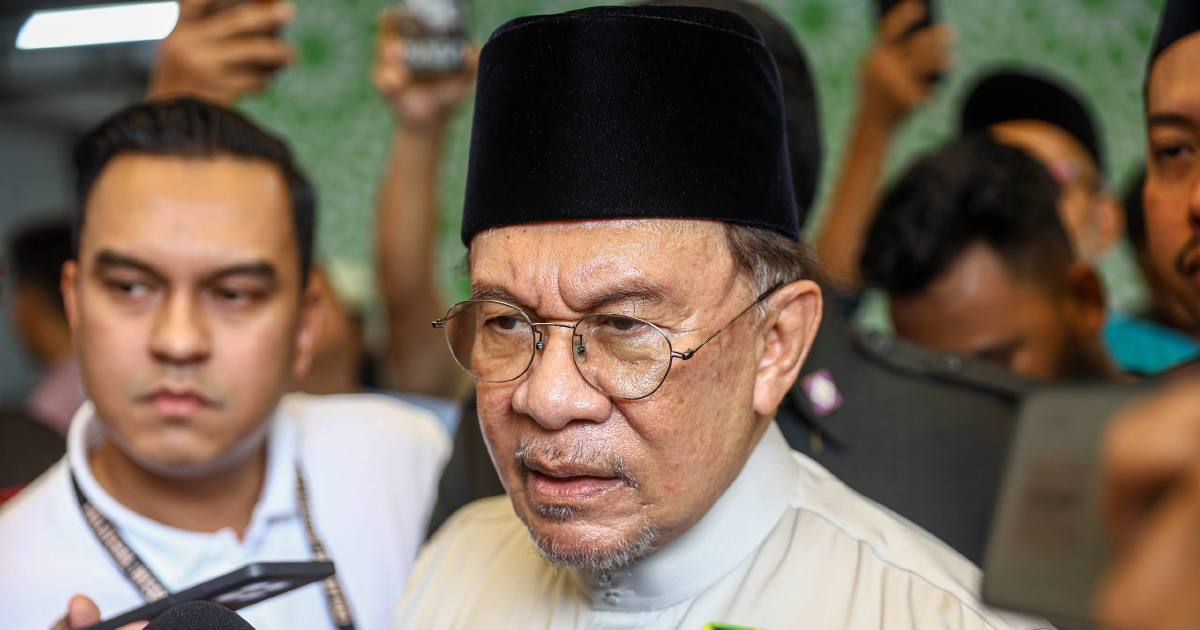
Prime Minister Datuk Seri Anwar Ibrahim has made clear that Malaysia's determination to pursue accountability regarding Low Taek Jho—widely known as Jho Low—remains unshakeable, and that any clemency extended by the United States will not alter the nation's stance towards the fugitive businessman.
The emphatic statement comes at a time of heightened concern across the region and among Malaysian officials about the possibility of political intervention in the legal proceedings against Jho Low, who has emerged as a central figure in one of the world's largest financial scandals. The businessman has long evaded capture despite being implicated in massive fraud schemes that have had far-reaching consequences for Malaysia's economy and international reputation.
Jho Low's prominence in global infamy stems largely from his alleged central role in the 1Malaysia Development Berhad scandal, where billions of ringgit disappeared under suspicious circumstances. This fund, established ostensibly to promote Malaysia's economic development, instead became a vehicle through which vast sums were systematically siphoned away. The scale and audacity of the alleged fraud sent shockwaves through international financial markets and prompted investigations across multiple jurisdictions, including in the United States, Singapore, and Switzerland.
The Prime Minister's declaration reflects Malaysia's determination to see justice served through the proper channels, regardless of external pressures or diplomatic manoeuvres that might complicate the pursuit. His intervention comes amid speculation and concerns within policy circles about potential political clemency that could derail ongoing legal efforts. The timing of such a pronouncement underscores the seriousness with which the Malaysian government views the matter and its commitment to recovering assets and holding those responsible accountable.
For Malaysian readers, the significance of this statement extends beyond a single individual. Jho Low's case has become emblematic of governance failures, regulatory lapses, and the vulnerability of sovereign wealth funds to criminal misappropriation. The scandal has served as a cautionary tale about the importance of transparency, oversight, and institutional safeguards. Many Malaysians view the pursuit of Jho Low not merely as a personal vendetta but as a matter of national pride and economic justice.
The international dimensions of the case add further complexity. Law enforcement agencies in multiple countries have pursued various aspects of the investigation, with the United States playing a particularly prominent role given Jho Low's extensive dealings with American financial institutions and real estate. Any pardon from Washington could theoretically complicate bilateral cooperation on asset recovery and further legal proceedings, which underscores why Anwar's statement addresses this possibility directly.
From a regional perspective, Southeast Asia has watched developments surrounding Jho Low with considerable interest. The case has prompted broader conversations about financial crime, the need for stronger anti-corruption mechanisms, and the challenges that smaller nations face when confronting actors with significant international connections and resources. Malaysia's firm stance signals to the region that despite external pressures, the nation remains committed to accountability and the rule of law.
The statement also reflects the current Malaysian government's approach to fighting corruption, which has been a defining policy platform since Anwar Ibrahim returned to prominence in national politics. The administration has made institutional reform and anti-graft initiatives central to its governance agenda, making it politically important that the leadership remains visibly committed to pursuing high-profile cases regardless of complicating factors.
Jho Low's continued evasion of capture remains a point of frustration for Malaysian authorities and the broader public. Despite the extensive investigations and international warrants, the fugitive has managed to remain at large, occasionally appearing in social media posts that suggest he continues to enjoy a comfortable lifestyle. This visibility while evading justice has fuelled public anger and kept the case in the spotlight.
The reference to a potential presidential pardon, while not unprecedented in American politics, would represent an extraordinary development given the magnitude of the alleged crimes and their international ramifications. Such a move would likely trigger significant diplomatic reverberations, potentially straining bilateral relations and complicating broader cooperation on financial crimes and asset recovery. Anwar's preemptive statement appears designed to make clear that Malaysia will not simply accept such an outcome.
Looking forward, Malaysia's position suggests that the pursuit of Jho Low through other legal avenues and international mechanisms will continue. This includes efforts to recover assets held outside Malaysia and to ensure that wherever the fugitive might eventually find himself, the legal consequences of his alleged actions will remain a fixture of his circumstances. The government's resolve, as articulated by the Prime Minister, indicates that time and diplomatic complications will not diminish the commitment to justice.
The broader lesson for Malaysian society and the region is that accountability for financial crimes at this scale cannot be swept away through political convenience or external pressure. Anwar's statement reinforces this principle and maintains the spotlight on a case that continues to matter deeply to national interests and international standards of governance.

