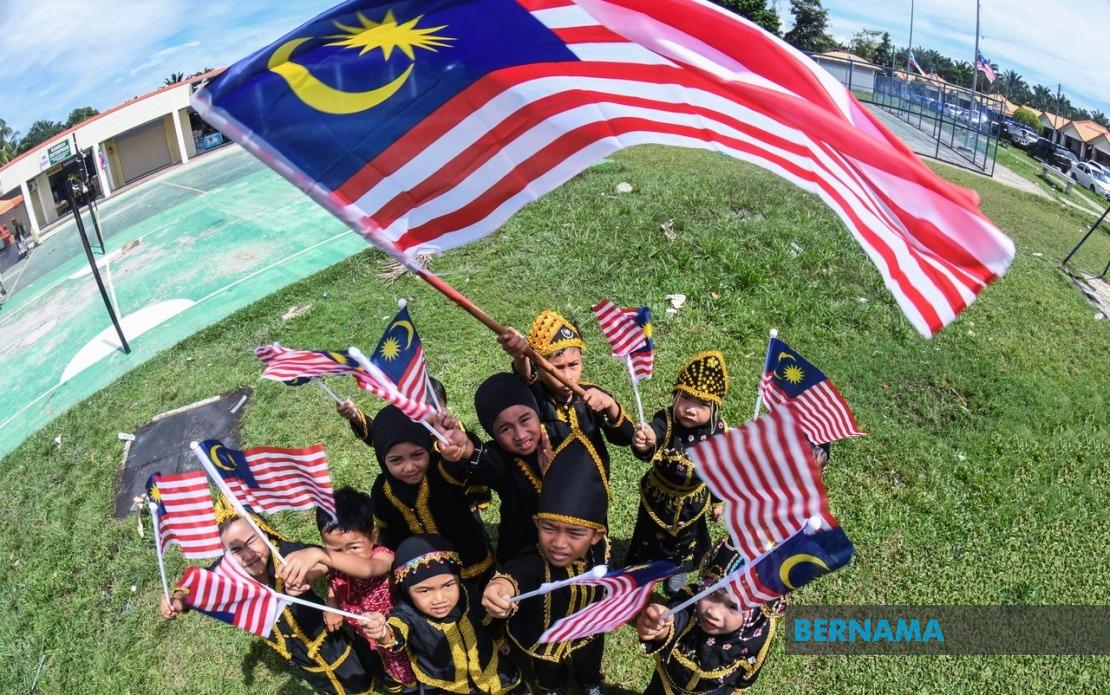
The launch of Malaysia's National Month and the Fly the Jalur Gemilang 2026 campaign will adopt a more restrained yet emotionally resonant approach, representing a significant shift from the large-scale public gatherings that characterised previous years. Scheduled for this Sunday, July 19, at the Ministry of Health Training Institute Sultan Azlan Shah in Tanjung Rambutan, Ipoh, the event marks the beginning of festivities leading up to National Day and Malaysia Day 2026 celebrations. Unlike the expansive outdoor spectacles held in Muar, Johor last year and Cyberjaya in 2024, officials have deliberately opted for an indoor setting, signalling a deliberate recalibration of how the nation marks its most important patriotic occasions.
The decision to scale back the event reflects the practical realities facing governments and societies across the region. Muhammad Najmi Mustapha, director of the Information Department's Communications and Community Development Division, explained that global circumstances—particularly energy supply disruptions and the ongoing conflicts affecting West Asia—have necessitated a rethinking of celebration formats. Rather than viewing this as a diminishment of national pride, authorities are positioning the change as an opportunity to demonstrate that patriotism transcends the grandeur of physical gatherings. The indoor setting paradoxically creates space for more intimate, focused messaging around national identity and unity, potentially resonating more deeply with Malaysians than sprawling public events.
Prime Minister Datuk Seri Anwar Ibrahim will formally launch the campaign beginning at 10 am, underscoring the government's commitment to these national observances despite budgetary constraints. The ceremony will be broadcast live across Radio Televisyen Malaysia and the Malaysian National News Agency, extending its reach beyond the physical venue through digital platforms. Recognising that many Malaysians engage with national celebrations through virtual channels, officials have ensured comprehensive streaming coverage via the Facebook Live pages of Merdeka360, the Ministry of Communications, and the Information Department. This multi-platform approach reflects a mature understanding of contemporary media consumption patterns in Malaysia, where significant portions of the population now experience major national events primarily through screens rather than in-person attendance.
Central to this year's campaign is the continuation and expansion of the '1 Rumah 1 Jalur Gemilang' initiative, which encourages individual households to display the national flag as a tangible expression of patriotism. The programme has evolved considerably since its introduction several years ago, now encompassing nine distinct clusters instead of the original seven. The addition of houses of worship and sports organisations reflects recognition that patriotism operates across multiple spheres of Malaysian life, not merely within conventional institutional settings. This inclusive framework acknowledges that national identity is lived and expressed through religious communities, athletic pursuits, educational institutions, healthcare facilities, and security services, among others. The expansion suggests official thinking has matured beyond viewing patriotism as primarily a top-down government initiative.
The campaign's extension into religious spaces holds particular significance for Malaysia's multicultural society. By explicitly incorporating houses of worship into the flag-flying initiative, authorities recognise that patriotic sentiment can harmoniously coexist with religious identity and practice. This represents a sophisticated acknowledgment that many Malaysians see no contradiction between devotion to their faith and loyalty to their nation. Similarly, the inclusion of sports organisations taps into the genuine reservoir of national pride that emerges when Malaysian athletes compete on international stages, offering an alternative pathway for expressing patriotism beyond formal government channels.
Communications Minister Datuk Seri Fahmi Fadzil has selected 'Malaysia MADANI: Kesejahteraan Dinikmati' as the overarching theme for the 2026 celebrations, with the Malaysia MADANI logo serving as the official insignia through next year. The theme emphasises shared prosperity and wellbeing, suggesting that national celebrations should ultimately ground themselves in tangible improvements to citizens' quality of life. This thematic choice moves beyond abstract appeals to unity, instead asking Malaysians to connect their patriotic sentiments to concrete experiences of progress and development. The focus on 'Kesejahteraan Dinikmati'—prosperity that is actively experienced and enjoyed—positions 2026 celebrations as opportunities to take stock of how national progress translates into individual and family wellbeing across the income spectrum.
Government officials are actively encouraging Malaysians to participate in digital expressions of patriotism, particularly through social media engagement. Citizens are invited to adopt the Jalur Gemilang as their profile pictures and share content related to National Month using designated hashtags: #HKHM2026, #MalaysiaMADANI, #KesejahteraanDinikmati, and #Merdeka360. This stratagem recognises that social media platforms have become primary spaces where Malaysians construct and project their identities, making them natural venues for patriotic expression in the digital age. By providing specific hashtags, officials facilitate the aggregation and visibility of citizen-generated content, creating what amounts to a crowdsourced celebration that extends far beyond formal government events. This approach democratises patriotism, positioning ordinary Malaysians as active creators of national narrative rather than passive recipients of government messaging.
The physical culmination of these celebrations will occur on August 31, when National Day 2026 will be commemorated at Dataran Putrajaya. Authorities have committed to maintaining a "modest yet vibrant" scale for this major public gathering, suggesting that the Putrajaya event will similarly prioritise focused patriotic messaging over grandiose spectacle. The decision to concentrate major National Day festivities at Putrajaya's symbolic heart—the administrative centre of Malaysian government—carries its own significance, anchoring national celebrations to the institutional structures through which collective governance operates.
For Southeast Asia more broadly, Malaysia's approach to these celebrations carries instructive implications. As regional governments navigate economic pressures, energy constraints, and geopolitical uncertainties, the Malaysian model demonstrates that scaled-down national observances need not diminish their patriotic or ceremonial importance. The emphasis on distributed, grassroots participation through household flag-flying and social media engagement offers alternative celebratory frameworks that may appeal to other nations facing similar resource constraints. The integration of diverse institutional clusters—from sports organisations to houses of worship—provides a template for inclusive nationalism that respects Malaysia's multicultural composition while emphasising shared national identity.
The Information Department's strategy to provide ongoing updates through the Merdeka360 portal and social media platforms signals recognition that modern national celebrations unfold across extended timeframes rather than occurring as isolated ceremonial moments. By sustaining official communication channels throughout the months leading to August 31, authorities ensure that National Month remains psychologically present in public consciousness rather than confined to brief moments of spectacular display. This sustained engagement approach potentially builds deeper, more durable connections between citizens and their sense of national belonging than episodic grand events ever could achieve.

