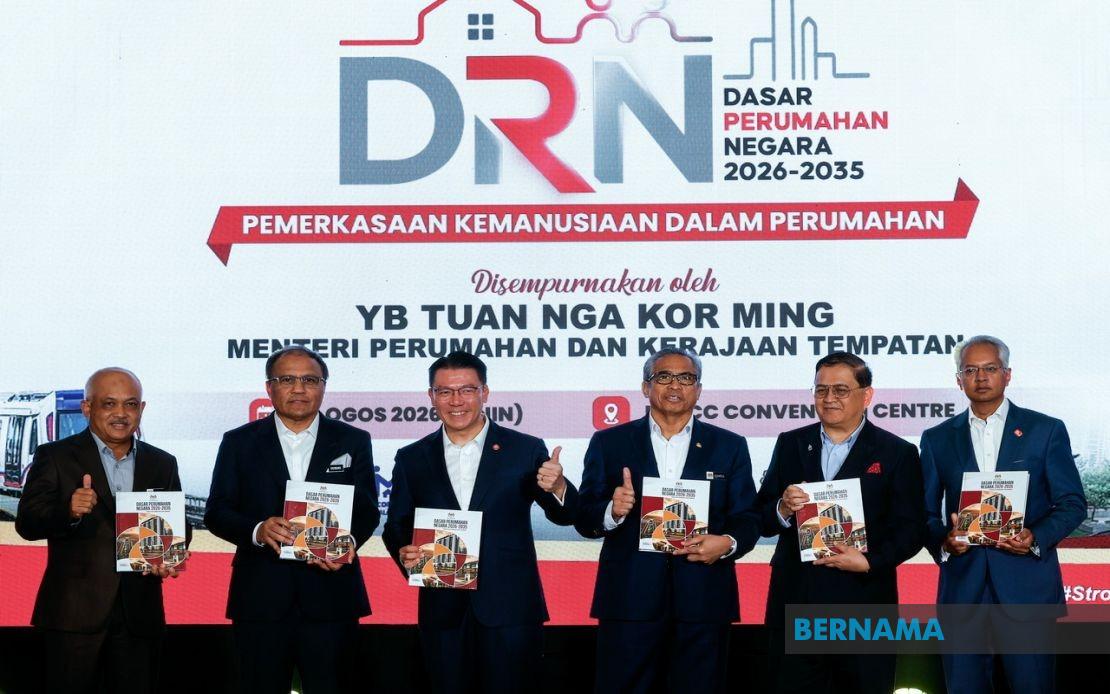
The Ministry of Housing and Local Government has announced an ambitious legislative agenda to reshape Malaysia's housing sector, unveiling plans to draft and enact four significant laws within the framework of the National Housing Policy 2026-2035. Minister Nga Kor Ming introduced the initiative at the policy launch in Kuala Lumpur on August 10, framing the legislation as essential to establishing a contemporary legal structure that balances the interests of developers, property owners, tenants, and the broader public. The comprehensive overhaul reflects growing recognition that existing housing frameworks have become inadequate for managing the complexities of modern urbanisation and a rapidly evolving property market.
Three entirely new Acts will be introduced alongside amendments to existing legislation. The Property Development Act represents a significant modernisation of development regulations, moving beyond the current framework that focuses exclusively on housing projects. The expanded scope will encompass commercial properties including retail units and mixed-use developments, acknowledging that the property sector encompasses far more than residential housing. Currently in the final stages of review, this Act addresses a critical gap in regulatory coverage and should provide greater clarity for both developers and purchasers engaging with commercial property ventures. The legal framework has not been comprehensively updated to reflect decades of market evolution, leaving numerous grey areas that developers and regulators navigate without clear statutory guidance.
The Building Managers Act addresses a pressing governance challenge within Malaysia's strata property sector. With approximately three million strata units distributed across more than 27,000 schemes—encompassing condominiums, service apartments, and single office home office units—the absence of dedicated legislative oversight for building management represents a significant regulatory vacuum. Proper management is fundamental to maintaining property standards, ensuring resident safety, and protecting structural integrity. Many Malaysian apartment dwellers have experienced disputes over maintenance fees, building upkeep standards, and accountability within management corporations. The new Act should establish clearer standards for building managers' responsibilities, qualifications, and conduct, potentially reducing conflicts between residents and management entities that frequently end up in small claims courts or consumer forums.
The Rent Tenancy Act aims to establish equilibrium between landlords and tenants, two constituencies with fundamentally different interests that have historically clashed in Malaysian property markets. Tenant protections in Malaysia remain relatively underdeveloped compared to neighbouring jurisdictions, leading to disputes over deposits, maintenance responsibilities, and eviction procedures. A comprehensive tenancy law would establish standard terms, protect deposits through escrow mechanisms, clarify maintenance obligations, and provide dispute resolution pathways. This legislation becomes increasingly important as rental markets expand with rising property costs pushing homeownership beyond reach for growing segments of the urban workforce. International evidence suggests that clear tenancy frameworks reduce disputes while creating confidence in rental markets, ultimately benefiting both property owners and renters.
Simultaneously, the government will undertake substantial revision of the Strata Management Act 2013, updating provisions that have become obsolete as property markets and management practices have evolved. The original Act, now over a decade old, predates significant changes in how residents interact with building management, including digital payment systems, sustainability requirements, and security technologies. Amendments should address contemporary management challenges while clarifying ambiguities that have generated ongoing litigation. This modernisation reflects the accelerating pace of change in property management practices and resident expectations, particularly among younger homeowners accustomed to tech-enabled service delivery and transparent accountability.
The legislative program responds to Malaysia's profound urbanisation trajectory. The country experienced urbanisation growth from 28 percent in 1970 to 78 percent currently, with projections indicating further acceleration to 85 percent by 2040. This demographic shift concentrates population pressure on limited urban land, intensifying competition for housing, commercial space, and services. Rapid urbanisation historically outpaces regulatory frameworks designed for earlier development patterns, creating mismatches between supply, demand, and quality standards. The housing ministry's comprehensive legislative approach reflects awareness that incremental amendments no longer suffice for managing property markets transformed by decades of urban expansion and changing demographic patterns.
A critical initiative accompanying the legislative program involves implementing big data analytics systems to resolve persistent housing market mismatches. Minister Nga Kor Ming emphasised that Malaysia's primary housing challenge is not insufficient construction volume but rather a fundamental disconnect between what developers build and what markets actually require. Property overhang—completed units failing to sell—represents wasted capital and underutilised resources. The analytics system, integrating data from state governments, local authorities, and the housing ministry, will provide district and locality-level market intelligence to inform developer decision-making. By combining supply, demand, and affordability data, the system offers developers empirical foundations for feasibility studies before committing substantial capital to projects. This represents a significant departure from traditional development practices based on developer intuition and historical patterns.
The data system specifically enables localised definitions of affordable housing, rejecting the fiction of a national standard figure. According to the National Property Information Centre, affordable housing in the Klang Valley averages around RM500,000, while Kelantan registers approximately RM300,000, reflecting divergent income levels and property costs across different regions. Applying uniform affordability definitions across geographically and economically diverse Malaysia creates policy absurdities—defining a Kuala Lumpur unit at the same price point as a Kuala Krai property defies economic reality and market fundamentals. Locality-specific affordability benchmarks allow policymakers and developers to align housing supply with regional purchasing power, theoretically reducing both oversupply of premium units and undersupply of genuinely accessible housing in specific markets.
Subscription to the big data analytics system will remain voluntary rather than mandatory, allowing market participants to adopt the tool based on calculated self-interest. This approach respects developer autonomy while creating positive incentives for participation through improved decision-making information. Developers utilising quality market data should theoretically experience higher sales rates and better project economics compared to those relying on traditional methods. Voluntary adoption also avoids regulatory compliance costs that might deter smaller developers, potentially preserving competitive dynamics within the construction sector. However, over time, competitive pressures should drive widespread participation as informed developers gain market advantages, gradually establishing the analytics platform as essential industry infrastructure.
The legislative and data initiatives reflect sophisticated understanding of housing market dysfunction extending beyond supply-side constraints. Malaysian property markets have experienced recurring cycles of oversupply in certain segments and underserving genuine demand in others. Luxury condominiums accumulate unsold inventory while affordable units remain scarce, suggesting developers miscalculate market demand or prioritise short-term profitability over volume. The big data system and revised regulatory framework attempt to align supply incentives with actual market requirements through improved information and clearer rules. However, success depends on developer responsiveness to market signals and willingness to moderate profit expectations by serving broader market segments.
For Malaysian consumers, these reforms offer potential protections across multiple dimensions. Prospective property buyers and tenants should benefit from clearer legal frameworks, more transparent transaction standards, and improved dispute resolution mechanisms. Building residents may experience better-managed properties operating under established professional standards. However, realising these benefits requires careful implementation, adequate enforcement resources, and regulatory oversight committed to consumer protection rather than developer convenience. The timeline for completing all four Acts remains undefined, though the minister committed to finalising them expeditiously. Implementation challenges will inevitably emerge as policymakers attempt translating broad policy objectives into detailed statutory language balancing competing interests within Southeast Asia's third-largest property market.

