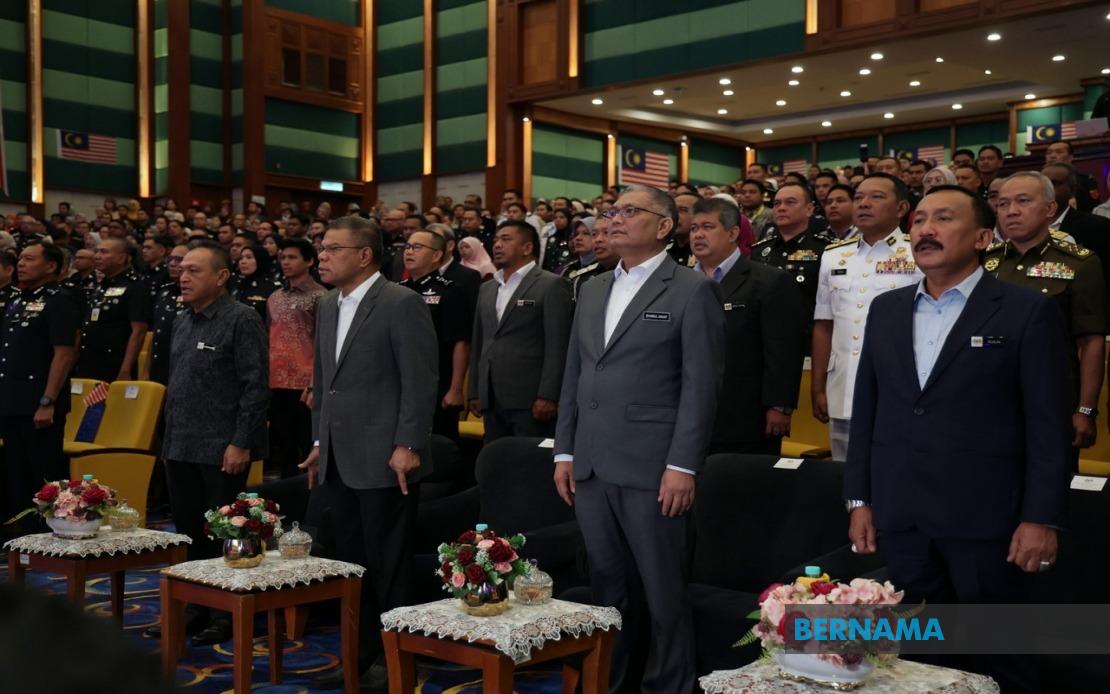
Malaysia's Home Minister Datuk Seri Saifuddin Nasution Ismail announced that a wide-ranging security enhancement plan for the nation's entry points will be tabled before the Cabinet, with Transport Minister Anthony Loke set to co-present the initiative. The announcement came during the Home Ministry's monthly assembly in Putrajaya, signalling the government's determination to tighten controls across airports, seaports, and land borders following a series of high-profile security breaches that have raised questions about oversight mechanisms at critical gateway facilities.
The plan represents a rapid governmental response, having been developed over just two weeks following a specific Cabinet directive to overhaul entry point operations. This accelerated timeline underscores the seriousness with which policymakers view the recent incidents, particularly a case involving a Malaysian pilot arrested at Indonesia's Soekarno-Hatta International Airport with approximately 25 kilogrammes of MDMA in his possession. That incident triggered immediate concern within government circles about the potential reputational damage to Malaysia's aviation sector and broader questions about systemic vulnerabilities in security screening procedures.
The joint presentation by the Home Ministry and Transport Ministry reflects an administrative recognition that airport security requires cross-agency collaboration rather than siloed departmental operations. Saifuddin Nasution explicitly highlighted this point, noting that the comprehensive plan addresses coordination gaps that previously allowed different agencies to operate without adequate information-sharing or unified protocols. This represents a structural reform intended to eliminate blind spots where contraband or suspicious individuals might previously have slipped through bureaucratic cracks between competing ministerial jurisdictions.
Technological and human capital upgrades form the backbone of the proposed framework. The plan encompasses improvements to closed-circuit television infrastructure, upgrades to scanning and detection equipment, and substantial investments in personnel training programmes. Rather than piecemeal fixes targeting individual facilities, the initiative examines resource competency across the entire security apparatus, seeking to ensure that screening staff possess adequate expertise to operate advanced detection systems and recognise suspicious patterns. These investments signal governmental commitment to matching international standards at major Malaysian gateways, particularly Kuala Lumpur International Airport, which handles millions of passengers annually and serves as a critical hub for regional air traffic.
The Malaysian government's concerns extend beyond immediate law enforcement to include diplomatic and economic considerations. Officials worry that repeated security lapses could undermine confidence in Malaysian airports among regional and international operators, potentially affecting aviation partnerships and tourist arrivals. Southeast Asia's reputation for transit security directly impacts its attractiveness as a logistics hub and gateway to regional markets. For Malaysia specifically, any perception of lax controls at entry points could divert cargo operations and passenger traffic to competing hubs in Singapore, Thailand, or other regional alternatives.
Investigations into the pilot's case reveal that cooperation between Malaysian and Indonesian authorities remains strong, with police interviews providing intelligence about potential international drug trafficking networks. Saifuddin Nasution noted that the investigation aims to determine whether the incident represents an isolated opportunistic act or evidence of systematic smuggling operations. This distinction carries significant implications for how Malaysia responds—isolated incidents suggest targeted enforcement improvements, while organised networks necessitate deeper intelligence-sharing agreements with regional partners and international drug enforcement agencies.
The comprehensive plan development involved consultation and input from multiple agencies under the Home Ministry's umbrella, the Transport Ministry, and other relevant security bodies. This multi-stakeholder approach intended to synthesise practical experience from frontline personnel with strategic oversight from policy leadership. Agencies contributed expertise developed through routine operations, previous security assessments, and international best-practice frameworks. The inclusive approach also ensures wider buy-in across government departments that will ultimately bear responsibility for implementation.
Malaysia's entry point security challenge reflects broader Southeast Asian vulnerabilities in an era of increasingly sophisticated smuggling operations. The region's position as a major transit route for illicit goods—from synthetic drugs to wildlife trafficking—creates persistent pressure on border agencies. Neighbouring countries face similar challenges, making regional cooperation essential. Malaysia's effort to upgrade its own security architecture contributes to broader regional stability and law enforcement effectiveness, particularly given the interconnected nature of modern smuggling networks that exploit weaknesses across multiple jurisdictions.
The government's response timeframe demonstrates political will to address public concerns about institutional competence in security matters. By rapidly developing and presenting a comprehensive plan, officials aim to demonstrate that lapses at entry points do not reflect systemic indifference but rather operational challenges capable of remediation through coordinated investment and policy reform. Success will ultimately depend on sustained implementation, adequate budget allocation, and genuine inter-agency cooperation beyond the presentation stage.
For Malaysian citizens and international partners, the plan's specifics—once finalised by Cabinet—will indicate whether the government intends merely incremental improvements or transformative restructuring of entry point operations. Stakeholders including tourism operators, logistics companies, and aviation authorities await details about implementation timelines and resource commitments. The coming weeks will reveal whether the rapid plan development translates into equally swift operational improvements or encounters implementation delays typical of large-scale government initiatives in Southeast Asia.

