The Malaysian government has signalled its intention to undertake a comprehensive reassessment of the country's import portfolio while simultaneously developing targeted policies aimed at reducing Malaysia's dependence on external supply chains. This strategic shift represents an important recalibration of the nation's approach to industrial development and trade management, particularly as policymakers grapple with the challenge of transitioning from a middle-income to a high-income economy.
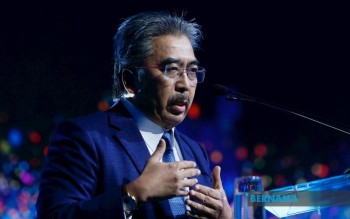
Datuk Seri Johari Abdul Ghani, the Minister of Investment, Trade and Industry, outlined this policy direction during remarks at the RHB Progress Series 2026 conference in Kuala Lumpur. Johari stressed that Malaysia must move beyond a passive approach to trade and instead focus on capturing genuine economic value through the development of indigenous technologies and capabilities. His comments reflect growing recognition within government circles that Malaysia's current development trajectory requires deliberate intervention to ensure that rising volumes of trade and investment tangibly improve living standards for ordinary Malaysians rather than simply enriching foreign corporations or facilitating the extraction of resources.
The scale of Malaysia's trade performance last year underscores both the nation's trading prowess and the underlying challenge. Malaysia's total trade exceeded RM3 trillion for the first time in its history, with exports climbing 6.5 per cent to RM1.61 trillion and imports rising 6.2 per cent to RM1.45 trillion. This activity generated a respectable trade surplus of RM151.8 billion. However, such headline figures mask deeper structural questions about whether this trade volume is optimally configured to advance national development objectives or whether it reflects patterns of import dependency that ultimately constrain Malaysia's capacity for independent economic growth.
The crux of the government's emerging concern centres on Malaysia's distance from the World Bank's threshold for high-income status. The international benchmark currently stands at a gross national income per capita of US$14,375, while Malaysia's current per capita GNI of US$12,380 leaves the nation approximately 16 per cent adrift. Closing this gap cannot be accomplished through incremental adjustments; rather, it demands sustained enhancements in productivity, innovation capacity and the complexity of the economy's productive structure. The government recognises that a business-as-usual approach—characterised by continued reliance on cost-competitive imports and conventional manufacturing—will prove insufficient for bridging this income gap.
Johari's articulation of the strategic challenge emphasises the need for adaptive agility and deliberate partnership diversification. Rather than remaining locked into historical patterns of trade dependency, Malaysia must position itself to make independent decisions that serve long-term national interests even when such decisions diverge from immediate cost minimisation. This represents a more muscular approach to industrial policy than has characterised recent administrations, signalling a willingness to deploy state capacity to shape economic outcomes rather than defer to market forces.
The minister's proposal to undertake a granular review of which goods and capital equipment warrant continued importation versus those for which domestic production capacity should be developed introduces practical substance to this philosophical reorientation. Such a review would necessitate detailed analysis of Malaysia's existing industrial capabilities, the technological requirements for local production, and the policy mechanisms—including tariffs, subsidies, research funding, and capability-building programmes—that could feasibly support domestic substitution. The implicit concern underlying this exercise is that unrestricted reliance on low-cost imports can gradually hollow out domestic industrial capacity, leaving Malaysia perpetually dependent on foreign suppliers for critical goods and vulnerable to external shocks.
Johari illustrated this risk through the example of Malaysia's iron and steel industry, which once achieved self-sufficiency but has since contracted following the market entry of larger foreign producers offering comparable products at lower cost. This cautionary tale encapsulates a core policy dilemma: how to welcome foreign investment and embrace globalisation while simultaneously protecting the space for domestic industries to develop and mature. The minister's proposed solution emphasises selectivity—welcoming foreign investors whose products, technologies and expertise do not yet exist domestically, thereby expanding Malaysia's productive frontier rather than displacing existing local enterprises.
This nuanced position acknowledges that wholesale protectionism would prove counterproductive, isolating Malaysia from global technological advancement and driving up consumer costs. Conversely, unguarded openness permits the systematic erosion of domestic capabilities that could ultimately strengthen the national economy. The challenge lies in calibrating policy to encourage complementarity between foreign and local investors, enabling both to flourish while ensuring that the aggregate effect advances Malaysian technological competence and reduces import requirements.
The broader context for this policy shift encompasses Malaysia's participation in increasingly complex regional value chains within Southeast Asia and beyond. As regional competition intensifies and global supply chains undergo reconfiguration, nations that possess strong domestic technological and manufacturing foundations will capture greater value from international commerce. Malaysia's policy recalibration reflects recognition that the window for transitioning toward higher-value production may narrow as neighbouring economies develop competing capabilities and global competition intensifies.
The government's renewed emphasis on import assessment and domestic capability development arrives alongside private-sector initiatives aimed at modernising Malaysia's financial and commercial infrastructure. RHB Bank's launch of RHB Pay, described as Malaysia's first bank-owned unified online payment gateway, exemplifies the type of homegrown technological innovation that the government seeks to encourage. The platform consolidates multiple payment methods—cards, FPX, DuitNow Pay, with e-wallets and QR codes planned for later rollout—into a single integration, offering Malaysian businesses streamlined payment acceptance without reliance on foreign payment service providers. Such initiatives, while seemingly technical in nature, represent genuine value creation rooted in Malaysian institutions and expertise.
The convergence of government policy signalling and private-sector innovation suggests an emerging consensus within Malaysia's economic establishment regarding the necessity for more intentional industrial and technological development. Rather than accepting Malaysia's position as a peripheral participant in global value chains, both state and private actors are positioning themselves to capture greater value creation domestically. Success will depend on whether the policy review translates into coherent, implementation-ready strategies that effectively nurture domestic capabilities without creating inefficient, protected industries insulated from competitive discipline.

