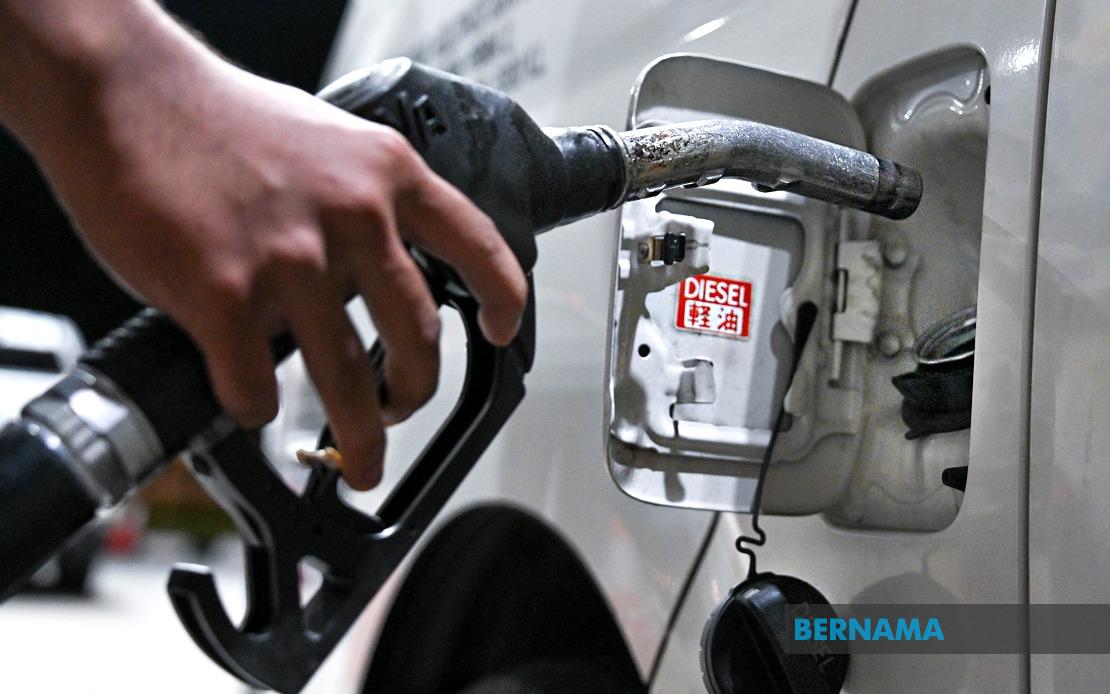
Malaysia's government is rolling out an overhaul of its diesel subsidy system designed to recover up to RM2 billion in annual savings by stemming the flow of subsidised fuel to unintended recipients and cross-border smugglers. The BUDI MADANI Diesel programme, launching on July 1 at a fixed price of RM2.10 per litre, represents a significant shift towards what Second Finance Minister Datuk Seri Amir Hamzah Azizan describes as a more transparent and accountable fuel subsidy mechanism nationwide.
The initiative addresses a troubling trend in government spending revealed in recent months. Whereas Malaysia's monthly subsidy bill for petrol and diesel traditionally hovered around RM800 million, it ballooned to approximately RM4.7 billion in March and RM4.9 billion in April as global crude prices climbed. This spike coincided with inexplicable increases in diesel consumption, which surged from roughly 624 million litres monthly to almost 1.2 billion litres—a near doubling that officials attribute primarily to leakages rather than genuine domestic demand growth.
The scale of the problem becomes even clearer when examining regional consumption patterns. Sabah and Sarawak, which together currently account for close to two billion litres of diesel annually, are consuming roughly double their estimated actual requirement of one billion litres per year. This discrepancy points to systematic leakage of approximately one billion litres annually across the two states alone, a loss the government can no longer tolerate amid pressure on its fiscal position.
Subsidy leakages occur through multiple channels, officials explained. Cross-border smuggling into neighbouring countries represents one significant pathway, while domestic abuse of subsidy mechanisms constitutes another. The most problematic pattern involves commercial or industrial operators who should be purchasing full-price unsubsidised diesel instead gaining access to heavily subsidised supplies intended for private vehicle owners. This diversion simultaneously drains the government treasury and risks destabilising supplies for legitimate consumers.
To combat these losses, the government is implementing a verification system mirroring its successful BUDI RON95 petrol subsidy programme. The BUDI Diesel framework uses MyKad identity card scanning at petrol stations to confirm that only eligible Malaysian private diesel vehicle owners can purchase fuel at the subsidised rate. Approximately 700,000 private diesel vehicle owners will qualify for this benefit, creating a controlled pool of eligible purchasers rather than the current open system.
Existing recipients of BUDI Diesel subsidies, who currently receive RM400 monthly in cash assistance, will transition directly into the new petrol station-based mechanism. The government has committed to an automatic migration process requiring no additional applications or paperwork from current beneficiaries, simplifying what could otherwise have been a cumbersome administrative transition. This approach retains the intended benefit while closing loopholes that previously existed.
The government is phasing in the new system gradually to minimise disruption. Early access to BUDI Diesel becomes available on June 27 for eligible private diesel vehicle owners in Peninsular Malaysia, allowing several days of testing and adjustment before the official July 1 nationwide launch. This staggered rollout provides time to identify any technical glitches in the MyKad verification system or payment infrastructure at petrol stations before full implementation across the country.
The rationale underpinning the BUDI Diesel reform extends beyond immediate fiscal savings. Officials frame the programme as essential to protecting the stability and security of Malaysia's domestic fuel supply chain. When massive quantities of subsidised diesel leak across borders or flow to unintended users, they create artificial scarcity for genuine domestic consumers and expose the nation to supply vulnerabilities. By tightening control over the subsidy system, the government aims to ensure that available supply serves the population it was intended to support.
For Malaysian motorists and businesses reliant on diesel, the RM2.10 per litre price point represents a significant intervention in market economics. This frozen subsidised rate shields diesel-dependent sectors—including public transport operators, logistics companies, and agricultural enterprises—from the full impact of international commodity price volatility. The targeting mechanism ensures that this support reaches the private vehicle owners the government deems most deserving while preventing the subsidy from being dissipated through leakage and abuse.
The broader policy philosophy reflects a government effort to balance fiscal responsibility with social support. Rather than eliminating subsidies entirely, which would burden lower-income Malaysians disproportionately, or maintaining universal subsidies that drain the treasury, the BUDI MADANI approach attempts a middle path: preserving assistance for legitimate domestic consumers while eliminating wasteful leakage. If the projected RM2 billion in annual savings materialises as officials anticipate, those funds could theoretically support other government priorities or reduce the fiscal deficit.
The success of this reform hinges on the technological reliability and security of the MyKad verification system and the cooperation of petrol station operators nationwide. Any technical failures or operational bottlenecks could undermine the programme's effectiveness or create consumer frustration. Additionally, sophisticated smuggling networks may adapt their methods to circumvent the new controls, requiring ongoing vigilance from customs and enforcement agencies.
For Southeast Asian observers, the Malaysian experience with targeted diesel subsidy reform offers lessons in managing commodity support programmes amid fiscal constraints and complex supply chain realities. Many regional governments face similar pressures from rising fuel costs and subsidy leakages, making Malaysia's structured approach to verification and targeting potentially instructive. The outcomes of the BUDI Diesel programme over the coming months will likely inform policy discussions across the region regarding subsidy efficiency and fiscal sustainability.