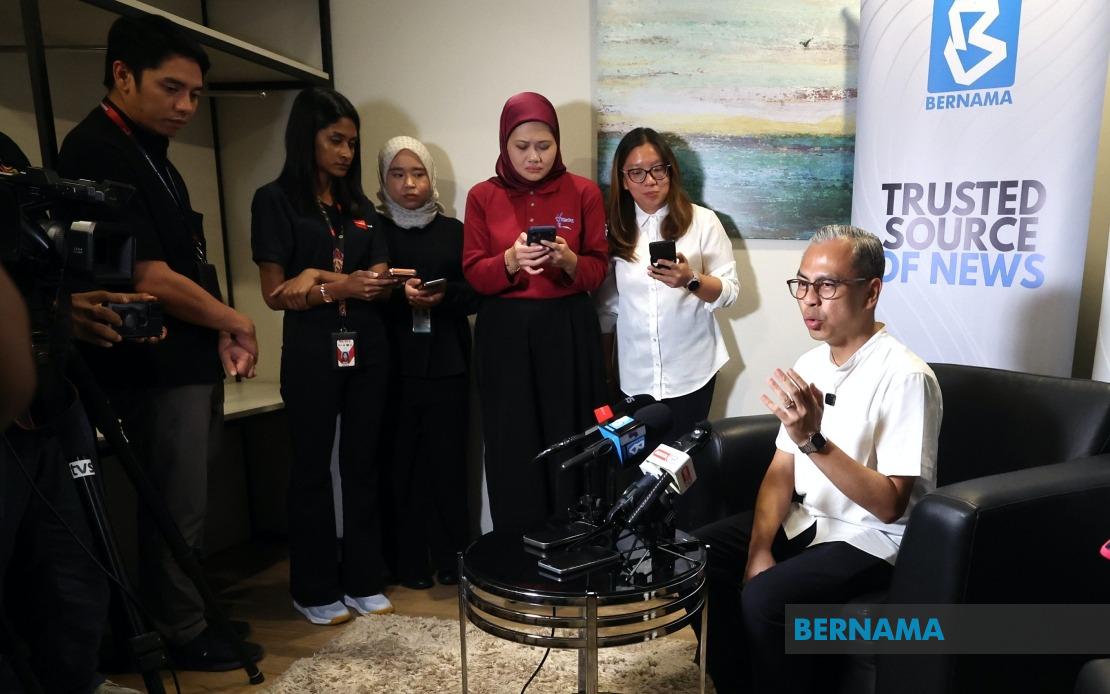
Communications Minister Datuk Fahmi Fadzil has announced plans to fortify the Malaysian Media Council (MMM) as the cornerstone of the country's self-regulatory media framework, positioning it as essential infrastructure for maintaining ethical journalism standards while minimising government intervention. Speaking in Johor Bahru following a visit to the Malaysian National News Agency's operations centre, Fahmi outlined a vision where media organisations and digital platforms collectively address industry challenges through independent mechanisms rather than state apparatus, marking a significant shift in Malaysia's approach to content governance.
The government intends to provide substantial support during the MMM's formative phase, recognising that establishing credibility and operational capacity requires more than legislative backing. This financial and administrative assistance represents an acknowledgment that self-regulatory bodies often struggle during inception and that enabling their success serves broader policy objectives around media freedom and industry confidence. By framing such support as temporary rather than ongoing, the minister signalled that the council should develop sufficient institutional strength to operate autonomously within several years, avoiding the trap of permanent government dependency that could undermine its credibility.
Expanding membership constitutes a central pillar of the strengthening strategy. Fahmi emphasised that attracting additional media organisations to join the MMM amplifies its legitimacy and enforcement capacity, creating peer pressure for compliance with ethical standards. When journalists and editors know that misconduct cases will be evaluated by fellow practitioners rather than government bodies, the incentive structure shifts toward self-correction and professional discipline. Broader membership also distributes the financial burden of maintaining operations, reducing reliance on any single stakeholder and ensuring diverse perspectives in governance decisions.
A particularly notable development involves Prime Minister Datuk Seri Anwar Ibrahim's announcement that complaints against journalists from recognised media organisations will no longer trigger automatic government action. Instead, such grievances must first pass through MMM review processes, establishing the council as a filter that protects journalists from capricious prosecution while maintaining accountability mechanisms. This procedural change represents a meaningful democratic safeguard, as it introduces transparency and peer evaluation into what previously could be unilateral executive decisions. The mechanism acknowledges that investigative journalism sometimes provokes powerful subjects to seek retaliation through legal systems, and introducing an intermediate review stage allows professional assessment of whether conduct actually violated ethical codes or merely inconvenienced powerful interests.
The inclusion of social media platforms in this regulatory framework addresses a critical gap in Malaysia's current content governance architecture. Fahmi highlighted that while traditional media organisations generally adhere to professional ethical standards, social media exhibits fundamentally different content dynamics. Information shared on these platforms often lacks editorial review, contextual framing, or sensitivity to local sensitivities. The proliferation of unverified content, particularly surrounding crime incidents, demonstrates how digital platforms can amplify harm by circulating victim information and investigative details without considering Malaysian legal frameworks or cultural contexts. A notable case in Banting, where a teenager stabbed a student, illustrated this problem when victim identities and police investigation details spread rapidly across social media despite established journalistic restraint in traditional media.
Inviting social media platforms to participate in the MMM represents an innovative approach to regulating content in the digital age, as it seeks to influence platform governance through industry participation rather than state mandates. While most platforms maintain community guidelines, these global standards rarely account for jurisdiction-specific legal requirements or social considerations. By joining the council, platforms could access expertise about Malaysian context, learn best practices from local media organisations, and develop policies that balance free expression with genuine harm prevention. This soft-power approach avoids the regulatory pitfalls of government-imposed restrictions while creating incentives for platforms to demonstrate responsible behaviour.
The initiative carries significance for Malaysia's international standing on media freedom indicators. Fahmi explicitly connected the MMM's strengthening to improving Malaysia's position in the Media Freedom Index, a metric that influences perceptions of the country's democratic institutions among international investors, civil society observers, and foreign governments. By demonstrating that Malaysia can establish credible self-regulatory mechanisms that function independently from political interference, the country distinguishes itself from peers employing heavy-handed content controls. This positioning enhances Malaysia's appeal as a regional technology hub and creative industries destination, as multinational companies increasingly consider press freedom conditions when choosing operational bases.
The distinction between traditional media participation and social platform engagement reflects growing recognition that regulatory frameworks must adapt to technological change. Traditional journalists typically work within institutional structures emphasising editorial standards, fact-checking procedures, and ethical training. Social media participants operate within drastically different incentive systems where engagement metrics and algorithmic amplification drive behaviour, often rewarding sensation over accuracy. Addressing these divergent dynamics requires regulatory approaches that acknowledge their structural differences rather than applying uniform standards that might prove either ineffective or counterproductive depending on context.
Implementing this framework will require careful negotiation with international platforms accustomed to global policy frameworks. Major social media companies may resist joining jurisdiction-specific regulatory bodies, fearing precedent-setting or operational complexity. However, framing MMM participation as a positive pathway toward demonstrable self-governance might appeal to platforms seeking to improve relationships with governments concerned about content moderation. For Malaysia particularly, where digital penetration exceeds 85 percent and social media influences political discourse significantly, establishing effective content governance mechanisms protects both public discourse quality and national stability without resorting to authoritarian measures that would damage the country's democratic credentials and international reputation.

