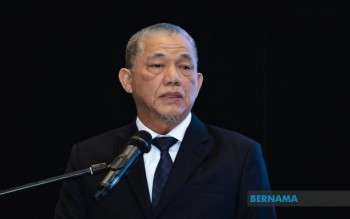
Malaysia is charting an ambitious course to breathe new economic life into aging coal power stations by converting them into renewable energy hubs and battery storage systems. Deputy Prime Minister Datuk Seri Fadillah Yusof unveiled the strategy at the closing ceremony of the World Economic Forum's "Malaysia's Energy Future: Power Sector Decarbonisation Deep Dive" in Kuala Lumpur, signalling a pragmatic approach to managing the country's energy transition while safeguarding infrastructure investments and local employment.
The proposed National Coal Site Repurposing Framework recognises that retiring coal facilities represent far more than redundant equipment. These power stations sit atop accumulated advantages—established electrical transmission networks, industrial infrastructure, and strategically valuable land parcels—that would be wasteful to abandon. Rather than allowing these assets to languish as stranded infrastructure, the government views them as platforms for creating fresh economic opportunities aligned with Malaysia's decarbonisation pathway. This reframing reflects a growing global recognition that successful energy transitions must engage existing communities and leverage installed advantages rather than simply abandoning them.
Fadillah, who also serves as Energy Transition and Water Transformation Minister, explained that selected coal plant sites possess inherent strengths for transformation into clean energy facilities. Their grid connections, built-out infrastructure, and proximity to established industrial zones and population centres make them natural candidates for hosting large-scale solar arrays, battery energy storage systems, and other renewable installations. The framework aims to establish structured dialogue among government agencies, energy regulators, utility operators, investors, and local communities to shape viable repurposing strategies that benefit all stakeholders. This collaborative architecture reflects lessons learned from energy transitions elsewhere, where top-down approaches without community input have faced resistance and implementation delays.
The repurposing agenda carries significant employment implications for Malaysia's coal-dependent regions. Each retiring power station represents an opportunity to develop new industrial clusters, attract manufacturing investment in battery technology and renewable equipment, and retrain existing workforces for roles in clean energy sectors. By anchoring economic development around these transition sites, Malaysia can soften the blow for coal communities while positioning them as nodes in the emerging clean energy economy. This approach aligns with broader Malaysian development objectives of creating skilled, high-value jobs beyond traditional extraction and generation sectors.
Malaysia remains committed to a disciplined decarbonisation timeline. The country has pledged to cease constructing new coal-fired power plants immediately, phase out coal-based electricity generation entirely by 2044, and achieve 70 per cent renewable energy installed capacity by 2050. These targets represent substantial reorientation of the nation's energy infrastructure, yet they must be executed carefully to maintain grid stability and economic competitiveness. The coal site repurposing framework fits within this broader trajectory, transforming erstwhile coal assets into engines of clean energy development rather than stranded liabilities.
A critical challenge underpinning Malaysia's transition involves sequencing renewable deployment ahead of coal retirement. Fadillah warned against inadvertently trading coal dependence for excessive reliance on imported liquefied natural gas, a scenario that would simply shift vulnerability from one external fuel source to another. Malaysia's geographic position in Southeast Asia exposes it to volatile international energy markets and geopolitical disruptions affecting fuel supplies and pricing. Only by accelerating renewable capacity faster than coal capacity declines can Malaysia genuinely reduce external energy dependence and build resilience. This sequencing imperative shapes investment priorities across the energy sector and underscores why solar deployment, battery storage, and grid modernisation must advance at pace.
The Energy Transition and Water Transformation Ministry is prioritising multiple mechanisms to accelerate clean energy deployment. Large-scale solar projects, particularly through competitive tendering processes, are attracting both domestic and foreign investment in utility-scale renewable generation. The Corporate Renewable Energy Supply Scheme enables businesses to source renewable power directly from producers, bypassing traditional utility channels and driving private-sector renewable investment. Battery energy storage systems address the intermittency challenges inherent in solar and wind generation, smoothing supply variability and enhancing grid reliability. Simultaneously, smart grid modernisation upgrades electrical networks to accommodate distributed renewable sources, real-time demand management, and enhanced resilience against disruptions.
Regional energy cooperation figures prominently in Malaysia's transition strategy. Fadillah reaffirmed commitment to advancing the ASEAN Power Grid initiative, which would enable cross-border electricity trading among Southeast Asian nations. This infrastructure would allow Malaysia to import renewable power from neighbouring countries with superior solar or hydroelectric resources during peak seasons and export domestically generated renewable power during surplus periods. Cross-border electricity trade thus multiplies effective renewable capacity across the region, reduces costly excess generation, and strengthens collective energy security against supply shocks affecting any single nation. For Malaysia specifically, integration into a functioning regional grid diminishes pressure to maintain large spinning reserves of natural gas or coal capacity for grid stability.
Malaysia is simultaneously exploring longer-term low-carbon energy options, including advanced nuclear technologies and small modular reactors. These technologies could provide stable, carbon-free baseload power complementing variable renewables, though they require robust safety frameworks, sophisticated regulatory governance, and public confidence. Nuclear deployment in Malaysia would represent a significant shift in energy policy and public perception, necessitating extensive consultation, transparent decision-making, and demonstrated competence in reactor operations and waste management. International cooperation with established nuclear powers would be essential to building domestic expertise and ensuring rigorous safety standards.
The coal site repurposing framework represents more than a technical exercise in asset recycling; it embodies a philosophy that energy transitions succeed when they create tangible opportunities for workers, communities, and investors rather than merely imposing losses. By anchoring renewable energy development at existing coal plant sites, Malaysia can achieve environmental objectives while maintaining employment, preserving industrial ecosystem advantages, and sustaining local economic vitality. This integrated approach to decarbonisation—combining coal phase-out with strategic repurposing, renewable acceleration, regional cooperation, and emerging clean technologies—positions Malaysia to navigate an equitable, economically sound transition toward a low-carbon energy system.

