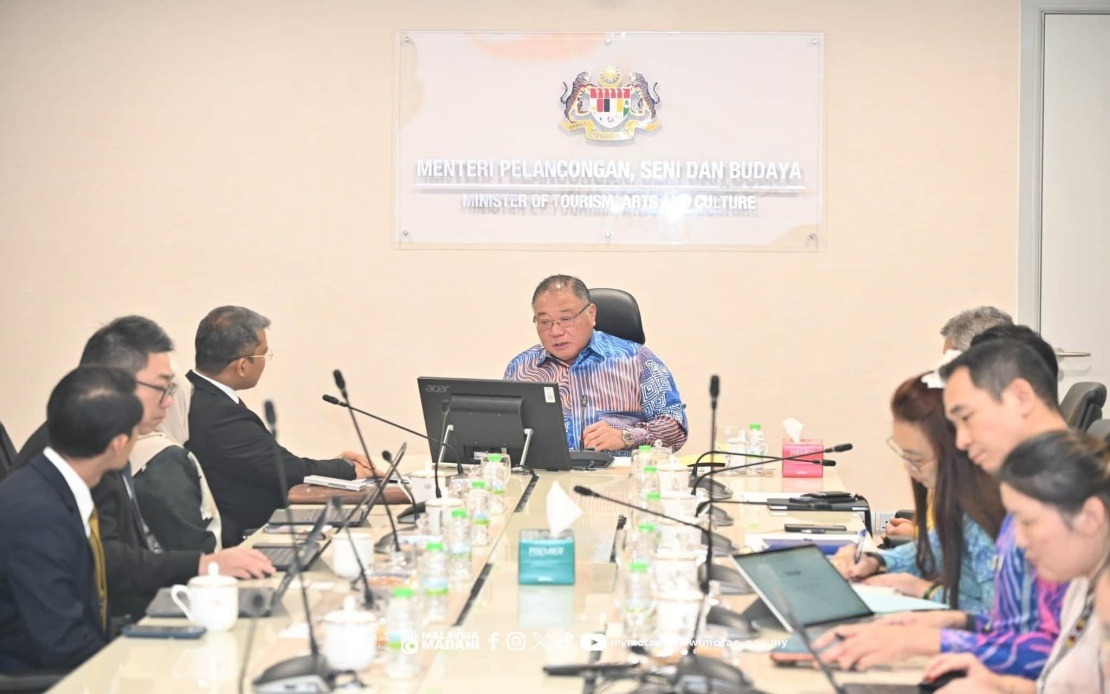
The Ministry of Tourism, Arts and Culture (MOTAC) and Malaysia Aviation Group (MAG) have moved to deepen their strategic alliance, signalling a coordinated push to revitalise Malaysia's tourism sector heading into 2026. A meeting between Tourism, Arts and Culture Minister Datuk Seri Tiong King Sing and MAG Group president and chief executive officer Captain Nasaruddin A Bakar in Putrajaya underscored the government's commitment to leveraging aviation infrastructure as a cornerstone of its broader destination marketing strategy. The collaboration represents a significant shift toward integrated planning across the public and private aviation sectors, reflecting recognition that Malaysia's competitiveness in attracting global visitors hinges on seamless connectivity and coordinated promotional efforts.
The partnership encompasses an ambitious expansion of MAG's international flight network, with particular emphasis on high-growth markets. India, China and Europe are earmarked as priority regions for network development, acknowledging the substantial outbound traveller populations in these areas and their demonstrated appetite for Southeast Asian tourism experiences. Beyond traditional gateway cities, both organisations are exploring new destinations including Fukuoka, signalling a deliberate strategy to diversify connectivity options and tap secondary markets that may offer less crowded travel corridors and emerging consumer demographics. This geographical diversification aligns with broader trends in tourism distribution, where emerging middle-class travellers increasingly bypass primary hubs in favour of more direct routing to their chosen destinations.
The Visit Malaysia Year 2026 campaign, which has been extended to run through 2026, provides the institutional framework for this intensified collaboration. The original VM2020 initiative preceded the COVID-19 pandemic, which substantially disrupted global tourism flows and forced Malaysia to recalibrate its target metrics and timelines. The decision to extend VM2026 reflects policymakers' belief that sustained, multi-year campaigns create greater momentum than single-year promotional bursts, allowing industry stakeholders adequate time to reconfigure capacity, train personnel and embed Malaysia into international travel planning cycles. The extended timeline also hedges against external shocks, providing flexibility if economic conditions or geopolitical developments impact traveller demand.
A critical component of the revitalised partnership focuses on optimising airline operations during traditionally weak demand periods. Joint marketing and flight promotion initiatives are designed specifically to address the perennial challenge of load factors—the percentage of available seat capacity that airlines fill—during low seasons. This tactical approach demonstrates sophisticated understanding of aviation economics; by targeting off-peak periods, both MOTAC and MAG can expand visitor arrivals without requiring proportional increases in aircraft or infrastructure investment. Strategic pricing, themed promotional campaigns and coordinated marketing messages can stimulate leisure travel during typically slower months, smoothing revenue flows and enabling more consistent employment across tourism-dependent sectors including hospitality, food service and cultural attractions.
Beyond marketing mechanics, the partnership extends into the lived experience of travellers. Both organisations have committed to enhancing passenger satisfaction through systematic improvements across multiple service dimensions. Upgrades to cabin facilities address the growing consumer expectation for comfort parity across airlines operating from developing nations; this matters particularly for long-haul routes where fatigue directly influences traveller mood and subsequent destination perceptions. Enhanced in-flight catering reflects recognition that food experience has become integral to how travellers evaluate their journey and form impressions of destination cultures. Improved cabin crew training elevates service consistency and creates opportunities for Malaysian hospitality values to make favourable impressions before visitors even arrive onshore. These cumulative improvements create a travel experience that begins upon boarding and extends into how visitors remember their entire Malaysia encounter.
The collaboration also explicitly targets strengthening Malaysia's domestic tourism ecosystem. Rather than concentrating tourism development among major international operators, the partnership framework acknowledges that sustainable tourism growth depends on benefits percolating through local supply chains. Hotels, restaurants, tour operators, artisan producers and cultural institutions all form part of the broader ecosystem that determines whether international visitors transform their arrival into repeat visitation and positive word-of-mouth recommendations. By intentionally structuring the partnership to amplify benefits for local industry players, MOTAC and MAG signal commitment to tourism models that generate employment and economic activity beyond the airline sector itself.
From a competitive positioning standpoint, the intensified MOTAC-MAG collaboration reflects strategic calculation about Malaysia's position within the regional tourism hierarchy. Thailand, Indonesia and Vietnam have all invested substantially in aviation capacity, destination branding and experiential infrastructure. Malaysia's historical advantages—political stability, English-language prevalence, multicultural appeal—face erosion as competing destinations professionalise their approaches. By tightening government-industry coordination, Malaysia seeks to reassert leadership in convenience and quality of visitor experience. This matters particularly given that Malaysian tourism has historically performed strongly among affluent Asia-Pacific visitors with moderate leisure budgets, demographics where service consistency and ease of logistics drive purchasing decisions.
The government's emphasis on closer cooperation between public sector, aviation industry and tourism operators reflects understanding that siloed decision-making hobbles competitiveness. When airlines, hotels, attractions and transport operators lack coordination mechanisms, visitors often encounter fragmented experiences marked by information gaps, inconsistent service standards and missed opportunities for bundled offerings. By formalising partnership frameworks, MOTAC and MAG create structures for regular consultation, joint problem-solving and aligned incentive structures. This institutional coordination doesn't eliminate competitive dynamics between individual firms but channels competition toward continuous improvement rather than destructive pricing spirals.
The economic implications of enhanced tourism flows extend substantially beyond the tourism sector proper. International arrivals generate foreign exchange earnings that strengthen Malaysia's balance of payments position, provide multiplier effects throughout service sectors and create export opportunities for cultural products and agro-tourism experiences. Higher visitor volumes also incentivise infrastructure investment in secondary cities, potentially redistributing economic benefits beyond Kuala Lumpur and Penang. In regional context, Malaysia's position as a stable, accessible hub within ASEAN gains reinforcement when international accessibility improves and visitor experiences solidify the destination's reputation for reliable, quality tourism experiences. These competitive advantages become particularly relevant as global wealth concentrates increasingly in Asia, creating unprecedented demand for aspirational travel experiences that Malaysian offerings are well-positioned to deliver.

