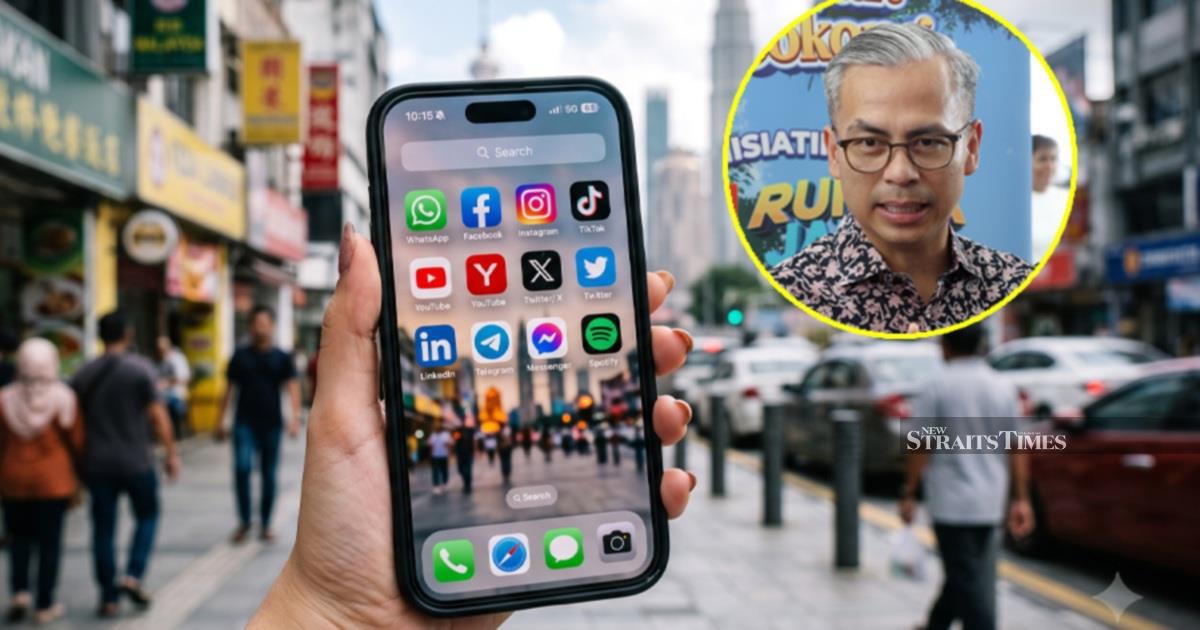
Communications Minister Datuk Seri Fahmi Fadzil has flagged a significant disinformation problem threatening Malaysia's digital landscape, with authorities tracking over 1,800 inauthentic social media profiles actively operating across multiple platforms. The detection represents a coordinated effort by the ministry to counter what officials characterise as a systematic network designed to manipulate public sentiment and exploit deeply entrenched social sensitivities within the Malaysian context.
The proliferation of these accounts marks a troubling escalation in digital manipulation tactics within Southeast Asia's third-largest economy. Rather than operating in isolation, many of these fraudulent profiles appear to be part of coordinated campaigns deliberately amplifying discourse surrounding race, religion, and royalty—the three most constitutionally protected and socially sensitive domains under Malaysian law. This convergence suggests a deliberate strategy to weaponise cultural divisions for political or commercial gain, leveraging the rapid spread of unverified content across platforms where millions of Malaysians conduct daily social interaction.
The 3R framework has long been considered a red line in Malaysian public discourse, embedded within constitutional safeguards and societal norms intended to maintain communal harmony in this multiethnic nation. When inauthentic accounts concentrate their messaging around these topics, they amplify existing tensions and create false impressions of widespread opinion that may not reflect genuine public sentiment. The authenticity deficit created by fake accounts fundamentally distorts the information ecosystem, making it harder for citizens to discern genuine grievances from manufactured controversy.
The ministry's detection capability indicates growing sophistication in monitoring digital spaces, though experts suggest the identified 1,800 accounts likely represent only a fraction of the broader inauthentic network operating across Malaysia's digital platforms. Social media companies have long struggled to detect coordinated inauthentic behaviour, particularly when campaigns employ techniques such as account recycling, linguistic adaptation, and time-zone distribution to evade automated systems. The actual scope of fake account operations may significantly exceed what authorities have publicly disclosed, creating uncertainty about the true scale of disinformation affecting Malaysian public discourse.
Fahmi's announcement comes amid growing international concern about social media's role in amplifying divisive content. The pattern observed in Malaysia mirrors disinformation strategies documented across Southeast Asia, where coordinated inauthentic networks exploit platform algorithms to maximise engagement with emotionally charged material. In Malaysia's context, where digital literacy varies significantly across demographic groups and linguistic barriers sometimes limit fact-checking resources in minority languages, the effectiveness of such campaigns may be particularly pronounced.
The identification of these accounts raises critical questions about platform responsibility and accountability. While social media companies maintain terms of service prohibiting fake accounts, enforcement remains inconsistent and often reactive rather than preventative. Malaysian authorities face a delicate balancing act—cracking down on disinformation without infringing on legitimate free speech or creating tools that could be weaponised against dissidents and civil society organisations. The approach adopted will likely set precedents influencing how other Southeast Asian governments address similar challenges.
The timing of this revelation carries political implications for Malaysia's ongoing efforts to strengthen digital governance. The country has been developing frameworks to address online harms, including proposed legislation and platforms for reporting malicious content. However, without robust cooperation from technology companies and sustained investment in digital literacy initiatives, reactive detection of fake accounts offers limited protection against the systematic erosion of trust in online information sources. Citizens increasingly struggle to determine which accounts represent genuine individuals or organisations, undermining the democratic potential of digital spaces.
International precedent suggests that coordinated inauthentic behaviour campaigns rarely emerge spontaneously. The deliberate targeting of 3R issues indicates possible orchestration by actors with specific political objectives, whether domestic or external. Tracking the origin and funding sources of these networks remains challenging, particularly when fake accounts utilise sophisticated obfuscation techniques and operate across jurisdictions with varying data protection regimes. Malaysian authorities have not yet publicly disclosed whether they have identified the architects behind this network.
The implications extend beyond immediate concerns about public order and social harmony. Systemic manipulation of digital discourse affects how citizens understand critical national issues, from economic policy to healthcare to environmental management. When portions of the information ecosystem are flooded with inauthentic content, genuine civic engagement becomes more difficult, and policy debates become distorted by manufactured consent rather than authentic public deliberation. This degradation of digital public space represents a subtle but significant threat to Malaysia's democratic processes.
Moving forward, addressing this challenge will require multifaceted interventions involving government, technology platforms, civil society, and educational institutions. Media literacy programmes targeting Malaysian audiences across age groups and language communities could help citizens develop critical evaluation skills when encountering online content. Simultaneously, transparency initiatives requiring social media companies to regularly disclose enforcement actions and provide researchers access to data about inauthentic behaviour patterns would enable better understanding and response to these threats. The ministry's detection of 1,800 fake accounts should catalyse broader conversations about protecting Malaysia's digital commons from coordinated manipulation while preserving the legitimate uses of social media for political expression, community organising, and public discourse.

