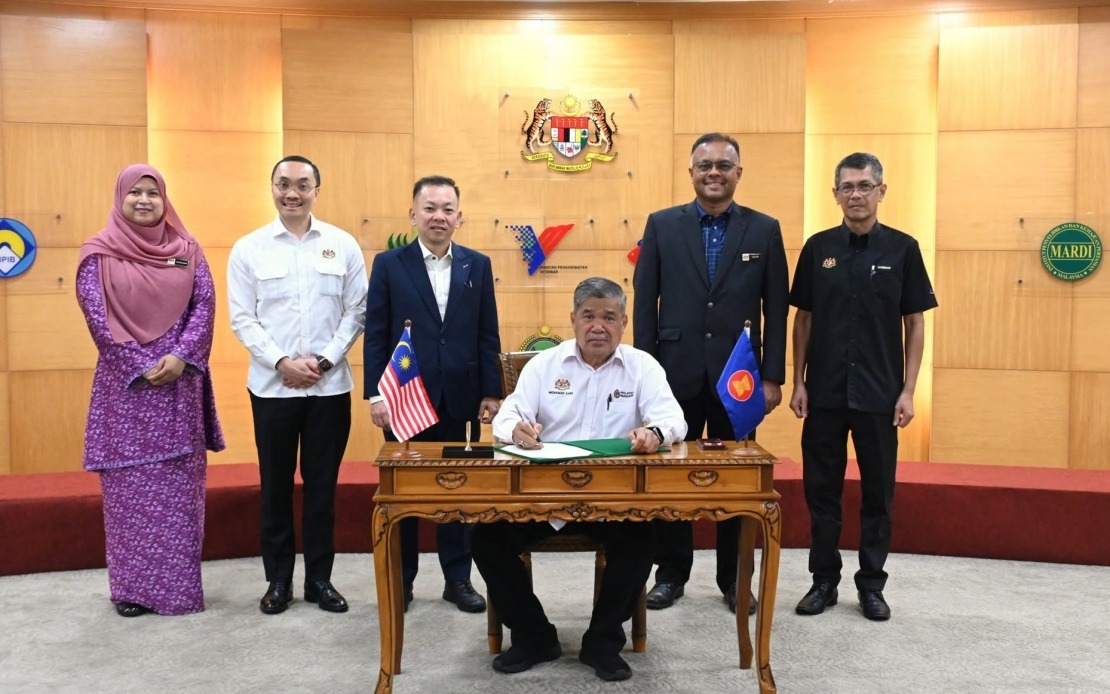
Malaysia has secured fresh opportunities to expand its presence in regional and global markets through two significant Memoranda of Understanding inked under the ASEAN framework, bolstering prospects for the nation's agri-food, commodity and forestry sectors. The agreements, finalised at the recent ASEAN Ministers on Agriculture and Forestry meeting, position Malaysian producers to benefit from enhanced market access while simultaneously gaining technological leverage in climate-resilient agricultural practices. Agriculture and Food Security Minister Datuk Seri Mohamad Sabu signed both documents on the government's behalf, reflecting the strategic importance both Putrajaya and the broader ASEAN bloc place on food security and sustainable agricultural development.
The first accord, the ASEAN Cooperation in Agriculture and Forest Products Scheme, represents a collaborative framework among all ASEAN member states designed to address multiple dimensions of agricultural prosperity and resilience. Structured around five foundational pillars, the scheme addresses critical regional concerns spanning from ensuring adequate food supplies across member economies to facilitating smoother cross-border commerce in agricultural and forest commodities. By establishing mechanisms for coordinated private sector engagement and encouraging investment flows throughout the bloc, the agreement creates infrastructure for capital and expertise to move freely toward productive opportunities. Simultaneously, the pact commits signatory nations to responsible stewardship of natural resources, recognising that long-term agricultural viability depends on ecological sustainability rather than extractive approaches that deplete environmental capital.
Malaysia's role under this framework assumes particular significance given the nation's substantial agricultural capabilities and established export infrastructure. The Ministry of Plantation and Commodities has assumed leadership responsibility for coordinating palm oil and cocoa initiatives regionally, while the Ministry of Agriculture and Food Security will spearhead Malaysia's agri-food product portfolio. This bifurcated leadership structure reflects the distinct commercial and technical requirements of different commodity streams. Through coordinated action, ASEAN members can mount collective marketing campaigns defending the reputation and market position of commodities facing international scrutiny or competition, with palm oil being especially relevant given Malaysia's status as a global producer and persistent external criticism regarding sustainability practices.
The scheme's reach extends considerably beyond tropical commodities alone. Industrial crops, livestock products, herbal and medicinal goods, and forest-derived items such as mushrooms, nuts and honey all fall within the cooperation's scope, offering Malaysian producers multiple pathways to market expansion. For many of these categories, ASEAN's combined market weight and coordinated promotion can overcome individual nations' limitations in international negotiating power. Smaller producers particularly benefit from pooled resources for marketing, quality standardisation and regulatory navigation. The emphasis on private investment facilitation signals that the scheme operates not through state direction alone but through creating environments where commercial actors identify and pursue opportunities with government providing enabling conditions.
The second MoU, negotiated between ASEAN collectively and China, introduces a distinct dimension centred on technological advancement and agricultural modernisation. Spanning eighteen distinct cooperation areas over a five-year implementation period, the agreement targets the intersection of productivity enhancement and environmental responsibility. Climate-smart agriculture represents perhaps the most strategically significant component, as it addresses the tension between producing adequate food supplies and adapting to environmental changes increasingly affecting harvests across tropical regions. Sustainable forest management provisions complement this climate focus, acknowledging that forests provide services beyond timber extraction, including carbon sequestration and watershed protection critical to agricultural productivity downstream.
The ASEAN-China cooperation mechanism specifically addresses vulnerabilities that have become more apparent in recent years. Disaster risk management and agricultural insurance provisions recognise that floods, droughts and other climatic events pose existential threats to food production and rural livelihoods, particularly affecting economies dependent on rain-fed agriculture. By establishing coordinated approaches to catastrophic risk, member nations can pool resources and knowledge for early warning systems, climate adaptation strategies and recovery mechanisms. Cross-border pest and disease control provisions reflect the reality that agricultural threats rarely respect political boundaries; a disease outbreak in one nation spreads rapidly through regional supply chains unless coordinated prevention and response systems exist.
For Malaysia specifically, access to climate-smart agricultural technology carries substantial implications. The nation's agricultural sector, while economically significant, faces mounting pressure from changing precipitation patterns, temperature fluctuations and emerging crop diseases. Chinese agricultural expertise and innovation, accumulated through managing food security across the world's largest population, offers practical value in developing farming methods suited to tropical Southeast Asian conditions while reducing carbon intensity. Technology transfer mechanisms embedded within the agreement facilitate access to research findings, equipment innovations and management practices without requiring Malaysia to reconstruct this knowledge independently.
The emphasis on research cooperation and development expertise sharing within the ASEAN-China framework creates pathways for Malaysian agricultural scientists and policymakers to engage with cutting-edge innovation networks. Universities and research institutions can establish collaborative relationships accelerating the adaptation of global best practices to local conditions. Policy coordination dimensions enable governments to share regulatory approaches and lessons from implementation challenges, avoiding duplicative mistakes and accelerating the adoption of effective frameworks. Trade information systems connecting participating economies reduce asymmetries that previously disadvantaged smaller suppliers negotiating with larger partners.
From a broader Southeast Asian perspective, these agreements represent a maturation of ASEAN cooperation beyond rhetorical commitments to concrete institutional frameworks with enforcement mechanisms and resource allocation. The food security dimension assumes heightened urgency given regional population growth, environmental degradation and the region's exposure to climate change impacts. By anchoring agricultural cooperation within formal multilateral structures rather than relying on bilateral negotiations, ASEAN member states create more stable and predictable trading environments reducing commercial uncertainty. The inclusion of China as a partner rather than competitor reflects evolving geopolitical relationships within the Indo-Pacific, positioning ASEAN as a convening entity capable of negotiating collective arrangements benefiting all participants.
Malaysia's strategic position at the nexus of these arrangements merits particular attention. As a middle-income economy with diversified agricultural capabilities and established agro-processing industries, the nation can serve as a hub for value-chain integration across ASEAN. Malaysian companies working in commodity trading, food processing and export logistics gain opportunities to expand operations across the broader regional market while accessing new supplier networks. The agreements create competitive pressures encouraging efficiency improvements and innovation diffusion throughout participating economies.
The practical implications for Malaysian farmers, agribusiness enterprises and consumers extend across multiple dimensions. Smallholder farmers engaged in crops falling under expanded market access provisions gain outlets for production previously limited to domestic or limited regional sales. Larger exporters acquire frameworks for establishing regional supply chains reducing costs and improving reliability. Consumers potentially benefit from improved food security reducing price volatility and supply disruptions. However, realising these benefits requires competent government implementation, responsive private sector adaptation and investments in infrastructure connecting producers with markets.

