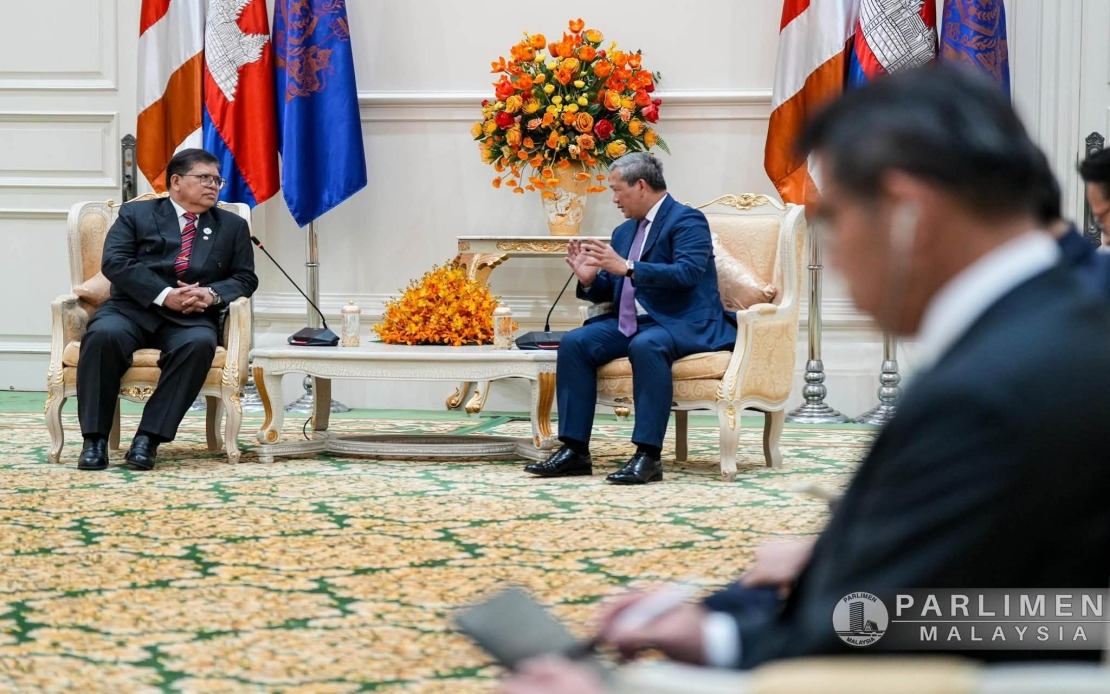
Malaysia has thrown its weight behind a diplomatic approach to resolving the ongoing border dispute between Cambodia and Thailand, with Dewan Rakyat Speaker Tan Sri Johari Abdul emphasising that dialogue must remain central to finding a lasting solution. Speaking during an official visit to Phnom Penh, Johari underscored the critical importance of maintaining constructive engagement between the two neighbours, warning that allowing bilateral tensions to escalate could undermine the collective strength and solidarity that ASEAN has built over decades.
The border question has become an increasingly sensitive issue within Southeast Asia, with communities living near the disputed territory bearing the brunt of periodic tensions and security uncertainties. Johari's intervention signals Malaysia's concerns about the potential spillover effects of unresolved disputes within the region's most influential bloc. His comments came during a bilateral meeting with Cambodian Prime Minister Hun Manet on the margins of the Second Inter-Parliamentary Speakers' Conference held in Phnom Penh from August 26 to 28, a gathering that brought together legislative leaders from across the region to discuss matters of mutual concern.
In his remarks, Johari demonstrated Malaysia's nuanced understanding of Cambodia's position, acknowledging the concerns facing the Cambodian government over developments along its border with Thailand and recognising the hardships experienced by local residents affected by the dispute. Rather than taking sides, Malaysia positioned itself as a constructive mediator committed to facilitating dialogue rather than escalating rhetoric. This measured stance reflects Kuala Lumpur's broader diplomatic philosophy within ASEAN, where Malaysia has consistently advocated for resolving differences through multilateral platforms and peaceful negotiation rather than confrontation.
The speaker stressed that ASEAN's fundamental purpose has always centred on building mutual trust among member states and creating mechanisms through which nations can address grievances without resorting to conflict. The bloc's success over the past five decades has rested on a commitment to finding common ground and managing disagreements in ways that strengthen rather than fracture regional cohesion. Johari's position reflects Malaysia's view that allowing any bilateral dispute to fester poses risks to the broader architecture of regional cooperation that benefits all Southeast Asian nations economically, politically and strategically.
Beyond the border question, Johari and Hun Manet discussed a comprehensive range of bilateral issues reflecting the depth of Malaysia-Cambodia relations. The two leaders explored opportunities for expanding parliamentary cooperation, recognising that legislatures play a crucial role in shaping national policies and building people-to-people connections. Economic engagement featured prominently in their discussions, with both sides acknowledging the growing importance of trade and investment flows between Kuala Lumpur and Phnom Penh as drivers of shared prosperity.
Youth engagement emerged as a particular priority for both nations, with both leaders agreeing that younger generations represent the future of bilateral ties. Johari advocated for expanding exchange programmes and creating more platforms for Cambodian and Malaysian youth to interact across educational, economic, social and parliamentary spheres. Such initiatives go beyond symbolic gestures, potentially creating networks of mutual understanding that can help prevent future misunderstandings and build lasting personal connections between citizens of both countries.
Technical and Vocational Education and Training formed another substantive area of discussion, with both sides recognising the potential for deeper cooperation in skills development and workforce preparation. Malaysia's experience in TVET systems could provide valuable lessons for Cambodia as it seeks to upgrade its human capital and prepare its workforce for the demands of a rapidly evolving regional economy. Discussions encompassed not only knowledge transfer but also concrete institutional exchanges and industry collaboration models that could create genuine value for workers and businesses in both nations.
Johari also extended Malaysia's appreciation for Cambodia's efforts in creating a welcoming environment for Malaysian business investments and operations. This acknowledgment serves multiple purposes, reinforcing positive relations while encouraging the Cambodian government to maintain investor-friendly policies that benefit the broader ASEAN economic space. The business community in Malaysia views Cambodia as an increasingly important market and production base, and Johari's comments reflected official support for deepening these commercial ties.
Malaysia's commitment to supporting efforts to bring all parties to Cambodia-Thailand disputes back to the negotiating table demonstrates how individual ASEAN members can contribute to regional stability without formal mediation roles. By consistently emphasising dialogue and expressing support for diplomatic solutions, Malaysia contributes to an intellectual and diplomatic climate that favours negotiation over confrontation. This approach aligns with Malaysia's broader strategic interests, as regional instability threatens trade routes, investor confidence and the prosperity upon which all Southeast Asian nations depend.
The broader significance of Johari's statements extends beyond bilateral Malaysia-Cambodia relations to encompass Malaysia's vision for ASEAN as it navigates geopolitical complexities and internal challenges. As the region faces external pressures from major powers competing for influence, internal solidarity becomes ever more valuable. Malaysia's consistent advocacy for dialogue and diplomatic solutions reinforces the principles enshrined in the ASEAN Charter and the ASEAN Way, approaches that have generally served the region well in maintaining peace and enabling economic integration despite significant differences in political systems, development levels and foreign policy orientations.
Looking forward, Malaysia's position suggests it will continue leveraging its parliamentary and diplomatic channels to promote constructive engagement on the Cambodia-Thailand question. While formal mediation might fall to ASEAN secretariat mechanisms or the regional forum, individual member states like Malaysia play important supporting roles through high-level dialogue and advocacy for peaceful resolution. The effectiveness of such efforts ultimately depends on whether Cambodia and Thailand themselves prioritise negotiation, but Malaysia's vocal support for dialogue creates diplomatic pressure that can facilitate movement toward solutions.

