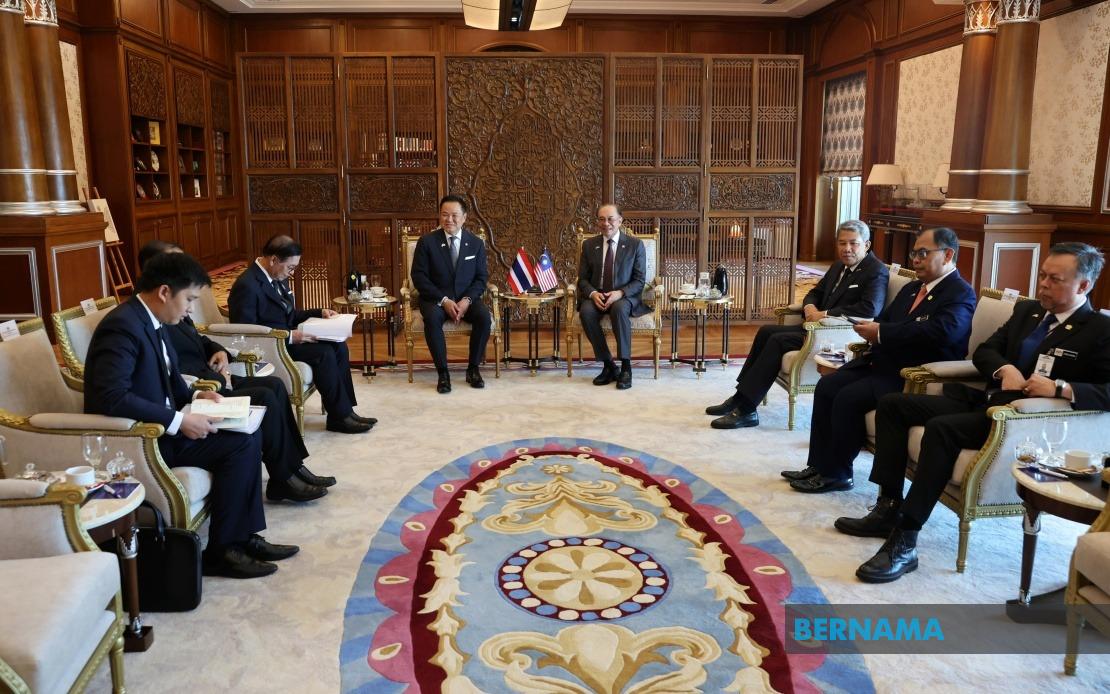
Prime Minister Datuk Seri Anwar Ibrahim has doubled down on Malaysia's diplomatic stance toward the Myanmar conflict, arguing that constructive engagement remains the most viable path forward for the troubled Southeast Asian nation. Speaking at a joint press conference in Putrajaya following high-level talks with visiting Thai Prime Minister Anutin Charnvirakul on Thursday, Anwar articulated a position that emphasises regional agency and Myanmar's own capacity for self-determination rather than external pressure or isolation tactics that have characterised some international responses to the 2021 military coup.
The Malaysian premier's emphasis on allowing Myanmar's people to chart their own political course reflects a broader ASEAN philosophy that privileges non-interference and sovereign decision-making, even when member states face serious internal instability. This approach stands in contrast to more interventionist stances adopted by Western nations and reflects the regional consensus that sustainable solutions must emerge from within Myanmar itself rather than being imposed from outside. Anwar's framing suggests that Malaysia views the prolonged nature of the crisis—now spanning over five years—as evidence that exclusionary strategies have reached their limits.
Announcing Thailand's potential pivotal role in advancing peace efforts, Anwar highlighted the geographic and diplomatic advantages Chiang Mai possesses as Myanmar's immediate neighbour. Thailand's position along the Myanmar border, combined with its long-standing economic and cultural ties to the country, positions Bangkok uniquely to facilitate back-channel communications and build trust among conflicting parties. The Malaysian government's confidence in Thailand's mediation capacity underscores a strategic calculation that neighbouring countries, with direct stakes in regional stability, may prove more effective intermediaries than distant international actors or formal multilateral mechanisms.
This diplomatic gambit carries particular significance given the humanitarian toll the Myanmar crisis continues to inflict across Southeast Asia. Millions of internally displaced persons and refugees, many sheltering in Thailand and Bangladesh, represent a destabilising factor that transcends Myanmar's borders. By encouraging Thailand to assume a more active peacemaking role, Malaysia tacitly acknowledges that regional security cannot be compartmentalised—instability in Myanmar threatens the prosperity and social cohesion of its neighbours, including Malaysia itself, which hosts significant numbers of Myanmar migrants and refugees.
Anutin's receptiveness to Malaysia's diplomatic overtures suggests emerging consensus among ASEAN heavyweights that the Five-Point Consensus, adopted by the regional bloc in April 2021, requires renewed emphasis and implementation. That framework, which calls for dialogue, non-interference, humanitarian assistance, and mediation through ASEAN, has faced criticism for lacking enforcement mechanisms and clarity on accountability. Malaysia's backing of engagement-based solutions indicates that regional powers remain committed to the ASEAN charter's founding principles even as the Myanmar situation tests those commitments severely.
The bilateral talks also touched on Thailand-Cambodia border tensions, an issue that has periodically flared into military confrontations and threatens the broader ASEAN project of regional peace. Anwar's appreciation for Anutin's commitment to maintaining tranquility along that frontier suggests Malaysia views Thailand as demonstrating responsible leadership in managing bilateral disputes through peaceful means. This implicit endorsement may carry diplomatic weight in Bangkok's domestic political calculations and reinforces the message that regional leadership requires not only managing one's own conflicts but setting examples for others.
Anutin's visit marks his first bilateral engagement with Malaysia since his political reappointment in March 2026, signalling that both governments view their bilateral relationship as sufficiently important to prioritise high-level renewal. The two-day official visit provides space for discussions extending beyond Myanmar and border issues to encompass economic cooperation, trade facilitation, and people-to-people exchanges. Such comprehensive engagement reflects recognition that durable regional stability requires multifaceted cooperation across security, economic, and social dimensions.
The ceremonial opening of transport infrastructure linking Bukit Kayu Hitam in Kedah with Sadao in Thailand on Friday carries symbolic weight beyond its practical benefits. The integration of the Immigration, Customs, Quarantine and Security Complex in Malaysia with its Thai equivalent represents tangible commitment to bilateral cooperation and demonstrates that both governments can execute complex technical projects despite periodic tensions. Enhanced border infrastructure facilitates legitimate trade and tourism whilst theoretically improving security screening capabilities, addressing both economic and safety concerns.
For Malaysia, positioning itself as a thoughtful voice advocating for dialogue-based solutions to the Myanmar crisis serves strategic interests beyond pure altruism. Regional stability directly affects Malaysian economic performance, labour markets dependent on migrant workers, and maritime security in crucial shipping lanes. By encouraging Thailand to play a more prominent mediation role, Malaysia distributes responsibility for managing the crisis across multiple regional actors rather than relying solely on ASEAN's collective institutional mechanisms, which have proven unwieldy and consensus-dependent.
The underlying logic of Malaysia's approach reflects pragmatic recognition that the Myanmar military leadership shows no immediate signs of capitulating to international pressure or ASEAN resolutions. Rather than accepting perpetual instability, the Malaysian government appears to favour a longer-term strategy of maintaining dialogue channels open, preserving Myanmar's seat within ASEAN despite widespread concerns over governance, and betting that sustained engagement by respected regional neighbours offers the best prospect for eventual democratic transitions or power-sharing arrangements.
This diplomatic positioning also signals to ASEAN's Western partners, particularly the United States and European Union, that the region prefers to manage its own crises through indigenous mechanisms rather than under pressure from external powers. Such messaging has domestic political utility within Malaysia and other ASEAN capitals, where nationalist sensibilities remain strong and historical grievances about colonial interference persist. By framing Myanmar's resolution as a regional responsibility requiring regional solutions, Anwar appeals to these sentiments whilst simultaneously maintaining Malaysia's standing as a pragmatic, internationally engaged power.
As the Myanmar situation remains frozen in the short term, the diplomatic engagement Malaysia champions may offer insufficient immediate relief to suffering civilians. However, the long-term logic holds that maintaining dialogue channels, preventing complete international isolation of the military government, and utilising regional mechanisms increase probabilities of eventual peaceful transitions compared to confrontational approaches that have yielded limited results. Malaysia's advocacy for engagement-based solutions thus represents a bet on the efficacy of patience, proximity, and persistent quiet diplomacy over isolation and pressure tactics.

