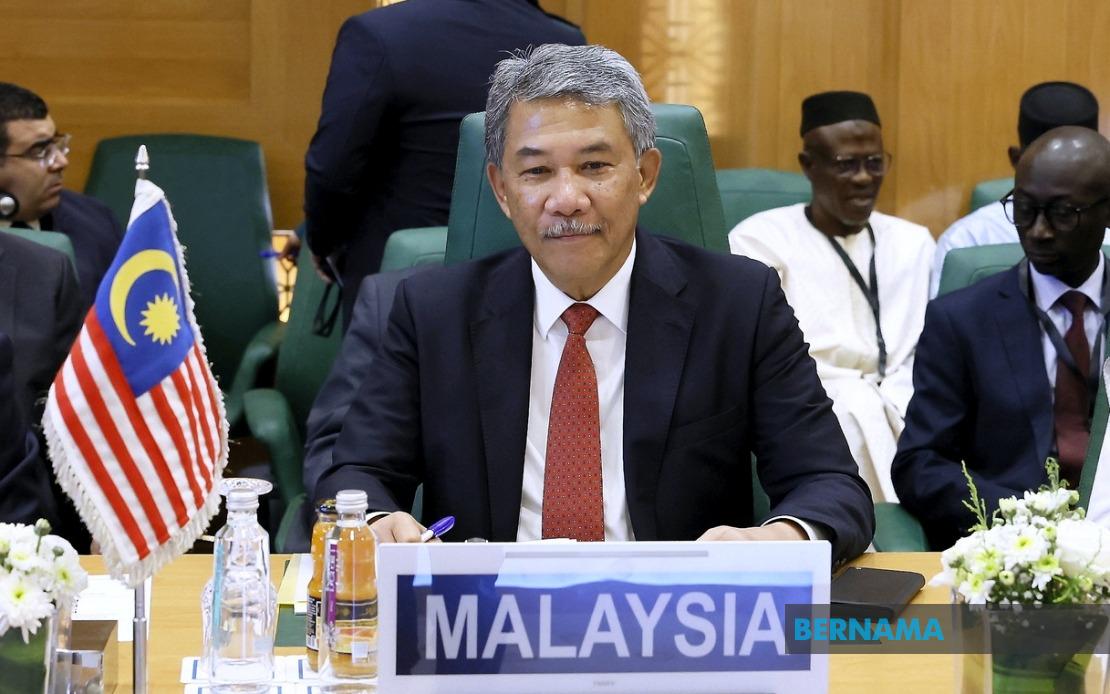
Malaysia has intensified its diplomatic campaign against Israeli settlement expansion by calling on all Organization of Islamic Cooperation member states to actively reject and withdraw support from what it characterises as illegal occupation measures. Speaking at an extraordinary OIC Council of Foreign Ministers meeting in Jeddah, Foreign Minister Datuk Seri Mohamad Hasan delivered a forceful condemnation of Israel's US$2.3 billion settlement initiative, positioning Malaysia at the forefront of regional resistance to what Kuala Lumpur views as systematic territorial appropriation in violation of international law.
The controversy centres on Israel's controversial E1 settlement plan, which Malaysian officials argue represents a deliberate strategy to render Palestinian statehood impossible by eliminating territorial contiguity. Rather than serving genuine security needs, Malaysia contends that these settlements are designed to fragment Palestinian-controlled land into disconnected enclaves, making political independence and viable governance fundamentally unachievable. This concern reflects a broader Southeast Asian perspective that sees settlement expansion as incompatible with any credible peace process.
Malaysia's position draws considerable weight from the International Court of Justice's July 2024 advisory opinion, which Malaysia invoked to strengthen its argument that OIC members have both legal and moral grounds to withhold recognition and support from Israeli occupation policies. The ICJ determination carries significant symbolic authority within Muslim-majority nations, and Malaysia sought to leverage this institutional validation to build consensus among the 57 OIC member states for coordinated diplomatic action. This represents an attempt to translate legal findings into concrete collective diplomatic pressure.
The settlement issue intersects with broader concerns about demographic change and religious sites in Jerusalem. Malaysia specifically condemned Israeli incursions into the Al-Aqsa Mosque compound on July 23, framing such incidents as provocations that destabilise the city's religious character and violate the historical Hashemite custodianship over Islamic and Christian holy sites. From Kuala Lumpur's perspective, these physical incursions embody a pattern of eroding Palestinian and Muslim presence and rights within occupied territories.
The Gaza humanitarian catastrophe featured prominently in Malaysia's statement, with officials emphasising the cumulative toll of nearly three years of conflict. The death toll exceeding 70,000, combined with widespread destruction of civilian infrastructure including homes, hospitals and schools, has created what Malaysia describes as a moral crisis that undermines the credibility of the international system itself. This framing positions the Palestinian question not merely as a territorial dispute but as a fundamental test of global governance legitimacy.
Malaysia renewed its unequivocal commitment to the two-state solution based on June 4, 1967 borders, with East Jerusalem designated as Palestine's capital. This position reflects Malaysia's consistent diplomatic stance over decades and represents a red line in Kuala Lumpur's Middle East policy. Rather than treating this as one possible outcome among several, Malaysian officials present it as the only viable framework for achieving sustainable regional peace, effectively rejecting any alternative arrangements that might compromise Palestinian sovereignty or territorial integrity.
The statement criticised Israel's blockade of humanitarian assistance to Gaza as systematic violation of international humanitarian law. Malaysia argued that the international community's repeated calls for ceasefire and humanitarian access, voiced for nearly three years, have been ignored, suggesting that voluntary compliance mechanisms have failed and stronger enforcement measures are required. This assessment reflects growing Malaysian frustration with what it perceives as selective application of international law standards.
Malaysia called for substantially increased OIC support for Palestinian institutional development, viewing state-building capacity as essential infrastructure for future independence. This reflects a strategic understanding that Palestinian statehood requires not merely territorial control but functioning administrative, judicial and security institutions capable of delivering public services and maintaining order. Such institution-building efforts would strengthen Palestinian claims to legitimate self-governance and prepare the groundwork for actual state formation.
The statement also targeted UN mechanisms that Malaysia views as having been compromised by Israeli actions. Specifically, Malaysia condemned the seizure of UNRWA's Kalandia Training Centre and legislation imposing mandatory death penalties on Palestinians, demanding that the Security Council enforce international law and protect UNRWA's mandate. This reflects Malaysian concerns that international humanitarian agencies are increasingly unable to operate effectively in occupied territories.
Malaysia explicitly demanded that Israel be held fully accountable for its actions through a rules-based international order. This framing represents a particular concern for Southeast Asian nations that depend on predictable legal frameworks for maritime commerce and territorial integrity. Malaysia's invocation of rules-based order suggests that allowing major powers to operate outside international law frameworks threatens the entire system that smaller nations rely upon for protection and dispute resolution.
The timing of Malaysia's intervention at the OIC extraordinary meeting reflects heightened regional concern about the trajectory of Israeli policy under current political leadership. By mobilising OIC member states to take coordinated positions, Malaysia aims to prevent normalisation of settlement expansion and signal that Muslim-majority nations retain agency in shaping Middle East developments despite limited military capacity. This diplomatic activism represents Malaysia's primary strategic tool in influencing outcomes it considers vital to regional stability and Islamic interests.
For Southeast Asian observers, Malaysia's vocal stance reflects broader tensions between maintaining commercial relationships with Western nations, including the United States, and upholding positions that resonate with domestic and regional Muslim constituencies. Malaysia's willingness to challenge Israeli policies at international forums demonstrates that economic considerations do not automatically override political and religious commitments, though such positions carry implications for Malaysia's broader diplomatic relationships that extend beyond the Palestinian question.

