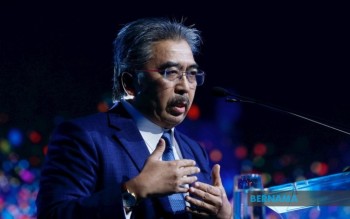
The Malaysian government faces a complex policy challenge in determining how to finance a nationwide electric vehicle charging network without placing undue burden on consumers or manufacturers. MITI Minister Datuk Seri Johari Abdul Ghani indicated during a parliamentary session that the ministry is still deliberating the most suitable approach to implement a proposed EV levy, emphasising that no final decision has been reached on whether such a charge will materialise.
The core dilemma confronting policymakers involves reconciling multiple objectives that often work in tension with each other. While Malaysia must accelerate its transition towards cleaner transportation and develop the infrastructure necessary to support widespread EV adoption, the government simultaneously operates under significant fiscal constraints that limit its capacity to fund such large-scale projects independently. This balancing act requires careful consideration of how costs should be distributed across different stakeholders in the automotive ecosystem.
Johari articulated the financial reality underlying this policy debate by pointing out that if manufacturers bear the levy burden, they will inevitably pass these charges downstream to vehicle buyers. This transmission mechanism means that the intended beneficiaries of EV infrastructure—the vehicle owners themselves—would ultimately shoulder the financial responsibility regardless of where the levy is formally assessed. The minister questioned whether it would be more transparent and economically efficient to impose charges directly on consumers or to maintain the indirect approach through manufacturer levies.
The scope of Malaysia's charging infrastructure challenge is substantial. Unlike China, which has deployed massive public charging networks funded by state investment and manufacturer participation, Malaysia lacks comparable resources and existing infrastructure. Building a comparable system would require sustained investment across urban and rural areas, necessitating mechanisms to generate dedicated revenue streams. A dedicated fund fed by EV levy proceeds could provide a sustainable, predictable source of financing specifically earmarked for charging station expansion rather than competing with other government spending priorities.
Malaysia's energy generation profile adds another layer of complexity to EV policy planning. The country remains significantly dependent on natural gas and coal-fired power plants to meet electricity demand, meaning the environmental benefits of EV adoption are partially offset by the carbon intensity of the grid supplying charging stations. This structural reality underscores why policymakers cannot simply transplant EV strategies from countries with predominantly renewable electricity systems. Any comprehensive EV rollout must account for the actual costs of electricity generation and transmission infrastructure expansion needed to support increased demand from charging networks.
Johari's emphasis on the broader fiscal picture reflects growing acknowledgment within government circles that EV policy cannot be examined in isolation from macroeconomic constraints. Malaysia's ongoing fiscal deficit constrains the budget available for discretionary spending on charging infrastructure. In this environment, revenue-generating mechanisms become not merely nice-to-have options but practical necessities for funding major capital projects. The government must determine whether a levy on EV sales represents the most equitable and economically efficient approach compared to alternative funding mechanisms.
The question of levy calibration—at what level charges should be set and what revenue targets should be pursued—remains undecided. These decisions will critically influence the competitiveness of Malaysia's automotive market and the pace of consumer EV adoption. A levy set too aggressively could dampen demand and slow the transition away from internal combustion engines, potentially working against climate and air quality objectives. Conversely, insufficient levy rates would generate inadequate revenue for meaningful charging network expansion, leaving consumers without the infrastructure necessary to make EV ownership practical.
The minister's remarks suggest the government recognises that both vehicle propulsion technologies will coexist for the foreseeable future in Malaysia. Rather than pursuing an aggressive phase-out of petrol and diesel vehicles, the strategy appears oriented toward enabling gradual market transition. This pragmatic approach acknowledges that many consumers will continue purchasing conventional vehicles for years to come, making it essential to maintain policies that don't penalise existing technologies too severely while creating incentives for EV adoption.
The participation of vehicle manufacturers in charging infrastructure development remains uncertain. Private manufacturers may resist requirements to invest substantially in public charging networks, arguing that government should bear primary responsibility for public infrastructure. The levy mechanism could potentially address this tension by creating a structured contribution from the automotive industry to charging network expansion while avoiding indefinite obligations that manufacturers might view as open-ended liabilities.
Consultation with stakeholders appears ongoing within MITI before policy finalisation. The government is assessing how different stakeholder groups—vehicle manufacturers, distributors, consumers, and the power generation sector—would respond to various levy designs. This deliberative approach, while potentially time-consuming, may ultimately produce more robust policy that commands broader acceptance and generates stable long-term funding for charging infrastructure development.
For Malaysian consumers and the automotive industry, the government's deliberations carry significant implications. A vehicle levy would raise EV purchase prices, though potentially making battery technology and charging access more affordable through dedicated infrastructure funding. Manufacturers would face new compliance costs and potentially new strategic decisions about which EV models to offer in the Malaysian market. The ultimate design of any EV levy will substantially shape the pace and trajectory of Malaysia's transition toward electrified transportation in coming years.
The ministry's measured approach to EV policy reflects recognition that rushed decisions could generate unintended consequences across Malaysia's energy, transportation, and fiscal systems. As other Southeast Asian nations also grapple with EV infrastructure financing, Malaysia's policy choices may serve as a reference point for regional peers. Getting the balance right between supporting EV adoption and maintaining fiscal sustainability while managing energy infrastructure expansion represents perhaps one of the more consequential policy calibrations confronting the government.

