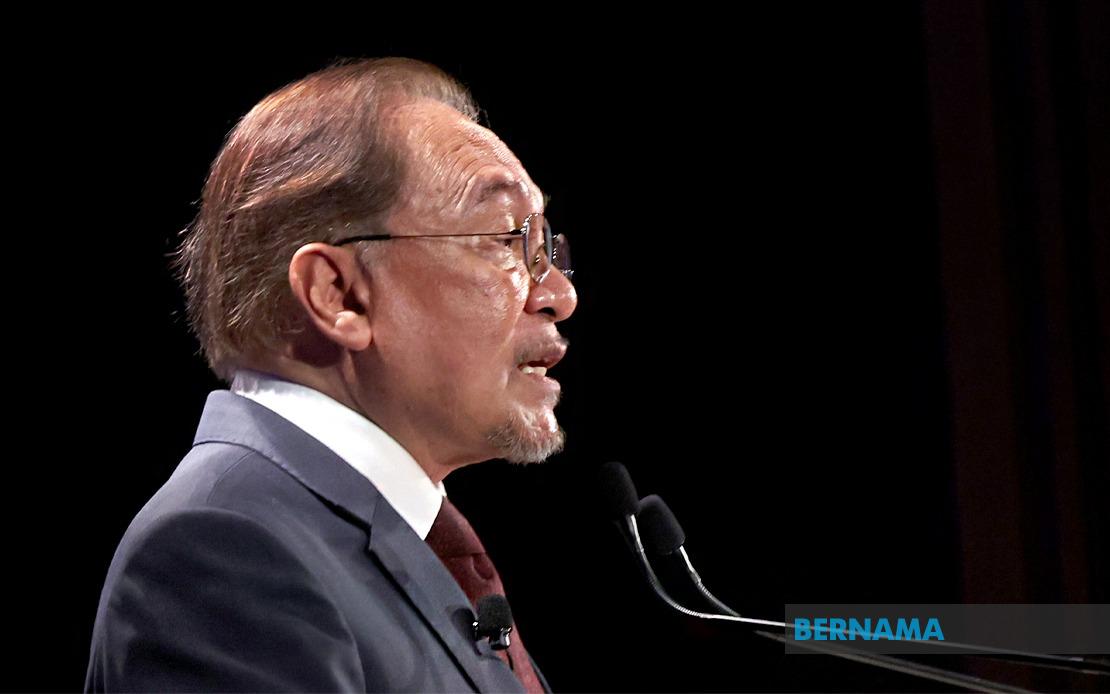
Malaysia has thrown its diplomatic weight behind the nascent understanding between the United States and Iran, recognising the potential significance of efforts to de-escalate months of simmering regional tensions. Prime Minister Datuk Seri Anwar Ibrahim made the announcement during his keynote address at the 39th Asia-Pacific Roundtable in Kuala Lumpur, acknowledging the work of intermediaries including Gulf states, Türkiye, and Pakistan in helping forge the memorandum of understanding between the two regional powers.
Yet beneath Malaysia's measured support lies a strain of cautious realism. Anwar pointedly stressed that the prospects for a durable peace remain fundamentally fragile and vulnerable to deliberate sabotage, underscoring the delicate nature of rapprochement between adversaries whose interests have diverged so profoundly. For a country with deep trade links across the Gulf and significant exposure to regional instability, Malaysia's assessment reflects genuine anxiety about the brittleness of peace brokered through indirect channels.
The Prime Minister underscored two immediate priorities that he believes must now command urgent international attention. First, all parties must demonstrate strict adherence to the full terms of any ceasefire arrangement, ensuring that violations—whether deliberate provocations or miscalculations—do not unravel the fragile consensus. Second, the Strait of Hormuz must be reopened to unfettered international shipping without restrictions or disruptions, a point that carries particular weight given the waterway's critical role in global energy and commerce flows.
The Strait of Hormuz context proves especially pertinent for Southeast Asian economies. Before the recent hostilities, this chokepoint handled roughly one-fifth of the world's traded oil supply, making it indispensable to price stability and energy security across the Indo-Pacific region. Any sustained closure or partial blockade directly cascades into higher fuel costs, shipping premiums, and inflation pressures that ripple through Malaysia's manufacturing and logistics sectors. Anwar's emphasis on reopening signals Malaysia's acute awareness of how Middle Eastern geopolitical tremors shake Southeast Asian wallets.
Beyond maritime passage, Anwar drew a sobering link between regional conflict and the economic welfare of ordinary citizens. The extended tensions have kept global food and energy prices elevated as nations scramble to lock in supply contracts and build strategic reserves. This seemingly abstract procurement behaviour translates into concrete hardship: inflation at the supermarket checkout, higher electricity bills, and constrained household budgets. The Prime Minister stressed that these impacts transcend mere statistical abstractions—they touch the daily lived experience of working families navigating cost-of-living pressures.
Moreover, Anwar highlighted an opportunity cost that extends far beyond immediate price shocks. Billions of dollars that might otherwise flow toward social programmes, infrastructure development, and economic diversification have instead been redirected toward securing energy supplies and mitigating shortage risks. For developing economies in Southeast Asia, this diversion of capital represents a tangible brake on progress. Schools, hospitals, roads, and industrial capacity receive fewer resources because governments and businesses must prioritise acquiring essential commodities at inflated prices. The regional growth trajectory flattens measurably when geopolitical crises force such budgetary trade-offs.
Quatar's role as an honest broker in the talks deserves attention. The Gulf state announced that Iran and the United States had achieved "positive progress" during indirect negotiations that concluded on Wednesday. This framing—emphasising incremental advance rather than breakthrough—suggests both the genuine movement that has occurred and the remaining chasm between the parties' positions. For Malaysia and other outside observers, Qatar's carefully calibrated language offers a realistic gauge of how far the process has actually travelled and how much distance remains to be covered.
The timing of Anwar's remarks during the 39th Asia-Pacific Roundtable, an annual conference organised by the Institute of Strategic and International Studies (ISIS) Malaysia, amplified their reach and significance. This three-day forum, which concluded on the day of his address, brought together policy elites, security analysts, and diplomatic figures from across the region. By delivering his cautiously optimistic but fundamentally sceptical assessment in this venue, Anwar signalled both Malaysia's constructive engagement with great power diplomacy and the region's determined effort to shape outcomes that affect its own stability and prosperity.
For Malaysia specifically, the calculus extends beyond energy security and inflation management. A sustained US-Iran rapprochement could open pathways for enhanced regional dialogue mechanisms in which Southeast Asian voices might exercise genuine influence. Conversely, any collapse of the nascent understanding could trigger renewed proxy conflicts, arms races, and destabilisation that would inevitably draw in peripheral actors like Malaysia through refugee flows, terrorist recruitment, or disrupted trade. Anwar's diplomatic positioning reflects Malaysia's interest in being perceived as a constructive player capable of offering perspective on managing great power competition within regional contexts.
The economic ramifications that Anwar articulated carry particular resonance for Malaysia's policymakers. The nation's manufacturing sector depends heavily on stable energy prices and uninterrupted maritime commerce. Port operators in Klang and Penang stand to benefit from reliable passage through the Strait of Hormuz, while petrochemical processors and refineries need affordable feedstock. Any backsliding on the US-Iran understanding would immediately translate into cost pressures that ripple through Malaysia's supply chains and competitiveness metrics in export markets.
Looking forward, Malaysia faces a diplomatic tight-rope. It must maintain constructive relationships with both the United States and Iran, avoid excessive alignment that could invite blowback, and position itself as a voice advocating for stability rooted in genuine interests rather than ideology. Anwar's carefully worded embrace of the understanding—welcome but cautious, supportive but clear-eyed about risks—reflects exactly this balanced posture. Malaysia will likely continue monitoring implementation closely, ready to praise progress but also prepared to highlight setbacks that threaten the region's economic and security architecture.

