Malaysia's banking industry stands at a critical juncture where the real challenge lies not in deploying artificial intelligence, but in embedding it responsibly within institutional safeguards and public trust. The Asian Institute of Chartered Bankers has sounded this important clarion call, emphasizing that banks across the country must move well beyond the experimentation phase and establish frameworks that ensure AI systems operate with genuine accountability and transparency. This distinction matters profoundly for a financial sector navigating the complexities of transformation under the Financial Sector Blueprint while simultaneously contending with rising cyber threats, climate-related financial risks, and broader geopolitical turbulence.
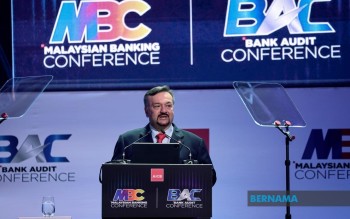
The message emerged from two major conferences held in Kuala Lumpur in early July, where over 1,000 banking executives, internal auditors, and regulators convened to examine how the industry could harness AI's potential without compromising systemic stability or customer confidence. Minister of Finance II Datuk Seri Amir Hamzah Azizan and Bank Negara Malaysia Governor Datuk Seri Abdul Rasheed Ghaffour jointly inaugurated the events, signalling the high-level policy importance attached to this conversation. The dual conferences—the fourth Malaysian Banking Conference and the second Bank Audit Conference—functioned as a unified platform for exploring governance challenges, regulatory adaptation, and the human dimensions of technological change.
A striking finding from research presented at these conferences reveals the gap between AI deployment and institutional confidence in its outputs. While Malaysian banks, digital banks, and development financial institutions have already rolled out AI systems for customer onboarding, fraud detection, anti-money laundering screening, and internal productivity tasks, only one quarter of senior leaders surveyed expressed sufficient trust in AI-generated recommendations to base critical business decisions upon them. This 25 per cent confidence level, derived from responses across nearly 90 banking institutions, underscores a fundamental credibility challenge that cannot be resolved through technology alone. The problem is not that AI lacks capability; rather, banks lack assurance mechanisms, explainability protocols, and governance structures that would justify relying on algorithmic outputs for high-stakes decisions affecting customers and systemic soundness.
Recognizing this disconnect, industry leaders launched the AICB-Ecosystm AI in Practice report, a comprehensive benchmark developed jointly by the banking institute, consulting firm Ecosystm, and AICB's Chief Risk Officers' Forum. The research provides Malaysia's financial sector with a detailed snapshot of where institutions stand on AI maturity, governance readiness, and organizational preparedness. Rather than prescribing a single implementation roadmap, the report validates the diversity of approaches while identifying common best practices and gaps that require attention. This data-driven foundation creates a shared reference point for peer comparisons and encourages institutions to upgrade their governance practices not through regulatory mandate, but through competitive pressure and professional aspiration.
Amir Hamzah's remarks during the conference highlighted a crucial strategic choice: whether AI governance in banking should be imposed top-down by government directive or cultivated through industry-led standards and voluntary commitments. He explicitly praised the AI Governance Framework developed by AICB's Chief Risk Officers' Forum—which received Bank Negara Malaysia's support and the Association of Banks in Malaysia's endorsement—precisely because it demonstrates banks taking ownership of their own standards. This approach reflects a broader governance philosophy where trust is built internally through institutional discipline rather than externally through regulation alone. Such industry self-governance, when backed by transparency and peer accountability, can be more nimble and contextually sensitive than government-mandated rules, though it requires participating banks to resist competitive pressures that might otherwise compromise standards.
Bank Negara Malaysia's Governor emphasized an equally vital point: innovation encompasses far more than technology acquisition or deployment speed. True innovation, in his framing, demands leadership excellence and governance rigour that keeps the financial system anchored to societal needs rather than allowing technological capability to drive strategy in isolation. This resonates deeply with regional and global experience, where poorly governed AI implementations have generated customer harm, regulatory breaches, and reputational damage that outweighed any efficiency gains. The Governor's intervention signals that Malaysia's central bank views AI governance as foundational to financial stability, not a peripheral compliance issue that banks can delegate to technical teams without board-level oversight.
The talent dimension emerged as another central preoccupation throughout the conferences. AICB Chairman Tan Sri Azman Hashim stressed that professional development and continuous capability building among banking staff represent essential investments, not optional enhancements. As institutions deploy AI systems, the demand for people who understand both financial realities and algorithmic limitations becomes more acute. Banks need professionals who can interrogate AI recommendations, spot bias or errors, manage human-AI collaboration workflows, and explain to customers and regulators why specific decisions were made. The Future Skills Framework and FSF Xcel initiatives, developed collaboratively across the industry, seek to identify and cultivate these critical competencies at scale. Without such talent development, even well-designed AI governance frameworks will founder when they encounter real-world complexity and edge cases that require human judgment.
The conferences also acknowledged that Malaysian banks do not face these challenges in isolation. Financial institutions across Southeast Asia and beyond confront analogous questions about AI governance, cybersecurity resilience, climate risk quantification, and workforce transformation. By convening banking and audit leaders in a regional context, the AICB conferences functioned as more than domestic policymaking forums. They served as catalysts for cross-border peer learning, enabling Malaysian institutions to benchmark themselves against regional and international standards while also positioning Malaysia's banking sector as a thought leader on responsible AI implementation within Asia.
The shift from AI adoption to trusted implementation carries profound implications for Malaysia's competitive positioning in the region. Countries that successfully embed AI within robust governance frameworks will attract more sophisticated global capital flows, retain customer confidence during inevitable technological disruptions, and develop deeper talent pools. Conversely, institutions that prioritize speed of deployment over governance maturity risk regulatory sanction, customer backlash, and erosion of the public trust that underpins all financial activity. The AICB's emphasis on governance, assurance, and talent development reflects a mature understanding that financial technology's ultimate value depends not on technical sophistication but on trustworthiness in service of customer and societal interests.
Looking forward, Malaysia's banking sector has articulated a clear strategic direction: moving away from the breathless pace of AI experimentation toward disciplined, transparent scaling backed by governance frameworks, skilled talent, and institutional accountability. This transition from experimentation to responsible scale-up marks a natural maturation point in the sector's AI journey. The industry-led governance frameworks, supported by regulatory blessing but not dictated by government, create space for innovation while establishing baseline standards of accountability. As the Financial Sector Blueprint guides Malaysia's broader banking transformation, the emphasis on trusted AI implementation rather than mere adoption will likely become an increasingly important competitive and stability consideration.
For Malaysian financial institutions, the path forward requires sustained investment in governance infrastructure, internal auditing capabilities, risk officer expertise, and front-line staff training. Boards and senior management teams must resist pressure to deploy AI systems faster than their governance capacity permits, even if competitors appear to be moving more quickly. The evidence presented at the banking conferences demonstrates that trust—the currency upon which all financial systems ultimately depend—grows from disciplined execution and transparency, not from technological flash or speed to market. As Malaysia's banking sector matures its relationship with artificial intelligence, this commitment to governance-first implementation positions the country's financial institutions not just for technological competitiveness, but for sustained stakeholder confidence and systemic stability in an increasingly complex global environment.

