Financial institutions across Malaysia are progressively conditioning loan approvals on companies' ability to demonstrate environmental, social and governance performance through formal sustainability reporting. This shift represents a fundamental change in how banks assess corporate creditworthiness, moving beyond traditional financial metrics to evaluate long-term viability through an ESG lens. Prathab V, principal consultant at ESGright Sdn Bhd, emphasises that both multinational corporations and small-to-medium enterprises stand to gain substantially by aligning with these emerging financial requirements, which have become integral to accessing capital markets and maintaining competitive advantage in an increasingly sustainability-conscious global economy.
While Bursa Malaysia mandates sustainability statements from all listed companies, the requirement remains voluntary for unlisted firms. This regulatory asymmetry creates a potential competitive disadvantage for private companies that neglect ESG reporting, as they face barriers to accessing financing and international market opportunities. Prathab underscores that preparing comprehensive sustainability reports need not impose onerous financial burdens on organisations. Rather, the investment in establishing robust ESG governance systems and transparent disclosure mechanisms often proves minimal relative to the benefits of improved capital access and risk management. Companies that strategically implement these practices position themselves to attract capital from increasingly sophisticated investors and retain contracts with multinationals that now routinely audit suppliers' sustainability credentials.
Government agencies and industry regulators have thrown institutional weight behind this sustainability agenda, recognising that competitive positioning in global supply chains increasingly depends on ESG credibility. Malaysian authorities have actively promoted sustainability reporting through various guidelines and incentive structures, signalling that businesses treating ESG as peripheral rather than central to strategy risk gradual marginalisation from premium financing tiers. Companies excelling in sustainability reporting gain access not merely to conventional capital, but to "smart capital"—funds allocated by investors increasingly applying rigorous sustainability screens. Those neglecting these standards inevitably find themselves outpaced by competitors who have integrated ESG into core business operations and stakeholder communication.
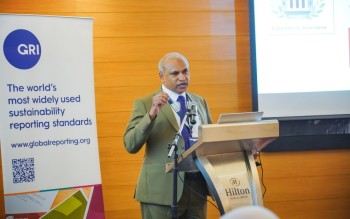
A recent convening organised by ESGright and the Global Reporting Initiative brought together approximately 40 senior corporate sustainability leaders and industry stakeholders representing combined market capitalisation exceeding RM380 billion. This gathering underscores the concentration of sustainability leadership among Malaysia's largest corporations and suggests the momentum behind ESG adoption across significant portions of the economy. The Global Reporting Initiative, an international standards-setter for sustainability disclosure, has become the authoritative framework guiding Malaysian corporate reporting. ESGright's emergence as the fifth-largest GRI professional trainer globally since 2023, and third-largest in the Asia-Pacific region, reflects accelerating demand for sustainability expertise and credentialing among Malaysian business professionals seeking to navigate this evolving regulatory and market environment.
Malaysia's standing within ASEAN as a jurisdiction with unusually high numbers of GRI-qualified professionals demonstrates government commitment to building institutional capacity around sustainability practices. This human capital investment positions the country advantageously as regional corporate headquarters and multinational subsidiaries increasingly localise sustainability governance. Recently, ESGright received appointment as Malaysia's first approved education partner for the International Financial Reporting Standards Foundation, an organisation developing globally recognised qualifications in sustainability-related financial disclosure. This designation enables Malaysian professionals to obtain internationally portable credentials in applying International Sustainability Standards Board frameworks, effectively creating a competitive advantage for knowledge workers and facilitating higher-quality sustainability practices across Malaysian firms.
Small and medium enterprises face distinctly different sustainability implementation challenges compared with large corporations, particularly regarding resource constraints and technical capacity. Robin Hodess, chief executive officer of the Global Reporting Initiative, advocates for proportionate sustainability frameworks tailored to SME capabilities rather than imposing identical disclosure burdens across firm sizes. Such calibrated approaches would help smaller companies progress along sustainability journeys without overwhelming them with compliance requirements misaligned to their operational scale and market position. For suppliers particularly, adopting even modest sustainability reporting opens supply chain opportunities otherwise closed to firms lacking demonstrated ESG credentials, thereby becoming essential for competitive survival in industries dominated by multinationals applying sustainability filters to vendor selection.
The complexity of sustainability reporting has proliferated as multiple frameworks and disclosure standards have proliferated alongside market-driven expectations. Companies increasingly require sophisticated guidance navigating this fragmented landscape of reporting standards, regulatory requirements, and stakeholder expectations. Hodess notes that many large Malaysian companies, particularly listed entities, demonstrated ESG commitment before regulatory mandates, proactively adopting Global Reporting Initiative Standards to facilitate international commerce and market access. This voluntary adoption reflected market understanding that comprehensive ESG reporting reduces barriers to export markets and enhances investor attractiveness, effectively functioning as competitive differentiation in globalised supply chains.
A significant challenge facing many organisations is "compliance fatigue"—exhaustion arising from cascading reporting requirements and evolving disclosure guidelines from multiple authorities and frameworks. Companies must reconcile obligations to meet expanding sustainability compliance demands with fundamental imperatives to generate shareholder returns, creating tension between competing organisational priorities. Prathab advocates for strategic selectivity in sustainability focus, encouraging companies to identify specific environmental, social or governance areas where their contributions would be most material and impactful, then executing excellence within those domains rather than dispersing effort across comprehensive but superficial engagement with all ESG dimensions. This concentrated approach generates more meaningful sustainability outcomes while reducing administrative burdens associated with attempting simultaneous excellence across all environmental, social and governance domains.
The trajectory toward mandatory ESG considerations in financing decisions fundamentally reshapes capital allocation mechanisms and corporate strategy formulation across Malaysian business. As international investors increasingly apply sustainability screens to investment decisions and multinational corporations embed ESG requirements throughout supply chains, companies operating without robust sustainability frameworks face systematic disadvantage in accessing premium financing, retaining major contracts, and competing for international market share. Malaysian authorities' active promotion of sustainability practices through regulatory frameworks and professional development initiatives reflects recognition that corporate sustainability capacity constitutes competitive infrastructure benefiting entire economy. The convergence of regulatory requirements, market-driven financing conditions, and investor expectations creates powerful incentives for Malaysian businesses across size categories to embed ESG considerations throughout governance structures and strategic planning processes.

