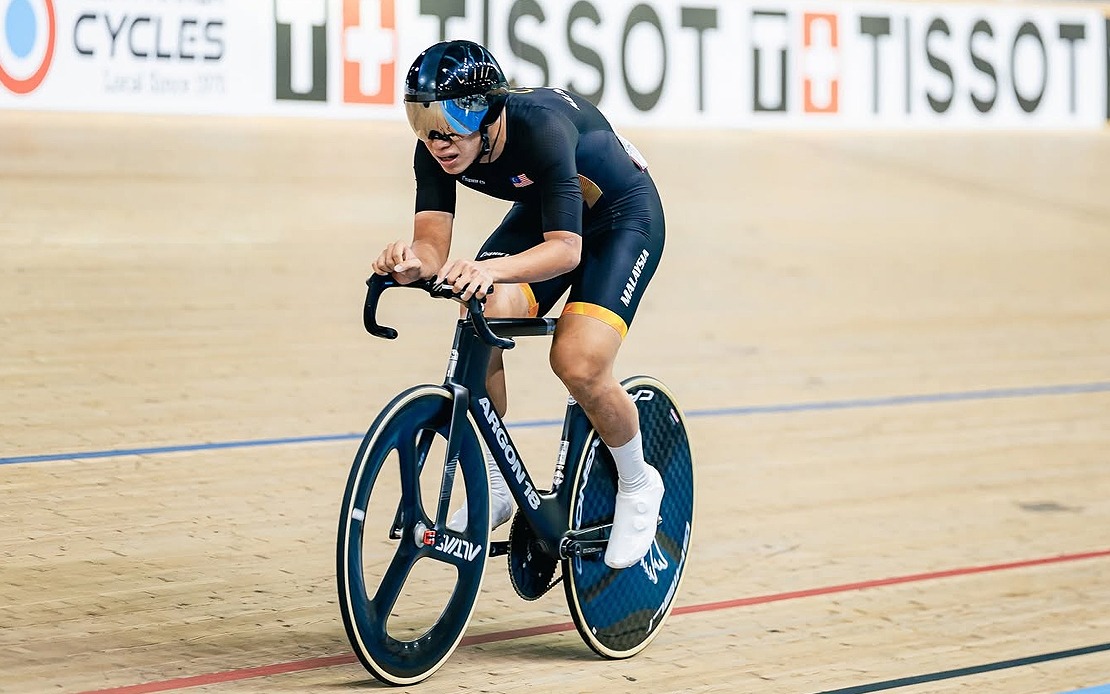
Malaysian track cyclist Lau New Joe has been discharged from Queen Elizabeth University Hospital in Glasgow following treatment for injuries sustained in a dramatic multi-rider collision at the 2026 Commonwealth Games on Saturday. The athlete, making his Games debut, is now cleared to return to Malaysia with the national contingent, though his recovery will extend well beyond his departure from Scotland.
The incident unfolded during the men's 10-kilometre scratch race final at the Sir Chris Hoy Velodrome when a cluster of nine riders crashed as the field entered the decisive final lap. New Joe was among those caught in the accident and appeared to lose consciousness momentarily before emergency medical personnel responded. He was stretchered from the track and subsequently marked as "Did Not Finish" in the official race results, leaving his competitive future uncertain during those initial anxious hours.
The medical response proved swift and thorough. Upon arrival at Queen Elizabeth University Hospital's emergency department, New Joe underwent comprehensive diagnostic imaging including computed tomography scans and full-body X-rays to assess the full extent of his injuries. These precautionary measures are standard protocol for athletes who have sustained blunt trauma, particularly when there is any possibility of head injury. The scanning results delivered welcome news: there was no internal bleeding within the brain cavity, a potential complication that could have forced an extended hospital stay or flight delay.
However, the scans did reveal structural damage to his facial skeleton. According to Malaysian contingent chief medical officer Dr Kamarul Hashimy Hussein, New Joe sustained minor fractures to multiple facial bones that, while not requiring immediate surgical intervention, will need careful monitoring and specialist management. The injuries extended beyond the skeletal structure to his dentition, with several teeth fractured in the impact. This combination of facial and dental trauma necessitated urgent referral to maxillofacial specialists who worked late into Saturday evening, treating New Joe from approximately 9 pm until 1 am to stabilise his condition and prevent further complications.
The dental injuries are particularly significant because they will require an extended treatment timeline that cannot be completed during the Games period. New Joe will need multiple sessions with maxillofacial specialists following his return to Malaysia, suggesting a recovery process measured in weeks rather than days. These procedures are essential not merely for aesthetic purposes but for functional restoration and long-term oral health, as improperly treated dental fractures can lead to chronic complications including infection, misalignment, and sensitivity issues.
Dr Kamarul emphasised that the National Sports Institute will assume responsibility for New Joe's ongoing care once he returns to Malaysia, coordinating both the physical medical treatment and the often-overlooked psychological dimension of recovery from such a traumatic incident. Athletes who experience sudden, dramatic injuries can develop anxiety or loss of confidence that extends beyond the purely physical healing process. Recognising this reality, the medical team has noted that New Joe possesses strong mental resilience and a competitive drive that should support his psychological recovery, though professional psychological support will be made available as part of his comprehensive rehabilitation programme.
The path back to competition will be gradual and carefully structured. Medical staff are implementing a systematic monitoring approach to track New Joe's progress across multiple parameters including general fitness, cardiovascular endurance, and muscle strength. This staged assessment is essential because athletes returning from significant injuries require confirmation that they have not only healed structurally but regained the functional capacity their sport demands. The rigorous demands of track cycling—which requires explosive power, precise bike handling, and sustained effort—mean that clearance cannot be granted until comprehensive fitness testing confirms readiness.
The timeline for New Joe's return to competition remains fluid, though the medical team has expressed cautious optimism about his prospects. There is a particular focus on determining whether he might be sufficiently recovered to represent Malaysia at the Asian Games, scheduled for September 19 to October 4 in a venue yet to be finalised for the 2026 edition. Such a timeframe would allow approximately six to seven weeks of recovery and training, a compressed but not impossible window depending on the precise rate of healing and the success of specialist treatments.
This incident carries broader implications for Malaysian track cycling and the nation's Commonwealth Games preparation. New Joe's crash was part of a larger accident involving nine riders, underscoring the inherent risks of track cycling, particularly during the frenetic final lap of scratch races where athletes jostle for position at high speeds. While such crashes are occasional features of the sport at elite level, the severity of injuries and the dynamics of the incident will likely prompt discussion within cycling circles about safety protocols and race management strategies.
The Glasgow 2026 Commonwealth Games represent a significant platform for emerging Malaysian athletes, and New Joe's participation as a debutant athlete carried considerable promise. His forced withdrawal from competition due to injury represents a disappointment for the Malaysian cycling contingent, yet the fact that his injuries, while serious, do not appear to be career-threatening offers some consolation. His return to competition, whenever that occurs, will require patience from both the athlete and the national sports system supporting him.

