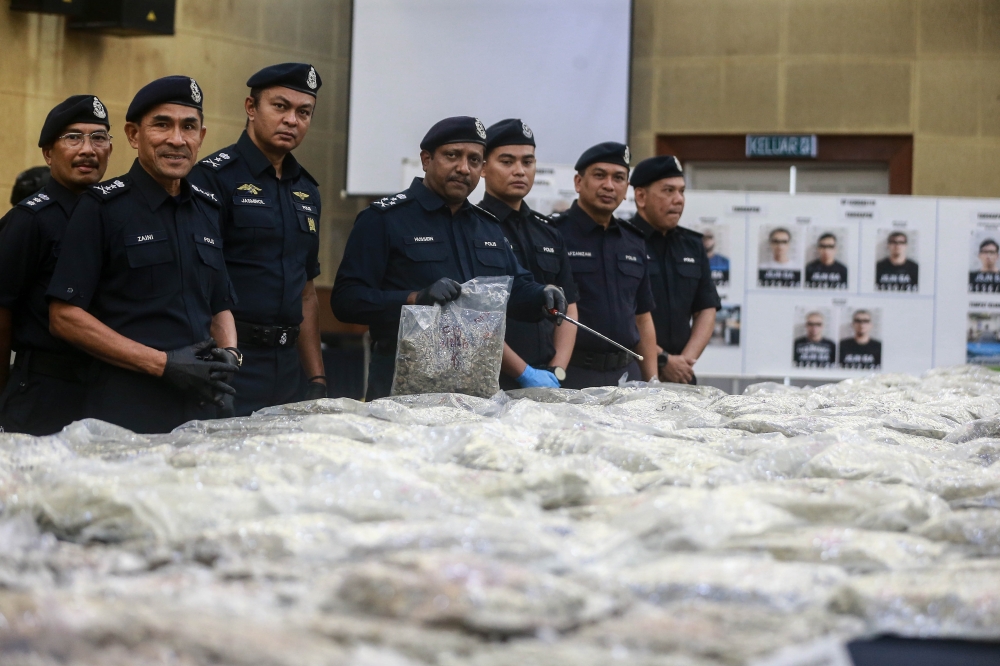
Police authorities in Malaysia have documented a troubling spike in overseas arrests involving Malaysian nationals suspected of participating in international drug smuggling operations. Since the start of January, fourteen citizens have been detained across various countries following investigations that traced their activities to Kuala Lumpur International Airport (KLIA), signalling an expansion of Malaysia's unwanted role in cross-border narcotics networks.
The revelation underscores a persistent vulnerability in border security infrastructure and enforcement mechanisms surrounding Malaysia's primary aviation hub. KLIA, as one of Southeast Asia's busiest airports and a critical regional transit point, has emerged as a focal point for drug trafficking syndicates seeking to move contraband through established international travel corridors. The pattern of arrests suggests that criminal organisations are deliberately utilising the airport's scale and operational complexity to obscure their illicit movements.
Detailed investigation patterns indicate that these Malaysian nationals were not typically operating as mastermind organisers, but rather as low-level couriers and operational facilitators within larger smuggling networks. This distinction matters significantly for law enforcement strategy, as it reveals how transnational drug syndicates deliberately recruit and deploy nationals from countries with established international travel patterns to lower their operational risk profile. By employing citizens with legitimate travel documents and established passenger histories, smuggling networks can blend narcotics transportation into routine commercial aviation flows.
The geographic spread of these arrests across multiple countries demonstrates the sophisticated, multinational infrastructure underpinning modern drug trafficking. Rather than simple bilateral smuggling arrangements between Malaysia and one destination country, these cases reveal complex networks spanning multiple continents with layered operational security. Malaysian couriers have been apprehended in jurisdictions across Asia, Europe, and beyond, indicating that the drugs themselves traverse even more complex routes than the personnel moving them.
The specific focus on KLIA as the originating point for these operations raises critical questions about screening procedures, intelligence sharing between airport authorities and drug enforcement agencies, and the adequacy of passenger profiling systems. While Malaysian customs and immigration personnel process hundreds of thousands of passengers monthly, identifying which individuals represent genuine trafficking risks amid normal travel flows presents an enormous operational challenge. The concentration of arrests linked to departures from this single facility suggests either that detection mechanisms remain insufficient or that criminal networks have developed sophisticated methods for circumventing existing safeguards.
International cooperation has clearly played a role in these arrests, as the detention of Malaysian citizens abroad requires either local law enforcement action or collaboration between police forces. This demonstrates the increasingly global nature of drug law enforcement, where cooperation between Malaysian authorities and their counterparts in destination countries becomes essential for identifying and prosecuting trafficking networks. However, such cooperation remains reactive, occurring only after contraband reaches foreign shores, suggesting that preventative measures at the source require strengthening.
The socioeconomic dimensions of these cases warrant consideration as well. Recruitment of Malaysian drug couriers typically targets economically disadvantaged individuals facing financial pressures, making them vulnerable to trafficking networks offering substantial cash payments for transporting narcotics. This recruitment pattern reflects the broader challenge of economic inequality feeding into organised crime across Southeast Asia. Without addressing underlying economic factors that make courier work appear attractive to vulnerable populations, enforcement action alone cannot stem the supply of willing participants in smuggling operations.
The Malaysian government faces mounting pressure to enhance airport security protocols and increase intelligence-gathering capabilities at KLIA. This might involve expanded passenger screening procedures, improved coordination between aviation authority personnel and drug enforcement specialists, and enhanced surveillance of high-risk flight routes and destinations. Investment in intelligence analysis capacity could enable authorities to identify emerging trafficking patterns before operations reach the deployment stage.
Regional implications extend beyond Malaysia's borders, as neighbouring countries including Singapore, Thailand, and Indonesia also grapple with similar trafficking pressures. The concentration of international flights and the geographic positioning of KLIA within Southeast Asia's air transport network means that disruptions to Malaysia's trafficking infrastructure create ripple effects throughout the region. Coordinated regional responses, potentially through mechanisms like the ASEAN regional forum or bilateral arrangements, could enhance collective capacity to disrupt these networks before they become operationally entrenched.
The fourteen arrests announced by police authorities represent confirmed cases where evidence reached prosecution standards and resulted in formal legal action. The actual scale of attempted smuggling likely far exceeds these documented cases, with significant quantities of contraband successfully navigating international borders and reaching consumption markets. This enforcement-to-actual-trafficking ratio suggests that even accelerated detection efforts capture only a fraction of total illicit movements.
For Malaysian citizens travelling internationally, these arrests carry implications for enhanced scrutiny at departure and arrival points. Airport security personnel may apply more intensive screening to Malaysian nationals, and authorities in destination countries may view Malaysian passengers with heightened suspicion. This represents an externality cost borne by legitimate travellers resulting from criminal activities by a small segment of the population.
Looking forward, sustained commitment to intelligence-led enforcement, international cooperation, and supply-chain security measures will prove essential for addressing KLIA's vulnerability to trafficking exploitation. The fourteen cases represent visible enforcement successes, but they simultaneously expose systemic weaknesses in border security and passenger vetting that require comprehensive, sustained reform.

