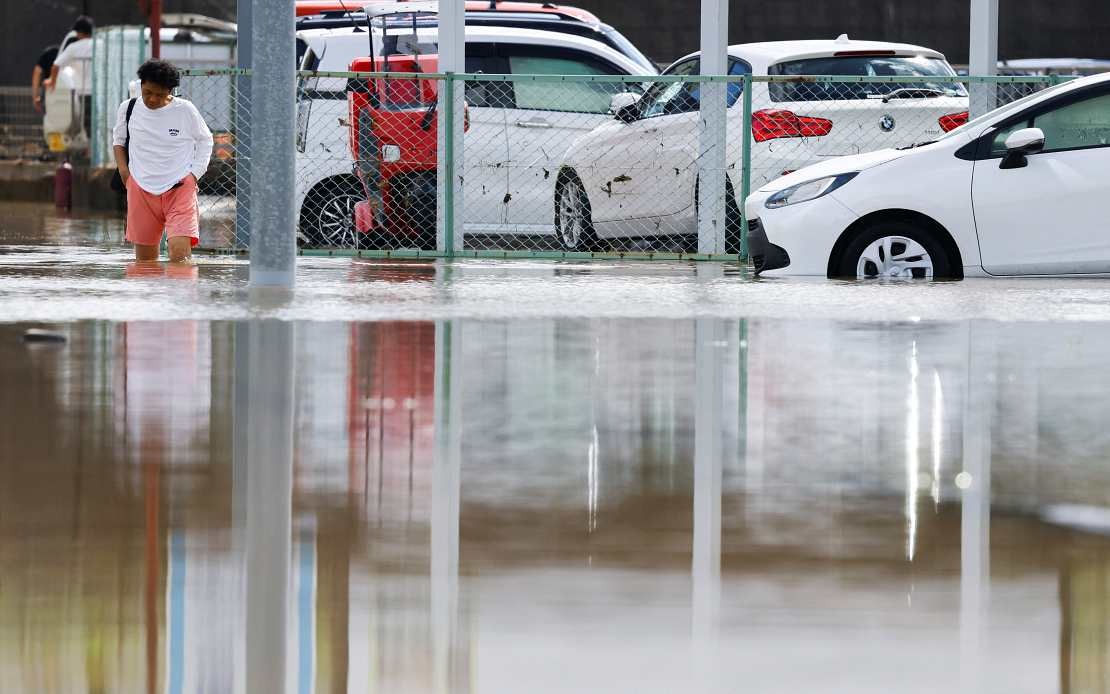
The Malaysian Embassy in Tokyo has instructed Malaysians residing in or visiting Japan to curtail non-essential travel and remain alert following unprecedented rainfall that has unleashed severe flooding across Chiba Prefecture and neighbouring areas within the Kanto region. The advisory came as transportation networks suffered substantial damage, prompting the displacement of thousands of people and creating widespread chaos at Japan's major international gateway.
The scale of the disruption became apparent when approximately 7,000 travellers found themselves stranded at Narita International Airport, unable to proceed with their journeys due to the destruction of crucial road and rail connections serving the airport and surrounding municipalities. The flooding represented a rare occurrence in the region, with meteorological records indicating the intensity of rainfall exceeded historical norms for the area. The cascading impact of the weather event extended beyond the airport, affecting entire transportation corridors that connect Tokyo to outlying prefectures and regional cities.
According to reporting from Kyodo News, the torrential downpour claimed at least eight lives, with the death toll potentially rising as rescue operations continued and damage assessments proceeded across the affected districts. The Japan Meteorological Agency responded to the crisis by issuing a Level 5 rain warning, its highest alert classification, covering more than one-third of Chiba Prefecture's municipalities adjacent to Tokyo. This designation reflects the exceptional severity of the weather system and the imminent danger it posed to residents and infrastructure across the region.
Local authorities deployed emergency response measures to protect vulnerable populations, issuing evacuation orders that at one point encompassed more than 400,000 residents. These orders affected multiple communities situated in flood-prone areas and low-lying zones where the risk of inundation was greatest. The scale of the evacuation underscored the serious threat the flooding represented to human life and highlighted the difficulties faced by emergency management agencies in coordinating movement of such large population segments amid deteriorating conditions.
For Malaysian citizens caught within Japan, the embassy provided specific guidance tailored to the circumstances. Residents were instructed to maintain distance from flooded areas and topographically depressed zones where water accumulation posed drowning hazards. The advisory emphasised the importance of heightened situational awareness, close monitoring of conditions as they evolved, and responsiveness to official communications from Japanese government bodies overseeing disaster response and public safety.
The embassy recognised that accurate and timely weather information would be essential for Malaysians making decisions about movement and safety. Consequently, it directed nationals to consult the Japan Meteorological Agency's English-language website at www.jma.go.jp/jma/indexe.html for the most current meteorological forecasts, official warnings, and technical advisories. By providing this specific resource, the embassy ensured that Malaysians could access information directly from the authoritative Japanese source without relying on potentially delayed or incomplete translations through diplomatic channels.
Understanding that some Malaysians might find themselves in genuine distress or confronting life-threatening situations, the embassy established multiple communication channels through which nationals could seek assistance. During normal business hours, Malaysians could reach the Embassy of Malaysia in Tokyo by calling +81-3-3476-3840. For emergencies occurring outside standard office times, an dedicated hotline was made available at +81-70-1471-9756, ensuring that help could be requested at any hour regardless of the time zone considerations that might otherwise complicate consular assistance.
Beyond telephone contact, the embassy provided electronic communication options recognising that some Malaysians might have limited mobility or prefer written communication. Email addresses were published for consular inquiries at [email protected] and for general missions matters at [email protected]. This multi-channel approach reflected sophisticated understanding of modern communication preferences and acknowledged that emergency situations might make certain contact methods more practical than others.
The flooding in Chiba Prefecture serves as a reminder of the vulnerability that even developed nations face when confronted with extreme weather phenomena. For Malaysian travellers and expatriates accustomed to tropical climate patterns, the intensity and sudden onset of temperate zone rainstorms can prove disorienting and dangerous. The disruption at Narita Airport particularly highlighted how climate events can cascade through interconnected economic and transportation systems, affecting not only local populations but also international travellers and the businesses dependent on reliable airport operations.
The incident also reflects broader regional climate trends affecting East and Southeast Asia, where monsoon patterns and tropical storm systems have intensified over recent decades. Japan's investment in early warning systems and disaster response infrastructure demonstrates approaches that Southeast Asian nations, including Malaysia, might examine as they strengthen their own resilience to increasingly severe weather events. The Malaysian Embassy's proactive communication with nationals exemplifies how diplomatic missions can serve protective functions beyond conventional political representation, particularly during transnational crises.
As the situation in Chiba Prefecture continued to develop, the paramount concern remained the safety of all individuals in affected areas, regardless of nationality. The Malaysian government's mobilisation of its diplomatic apparatus to protect its citizens reflected the fundamental responsibility that nations bear toward their nationals abroad. For Malaysians in Japan, adherence to official guidance and maintenance of contact with their embassy represented the most prudent course of action until conditions stabilised and normal transportation operations resumed.

