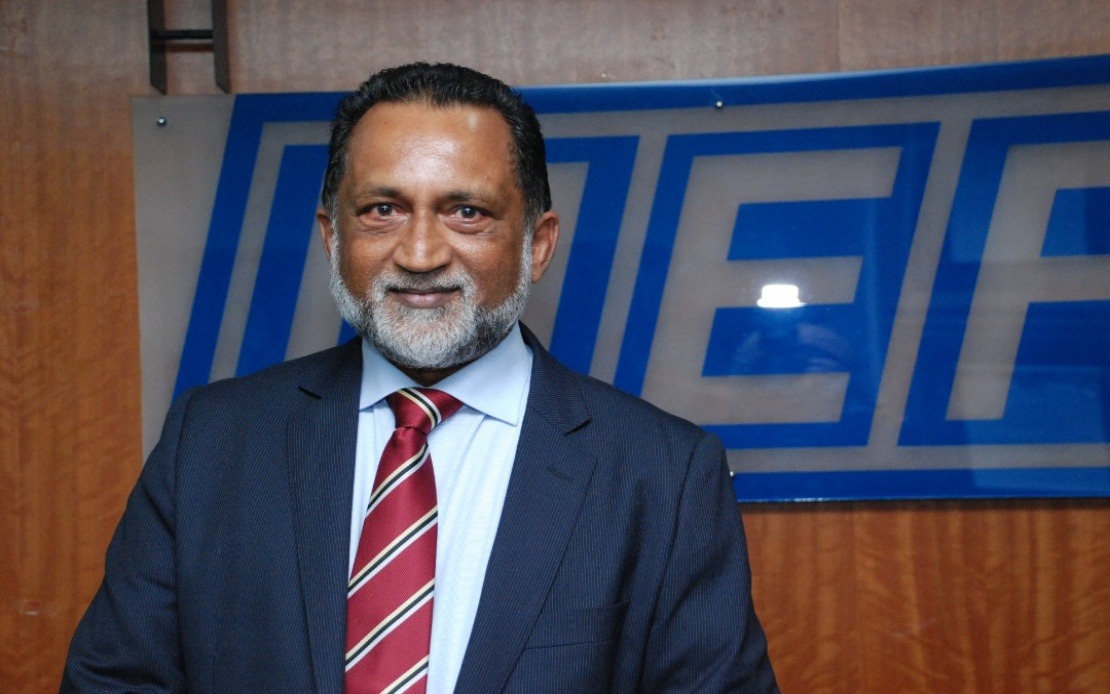
The rapid adoption of artificial intelligence in corporate hiring is forcing Malaysian employers to rethink how they balance efficiency with security. The Malaysian Employers Federation has raised serious alarms about the technology's dual-edged nature, warning that while AI recruitment tools have dramatically streamlined candidate screening, they have simultaneously created unprecedented vulnerabilities that could allow dishonest applicants to slip through traditional vetting procedures. The federation's president Datuk Dr Syed Hussein Syed Husman has called for a comprehensive overhaul of hiring safeguards to prevent fraud and protect the integrity of recruitment across Malaysia's diverse economy.
The challenge emerged as generative AI technologies matured, enabling job seekers to create polished resumes, compelling cover letters and application materials within minutes. Where previous generations of job hunters might have embellished their qualifications through conventional means, today's applicants can leverage sophisticated AI systems to produce highly convincing yet entirely fabricated or exaggerated credentials. This represents a qualitatively different threat because such documents are often indistinguishable from authentic ones at first glance, placing tremendous strain on employers who must process hundreds of applications weekly. The technology democratises deception—candidates no longer need specialised skills to manufacture convincing false credentials, merely access to freely available AI tools.
Data from the National Background Screening Risk Index underscores just how pervasive credential fraud has become in the Malaysian job market. The index, compiled by background screening specialist Venovox Sdn Bhd using approximately 300,000 screening records across 20 industries, revealed that 15 per cent of job candidates contained at least one significant discrepancy. These ranged from inaccurate employment histories and falsified qualifications to identity-related irregularities, financial red flags and reputational concerns. For employers, this statistic translates into a one-in-seven chance that any given applicant has deliberately misrepresented themselves—a risk level that mandates systematic verification protocols rather than reliance on cursory document reviews.
Yet the fraud landscape has evolved beyond simple resume padding. Deepfake technology and digital identity manipulation now pose an escalating threat, particularly as remote and hybrid work arrangements have become entrenched across Malaysian corporations. Interview candidates can no longer be assumed to be physically present or genuine when meeting hiring panels via video calls. The sophistication of synthetic video feeds, artificial voices and convincing digital impersonation means that even direct candidate interaction no longer guarantees authenticity. This represents perhaps the most unsettling frontier in recruitment fraud, as it undermines the one verification method that employers have historically relied upon—face-to-face assessment and human intuition about candidate credibility.
Datuk Dr Syed Hussein emphasised that the federation's core recommendation is straightforward: artificial intelligence should enhance human decision-making rather than replace it. Over-reliance on automated screening systems has created blind spots where sophisticated fraud can flourish undetected. He stressed that human assessment must remain central at critical junctures throughout the hiring process, ensuring that technological efficiency gains do not come at the cost of recruitment integrity. This position reflects growing recognition across Southeast Asian business communities that the rush to automate hiring has occasionally outpaced the development of corresponding safeguards.
To counteract these emerging threats, the MEF has outlined a multi-layered approach to verification. Employers should implement robust identity validation measures, including careful examination of official identification documents and live video interactions or in-person assessments for positions of significant responsibility or sensitivity. These steps are foundational but insufficient alone. The federation also advocates moving beyond resume-based hiring entirely, instead constructing multi-stage evaluation frameworks. Technical tests, practical skills assessments, work samples, case studies and competency-based interviews collectively provide a more comprehensive picture of a candidate's genuine capabilities than any document could offer.
Employer diligence must also extend to rigorous credential validation, with particular emphasis on verifying academic qualifications and employment history through formal reference checks and confirmation of previous work records. Traditional reference checks have sometimes been dismissed as outdated, yet they remain among the most difficult forms of fraudulent application materials to fake convincingly. A hiring manager who contacts a previous employer's human resources department can typically identify false employment claims quickly. Similarly, contacting universities directly to verify degree completion rates far higher success than accepting credentials at face value. These time-honoured verification methods complement rather than contradict technological screening tools.
Recruiting personnel themselves require upskilling to detect AI-related manipulation effectively. Hiring managers must develop the capacity to identify inconsistencies between written application materials, interview performance and demonstrated competencies. An applicant whose beautifully crafted resume suddenly performs poorly during technical assessments may have used AI to generate application documents without actually possessing the described skills. Conversely, candidates whose articulate interview performance contradicts poorly written application materials might be legitimate candidates whose AI-generated documents failed to capture their actual communication style. Training recruiters to spot these red flags becomes essential as the technology becomes more commonplace.
For Malaysia specifically, these concerns carry particular weight given the country's position as a regional technology hub and growing digital economy. Major corporations and startups alike are expanding hiring at unprecedented rates to fill roles in technology, finance, and other sectors where credential fraud could prove especially damaging. A financial services company that hires a fraudulent candidate claiming relevant experience could face significant compliance and reputational risks. A technology firm building a software development team based on falsified technical credentials could jeopardise product quality and timeline delivery. The stakes extend beyond individual hiring decisions to encompass organisational performance and sector-wide trust.
The MEF's intervention reflects a broader Southeast Asian concern about maintaining fair competition in labour markets as AI transforms work. Genuine job seekers who present honest qualifications find themselves disadvantaged when competing against candidates whose AI-enhanced applications appear more impressive. Employers who invest in thorough verification processes bear higher hiring costs than those who accept applications at face value. Without industry-wide standards and practices, this creates perverse incentives that could ultimately degrade the quality of hiring across Malaysia's economy. The federation's recommendations, if widely adopted, could help establish baseline expectations around hiring integrity.
Datuk Dr Syed Hussein concluded by striking a balance between innovation and caution. He acknowledged that AI should not be discouraged in recruitment contexts, as these tools genuinely improve efficiency and can reduce unconscious bias in initial screening stages. However, this innovation must be accompanied by appropriate safeguards that preserve trust in hiring processes and protect both employers and genuine job seekers. The stakes involve not just individual transactions but the foundation of meritocratic hiring practices that benefit the broader Malaysian economy. As artificial intelligence continues reshaping recruitment, the challenge will be maintaining this equilibrium between efficiency and integrity.

