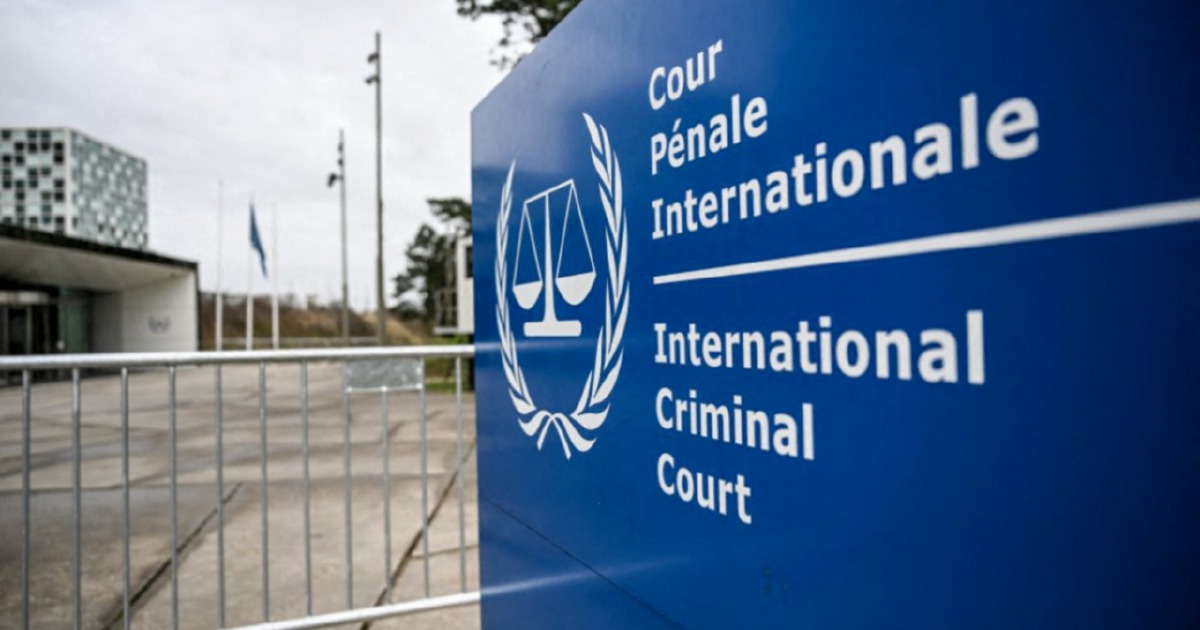
A Malaysian lawyer has stepped into the spotlight to publicly respond to allegations that her legal complaint against International Criminal Court chief prosecutor Karim Khan served geopolitical interests, specifically those of Israel. In her first public statement since initiating the misconduct case, the attorney addressed a hostile information environment in which her anonymity had become a liability rather than protection, as various parties attempted to construct narratives around her identity and motivations.
The lawyer's emergence follows weeks of speculation regarding the origins and intent behind her accusation that Khan engaged in sexual misconduct. During an interview with CNN, she articulated her frustration with having been cast as a potential proxy for foreign governments or intelligence services seeking to undermine the ICC prosecutor's authority during a period of heightened scrutiny over his office's investigative decisions. The anonymity that had initially shielded her from direct pressure had instead created a vacuum filled by conjecture, rumour, and deliberate misinformation campaigns.
Khan has been a polarising figure in international justice circles, particularly following the ICC's controversial move to seek arrest warrants for Israeli leaders in relation to alleged war crimes in Gaza. This highly sensitive geopolitical context provided fertile ground for competing narratives about who might be orchestrating challenges to his authority and why. The allegation that Khan himself engaged in sexual misconduct represented one strand of criticism; theories about the accuser's hidden backers represented another, reflecting broader battles over the ICC's credibility and independence.
The timing of her public disclosure reflects a calculated decision that direct testimony would serve her interests better than continued anonymity. By speaking to international media, the lawyer sought to reclaim control of her own narrative and establish her account on the public record without intermediaries. Her insistence that she acted independently, driven by principles of accountability rather than strategic geopolitical calculations, forms the crux of her counter-argument to allegations that she functioned as a conduit for external pressure on Khan.
For Malaysian observers, the prominence of a local attorney in a matter of international significance underscores the country's role in global legal and governance structures. Malaysia, as a sovereign state with its own complex relationship with international justice mechanisms, contains citizens engaged in high-stakes international litigation and investigation. The case raises questions about how Malaysian nationals navigating global institutions are perceived and whether their independent professional judgments receive fair consideration or become subject to conspiratorial thinking.
The allegation against Khan has created profound complications for an institution already facing criticism from multiple directions. Developing nations and civil rights organisations have scrutinised the ICC's track record on African cases while questioning its treatment of Western powers, whereas governments aligned with Israel have opposed its Gaza investigations. Khan's personal conduct allegations, if substantiated, would represent an integrity crisis at the highest level of the institution. Conversely, if the allegations prove unfounded or motivated by hostility toward his prosecutorial direction, this too would damage the ICC's institutional credibility.
The Malaysian lawyer's decision to come forward publicly reflects broader dynamics in how allegations of misconduct are now litigated not merely in formal institutional processes but across media platforms and public discourse. Her assertion that anonymity had been weaponised against her—enabling others to construct convenient fictions about her role and identity—speaks to the challenges facing complainants in high-profile cases involving powerful international figures. The balance between protecting a complainant's safety and enabling substantive public engagement with allegations remains unresolved in contemporary institutional practice.
International observers monitoring the ICC situation view her statement as a potential turning point in public understanding of the case. Whether her emergence strengthens or weakens her credibility will depend partly on how independent institutions assess her evidence and partly on the persuasiveness of competing narratives now circulating through diplomatic and media channels. The case has attracted attention from human rights organisations, governments with stakes in ICC decisions, and legal scholars debating institutional accountability and independence.
For Southeast Asia more broadly, the matter carries implications regarding how the region's legal professionals engage with international justice mechanisms. Malaysia's position as a middle-power nation without permanent influence over major international bodies means its citizens' participation in global legal processes often occurs at the intersection of multiple competing interests and power dynamics. The Malaysian lawyer's experience illustrates how individuals operating in these spaces navigate not merely professional challenges but also geopolitical pressures and reputational risks.
The unfolding situation remains genuinely contested, with formal investigations continuing within the ICC's own accountability mechanisms. Her public statement represents a significant moment in the case's evolution, but the ultimate determination of the allegations' validity will depend on independent review processes and the quality of evidence examined through proper institutional channels rather than media discourse. The distinction between her personal credibility and the substance of her allegations will prove crucial as the matter proceeds.

