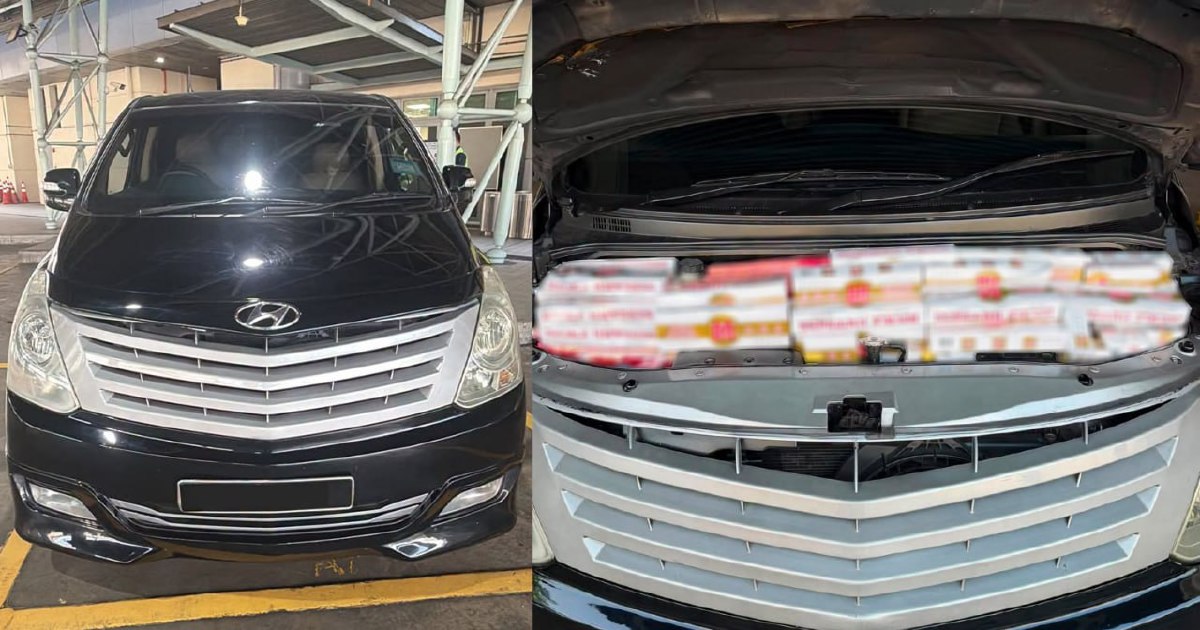
A 26-year-old Malaysian national faces legal action in Singapore following his arrest by Immigration and Checkpoints Authority (ICA) officers, who uncovered a substantial cache of smuggled cigarettes during a vehicle inspection at the border. The discovery of more than 600 cartons and 900 individual packets of duty-unpaid cigarettes, concealed in a specially modified compartment beneath the multipurpose vehicle's floorboard, has resulted in the seizure of the transport and ongoing investigations.
The arrest underscores a persistent challenge for authorities in both Malaysia and Singapore, where cigarette smuggling remains a lucrative yet heavily penalised trade. The contraband was detected during what appear to have been standard immigration checks, suggesting that officers deployed at border crossings have maintained vigilant screening protocols. The sophistication of the hiding method—using a concealed compartment beneath the vehicle's floor—indicates that the transportation was likely part of a more organised operation rather than a casual attempt to move goods across the border.
Cigarette smuggling between Malaysia and Singapore has long been driven by substantial tax differentials. Singapore imposes some of the world's highest excise duties on tobacco products, making legitimate cigarettes significantly more expensive than those available in Malaysia. This price gap creates powerful financial incentives for smugglers to transport cheaper Malaysian cigarettes into Singapore, where they can be sold at substantial markups whilst still undercutting official retail prices. The duty avoidance represents a significant loss of government revenue for Singapore.
For Malaysian nationals, the consequences of being caught engaging in such activities extend beyond immediate criminal charges. Conviction in Singapore's courts typically results in substantial fines and potential imprisonment, depending on the scale of the operation and whether it constitutes a first or repeat offence. The seizure of the vehicle compounds the financial impact on the individual involved. These penalties serve as deterrents, though the persistence of smuggling suggests that perceived profit margins continue to motivate risk-taking amongst certain individuals.
The ICA's continued enforcement efforts reflect Singapore's zero-tolerance approach to contraband importation. The agency regularly conducts operations across Singapore's land, sea, and air entry points, with checkpoint staff trained to identify vehicles and containers displaying tell-tale signs of smuggling. The discovery in this case required either officer vigilance or possibly intelligence gathered through prior investigations. Modern detection methods, including vehicle scanning technology and physical inspections, have become increasingly sophisticated, yet smugglers continually adapt their techniques in response.
From a regional perspective, this incident highlights an ongoing tension in cross-border trade enforcement. While Singapore strictly prohibits the importation of duty-unpaid tobacco, the neighbouring Malaysian market remains a source. Law enforcement cooperation between Malaysian and Singaporean authorities exists, but resources and enforcement priorities vary. The issue touches on broader questions about taxation policy, personal freedoms, and the legitimate regulation of harmful products. Policymakers in both nations grapple with balancing public health objectives—which high taxation supports by discouraging consumption—against concerns about black market activity.
The scale of the seizure, involving hundreds of cartons, suggests this was not a personal-use quantity but rather destined for commercial distribution in Singapore. This elevates the case beyond simple goods smuggling into territory involving potential charges related to trafficking for profit. Depending on how charges are framed and the individual's background, sentencing could prove severe. The case will likely be processed through Singapore's courts, where tobacco-related smuggling cases are treated seriously given revenue implications and public health considerations.
Malaysian nationals arrested in Singapore for contraband-related offences face particular complications, as the matter falls under Singapore's jurisdiction and legal system. Diplomatic assistance from Malaysia's High Commission in Singapore may be available, but it does not alter the fundamental legal exposure. Family members and employers may also face indirect consequences if the individual cannot return promptly to Malaysia or faces lengthy detention pending trial.
The incident serves as a reminder that whilst the price differential between Malaysian and Singaporean cigarettes remains substantial, enforcement has intensified and detection technology has improved. Individuals considering involvement in such smuggling operations face significantly elevated risks. The resources deployed at border checkpoints, combined with increased vehicle inspection protocols, have made large-scale smuggling considerably more dangerous than in previous years.
Beyond the individual case, this arrest contributes to broader patterns observed by Singapore's authorities, helping them refine intelligence and enforcement strategies. Information gathered from investigations feeds into risk assessment models that identify trafficking patterns, frequent smuggling routes, and operational methods. As enforcement evolves, smuggling networks adapt, creating a continuous cycle that shows no signs of termination whilst the underlying tax differential persists. Regional solutions would require coordinated policy adjustments, but such harmonisation faces considerable political and fiscal obstacles.

