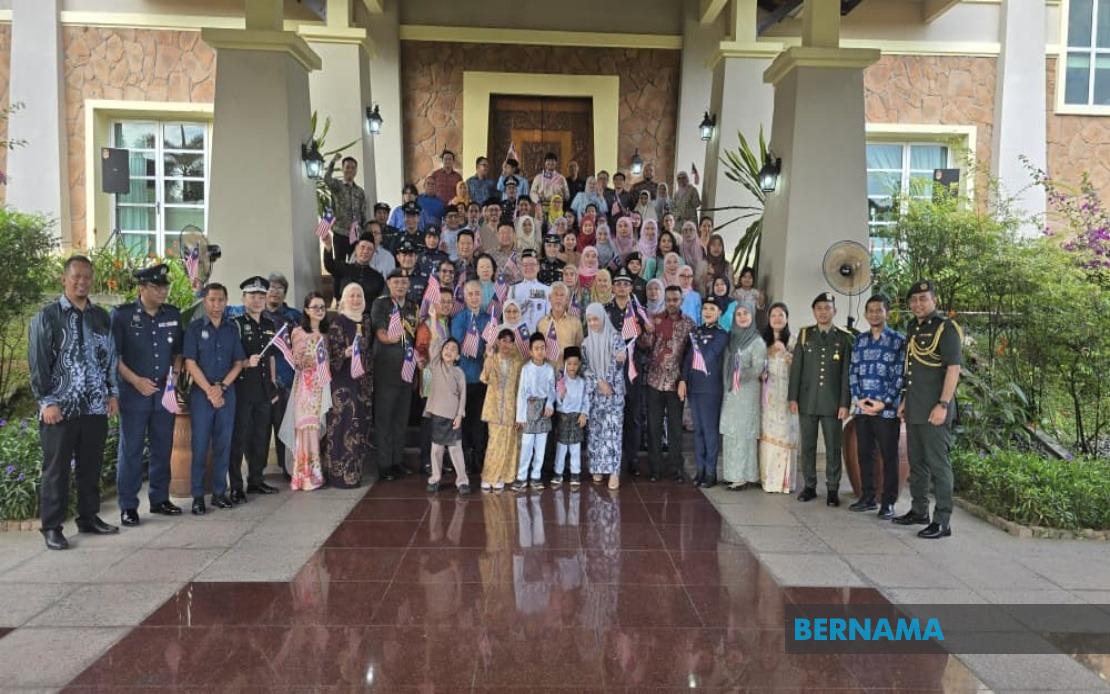
The Malaysian diaspora in Singapore constitutes far more than a mere expatriate workforce—they represent living embodiments of bilateral friendship and serve as unofficial ambassadors who actively strengthen the intricate bonds between Kuala Lumpur and the city-state, according to Malaysian High Commissioner Datin Paduka Anizan Siti Hajjar Adnin. Speaking during festivities marking Malaysia's 2026 National Day celebration held at Rumah Malaysia in Singapore on Monday, the High Commissioner articulated how Malaysians residing in the republic, encompassing tens of thousands who traverse the Causeway daily for employment, commerce, and family obligations, occupy a uniquely privileged position in fostering goodwill between the neighbours.
The relationship between Malaysia and Singapore transcends conventional diplomatic formalities, rooted instead in centuries of interconnected history, geographical proximity, shared economic interests, overlapping cultural tapestries, and extensive family networks that crisscross the border. This multilayered foundation has created an organic people-to-people connection that government-to-government relations alone cannot replicate. Anizan underscored that Malaysians living in Singapore, whether they have relocated permanently or maintain temporary arrangements, occupy what she characterised as a particularly strategic vantage point from which to deepen mutual understanding and strengthen the partnership that underpins regional stability.
The High Commissioner articulated specific expectations for how Malaysians abroad should conduct themselves, positioning personal behaviour as instrumental to advancing national interests. By embodying integrity, maintaining professional standards, demonstrating courtesy in daily interactions, practising mutual respect across cultural divides, and extending assistance to others, individual Malaysians contribute incrementally yet meaningfully to how their nation is perceived. Each professional accomplishment, each act of kindness, and each successful collaboration accumulates into a broader narrative about Malaysian character and capability that shapes perceptions far beyond individual circumstances. Anizan's message resonated with an emphasis on agency—that wherever Malaysians find themselves geographically, they retain the capacity and responsibility to generate positive impacts within their adopted communities.
Recognising the particular importance of sustaining cultural continuity among younger generations far from home, the High Commissioner specifically encouraged Malaysian youth in Singapore to maintain active engagement with their heritage and linguistic traditions. The Malay language, as the constitutional national language of Malaysia, carries symbolic weight extending beyond mere communication—it represents a unifying force that binds together a multiethnic, multireligious nation. For diaspora communities, maintaining linguistic proficiency becomes an anchor to identity and a practical tool for intergenerational knowledge transfer. Anizan's appeal to younger Malaysians reflected broader anxieties about cultural drift among expatriate populations and recognition that language preservation requires conscious, deliberate effort, particularly when the surrounding environment presents alternative linguistic and cultural frameworks.
The envisioned Malaysia that the High Commissioner articulated represents a nation comfortable in its own skin—one that has resolved internal questions about identity sufficiently to project confidence outward. This Malaysian model embraces openness to global influences and international engagement without surrendering foundational values or cultural moorings that provide continuity and meaning. The prescription avoids both isolationism and wholesale cultural assimilation, instead charting a middle course of selective engagement. For Malaysians in Singapore, this message carries particular relevance given Singapore's own intense cosmopolitanism and the constant temptation to fully absorb into an economically dynamic, culturally neutral environment that may seem to offer material advancement with fewer identity complications.
The 2026 National Day observance at Rumah Malaysia drew over 70 staff members and family members from the Malaysian High Commission itself, transforming the official celebration into something more intimate than typical diplomatic ceremonies. The participation of High Commission personnel and their dependents embodied the principles Anizan articulated—officials serving abroad maintaining connection to national identity while executing their professional duties. The venue selection at Rumah Malaysia, Malaysia's cultural centre in Singapore, further reinforced the thematic emphasis on cultural preservation and bridge-building, providing a physical space dedicated to maintaining Malaysian presence and facilitating cross-border cultural exchange.
The broader context of Malaysia-Singapore relations reflects both deep integration and persistent tensions that characterise the relationship between neighbouring countries sharing colonial history, ethnic diversity, and economic interdependence. Water agreements, maritime boundaries, trade imbalances, and occasional political tensions periodically strain official relations. However, the reality of hundreds of thousands of Malaysians working, studying, and residing in Singapore, combined with equivalent numbers of Singaporeans maintaining interests in Malaysia, creates grassroots connections that persist regardless of official diplomatic temperature. High Commissioners understand that cultivating these people-to-people networks provides insurance against official relations deteriorating into genuine hostility, ensuring that channels of communication and mutual understanding remain open even during periods of official tension.
The cross-border traffic referenced by Anizan—thousands of Malaysians entering Singapore daily—constitutes one of the world's highest-volume cross-boundary commuting phenomena. This daily movement, largely invisible in statistics yet fundamental to both economies, creates lived experience of bilateral integration among ordinary people. These commuters, ranging from construction workers to financial professionals, from domestic helpers to senior executives, informally represent Malaysia to Singaporean colleagues, employers, and communities they interact with. Their conduct, professionalism, and interpersonal effectiveness contribute cumulatively to how Malaysia is perceived and whether bilateral relations remain characterised by warmth, indifference, or suspicion.
For Malaysian policymakers and diplomats, emphasising the role of diaspora communities in advancing national objectives reflects sophisticated understanding of soft power and non-traditional diplomacy. Rather than relying solely on official channels, official statements, and diplomatic protocols, recognising and mobilising the goodwill and connections of nationals abroad taps into organic networks and authentic human relationships. High Commissioners stationed abroad increasingly see their role as encompassing not merely formal state-to-state diplomacy but also community engagement, cultural stewardship, and facilitation of the connections that make bilateral relationships resilient and mutually beneficial beyond mere governmental calculation.
Another dimension of Anizan's message addressed implicit anxieties about integration and assimilation. Singapore's success as a global financial centre and developed economy can exert powerful gravitational pull on Malaysian talents and professionals, potentially creating a permanent brain drain. However, the High Commissioner's framing suggests that maintaining Malaysian identity and cultural connection need not conflict with professional success or economic advancement in Singapore. Rather, these elements can coexist, with individuals serving dual purposes—advancing their careers while remaining connected to Malaysia and serving as informal representatives of Malaysian values and capabilities. This framing may influence retention and engagement among Malaysian professionals who might otherwise experience their continued Malaysian identity as incompatible with their Singapore success.
The celebration of National Day in Singapore carries particular poignancy given the historical separation of Singapore from Malaysia in 1965 and the subsequent divergent development trajectories of the two nations. Yet the continued observance and the official Malaysian presence through the High Commission underscore that despite political separation, the relationship retains emotional dimensions rooted in shared history and culture. For Malaysians in Singapore, National Day celebrations provide opportunities to reconnect with national identity, reinforce community bonds, and reaffirm commitment to maintaining ties across the border. The fact that such celebrations occur annually and draw official participation indicates that both governments view maintaining these connections as worth investing diplomatic effort into, even as they pursue distinct national interests.

