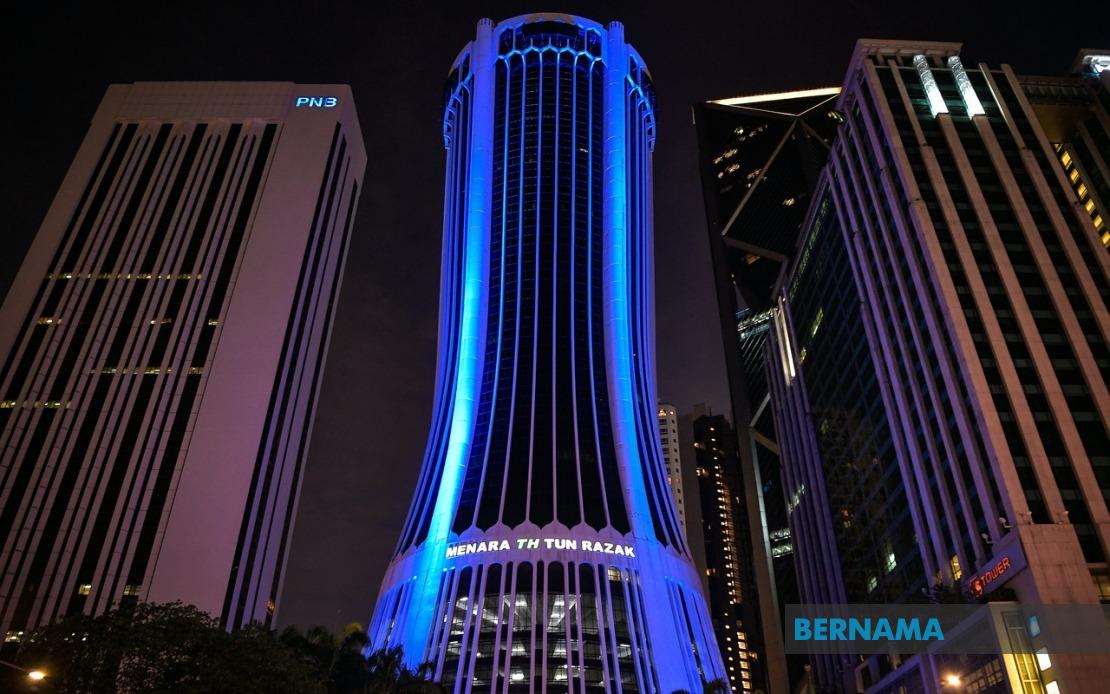
The Lembaga Tabung Haji (Tabung Haji or TH) faces renewed scrutiny following the release of findings from a Royal Commission of Inquiry examining its governance and operational practices. Yet among the Muslim community in Malaysia, the institution's standing as a custodian of their religious aspirations appears to have weathered the scrutiny intact, with depositors demonstrating continued commitment to their savings accounts and long-term pilgrimage plans.
The distinction between Tabung Haji and conventional financial institutions lies fundamentally in how Malaysians perceive its purpose. For millions of Muslim citizens, the organization represents far more than a standard banking entity or investment vehicle. Rather, it occupies a unique and revered position as the primary mechanism through which ordinary Malaysians can systematically accumulate resources to fulfil the Islamic pillar of hajj. This dual identity—as both financial institution and spiritual facilitator—shapes how depositors evaluate the organization's performance and legitimacy.
Atiqah Shah Hadi, a 40-year-old tailor, exemplifies this enduring trust. She has maintained her Tabung Haji account continuously since her father established it during her childhood. Her relationship with the institution reflects a generational commitment that transcends individual business cycles or management controversies. When she visited a branch to check her account status, she learned her expected turn to perform hajj would arrive in 2033. Rather than allowing recent management concerns to shake her resolve, she has intensified her savings discipline, ensuring that when her opportunity arrives, she will possess the necessary funds to undertake this profound religious obligation.
Muhammad Haikal Abdul Halim, a 35-year-old civil servant, demonstrates similarly unwavering confidence despite acknowledging the institution's recent difficulties. He remains resolute in his refusal to withdraw accumulated savings, viewing the current situation as temporary noise against a longer-term commitment. Looking ahead, he intends to establish automatic salary deductions for additional contributions, reasoning that with hajj queue projections indicating his turn will come in 2032, the time for preparation is now. His decision to open accounts for his three young children underscores how trust in Tabung Haji extends across generations within individual families.
The persistence of depositor confidence despite management revelations raises important questions about institutional trust and religious purpose. Dr Saizal Pinjaman, director of the Centre for Economic Development and Policy at Universiti Malaysia Sabah, identifies two critical pillars that must remain solid: the absolute security of depositor savings and the institution's robust long-term financial sustainability. These are not peripheral concerns but fundamental to Tabung Haji's legitimacy as the guardian of Muslim Malaysians' hajj aspirations.
For these foundations to withstand scrutiny, Pinjaman emphasizes that Tabung Haji must adopt transparent accounting practices that comprehensively reflect all losses and asset impairments alongside reported profits. Profits should not be distributed to depositors based on incomplete or optimistic financial pictures. Instead, the institution must maintain adequate reserves capable of absorbing market volatility and economic downturns. This conservative approach protects the long-term viability of the hajj fund and ensures that depositors' accumulated savings remain genuinely accessible when their pilgrimage dates arrive.
Pinjaman additionally recommends that Tabung Haji should consistently disclose the actual costs associated with hajj services it provides or subsidizes on behalf of pilgrims. This transparency addresses a critical information gap: depositors should understand the true value they receive and how institutional resources are allocated between administrative operations, investment activities, and pilgrim support. Such clarity strengthens the rational basis for continuing confidence while allowing depositors to make informed decisions about their participation.
Dr Noor Nirwandy Mat Noordin, a senior lecturer at Universiti Teknologi MARA's Centre for Media and Information Warfare Studies, offers a different perspective grounded in historical assessment. From her vantage point, Tabung Haji has undergone a genuine recovery trajectory following its earlier crisis period, emerging substantially stronger and more professionally managed. International recognition as one of the world's leading hajj management organizations represents tangible evidence of institutional reform and operational excellence.
Noor Nirwandy's assessment suggests that the recent RCI report, while highlighting legitimate governance concerns, may be better understood as part of an accountability mechanism that Tabung Haji has already begun addressing. From this analytical angle, the institution's ability to withstand institutional scrutiny while maintaining depositor confidence demonstrates systemic resilience. She expresses conviction that Tabung Haji will persist in fulfilling the trust and religious mandate that Malaysia's Muslim community has placed in it, executing its responsibilities with effectiveness and integrity.
The broader implication for Malaysia's religious financial ecosystem involves understanding how trust operates when spiritual obligation intersects with institutional performance. Depositors like Atiqah and Muhammad Haikal distinguish between management issues and foundational legitimacy. The RCI report may prompt necessary reforms, but it has not triggered a crisis of confidence or mass withdrawals. This resilience suggests that Malaysian Muslims view Tabung Haji's core mission as too important to abandon based on administrative difficulties alone.
However, this same resilience should not be interpreted as permission for Tabung Haji leadership to delay substantive reforms. The very loyalty that keeps depositors committed also demands that the institution honor that trust through uncompromising governance standards, transparent reporting, and rigorous financial management. The depositors' patience is not infinite; it is conditional upon demonstrable institutional improvement and the protection of accumulated savings.
Moving forward, Tabung Haji faces a critical window to translate the recommendations emerging from the RCI report into concrete operational changes. The institution must prioritize transparent financial disclosure, strengthen internal controls, and demonstrate that management lessons have been genuinely internalized. With depositors like Atiqah and Muhammad Haikal prepared to continue their pilgrimage preparations within the Tabung Haji framework, the institution possesses the goodwill necessary to implement reforms and restore any confidence that may have been slightly eroded.

